Can You Install Composite Decking Over an Old Frame in Puget Sound?
Redecking an existing frame with composite boards can save time and budget, but Western Washington moisture requires a thorough structural assessment first.
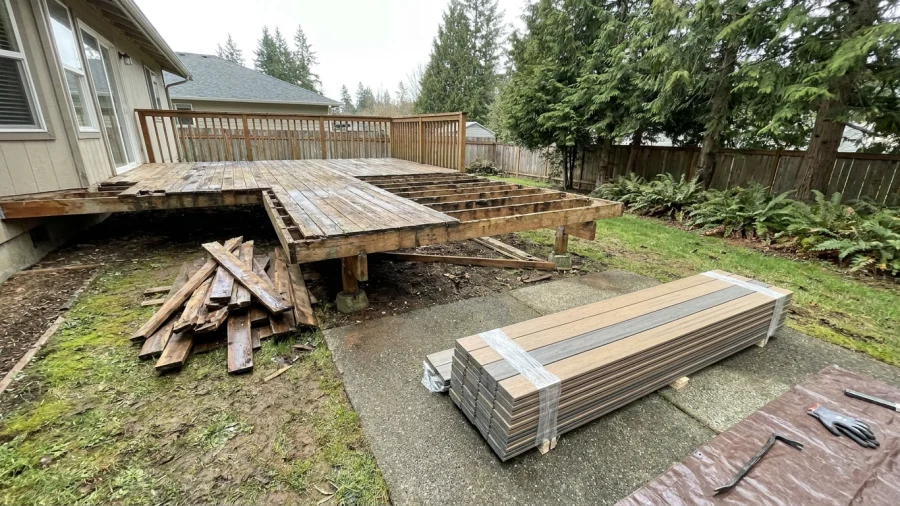
Many Western Washington homeowners with aging cedar or treated wood decks wonder if they can replace only the surface boards with modern composite decking. The surface may show splintering, moss growth, or cupping, while the posts and joists beneath still seem sturdy at a glance.
Installing composite decking over an existing frame—commonly known as redecking or resurfacing—is often possible. However, the damp Pacific Northwest climate makes this decision more complex than in drier regions. A frame that looks acceptable on the surface can harbor hidden moisture damage that jeopardizes the performance of high-end composite materials.
The Appeal of Redecking: Saving Time and Budget
Redecking involves removing the existing surface planks and railing systems while leaving the original ledger board, posts, beams, and joists in place. For homeowners in Seattle, Tacoma, and across the Puget Sound region, this approach offers several clear practical advantages.
Substructure framing, concrete footings, and structural hardware often account for 20% to 40% of the total cost of a ground-up deck replacement. Reusing a sound substructure reduces material costs, limits demolition waste, and speeds up the construction schedule significantly.
Equally important is eliminating seasonal maintenance. Standard cedar decks in Western Washington require pressure washing, drying, sanding, and staining every one to two years to resist rot and mildew. Switching to composite creates an easy-to-clean surface that eliminates splinters, annual sealing, and board weathering.
The Puget Sound Moisture Factor: What Happens Under Old Decking
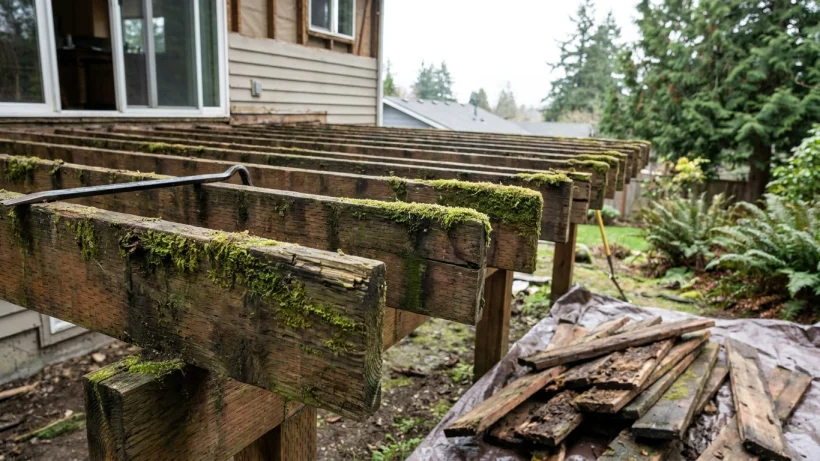
Western Washington experiences sustained moisture from October through late spring. Because rains are prolonged rather than brief, wood framing rarely dries completely during the winter months. The contact zone between the bottom of the deck boards and the top of the joists is especially vulnerable.
Fir needles, hemlock seeds, and organic debris frequently sift through deck gaps and lodge on top of framing members. Over time, this debris forms a damp compost layer that accelerates fungal decay and rot directly beneath the boards where homeowners cannot see it.
Quality composite decking products carry manufacturer lifespans ranging from 25 to 50 years. Fastening long-lasting composite boards to an existing frame that may only have 5 or 8 years of structural service life left is an expensive mismatch. If the framing rots prematurely, the composite boards must be unfastened and reinstalled over a newly built frame later on.
Critical Structural Checks: Is Your Frame Actually Suitable?
Before committing to a resurfacing project, the substructure requires a comprehensive physical inspection. Looking from the side or underneath is not enough; each structural component needs evaluation.
- The screwdriver test: Press a flathead screwdriver or awl into joist tops, rim boards, and the ledger board. Sound pressure-treated lumber will resist penetration, while decaying wood will feel soft, fibrous, or spongy.
- Ledger board attachment: Check the connection to the home. The ledger must have proper Z-flashing, corrosion-resistant structural lag bolts or ledger screws, and standoff spacers to prevent water from trapping against the home's exterior siding.
- Post-to-footing connections: Verify that support posts rest on concrete piers with elevated metal standoff brackets rather than sitting directly in dirt or cast in wet ground, which invites rapid bottom-up rot.
- Hardware corrosion: Examine joist hangers, angle brackets, and fasteners. The salty air near Puget Sound and moisture-laden treated wood can heavily corrode older zinc-coated or galvanized hardware over a decade or two.
Joist Spacing Requirements: Cedar vs. Composite
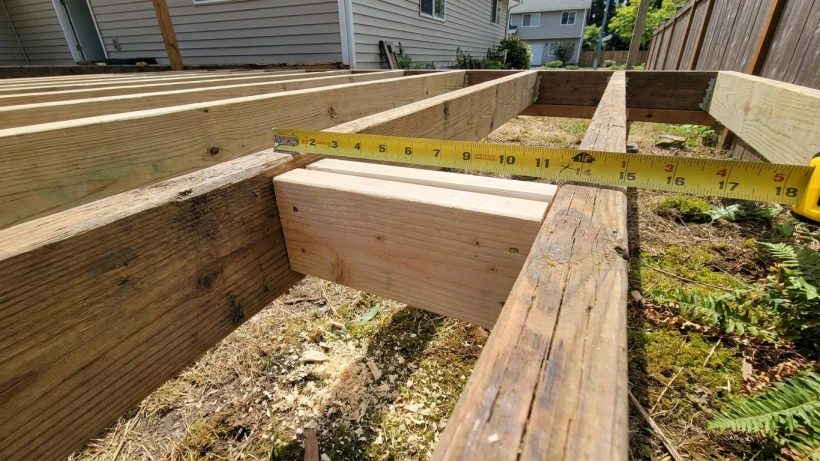
Natural wood decking like western red cedar has high natural rigidity along its grain, allowing older decks to be framed with joists spaced up to 24 inches on-center. Composite decking, manufactured from a blend of wood fibers and recycled plastics, behaves differently under load.
Composite boards are heavier and more flexible than wood. Most composite manufacturers specify a maximum joist spacing of 16 inches on-center for straight 90-degree layouts. If you intend to install composite decking on a 45-degree diagonal pattern, spacing must typically tighten to 12 inches on-center to prevent excessive board deflection.
If composite boards are installed over 24-inch joist spacing, the deck surface will feel springy underfoot and can bow permanently over warm summer days. When joist spacing exceeds manufacturer requirements, carpenters must sister new framing or install intermediate joists to achieve a 12- or 16-inch layout before surface installation begins.
Essential Upgrades If You Keep the Existing Frame
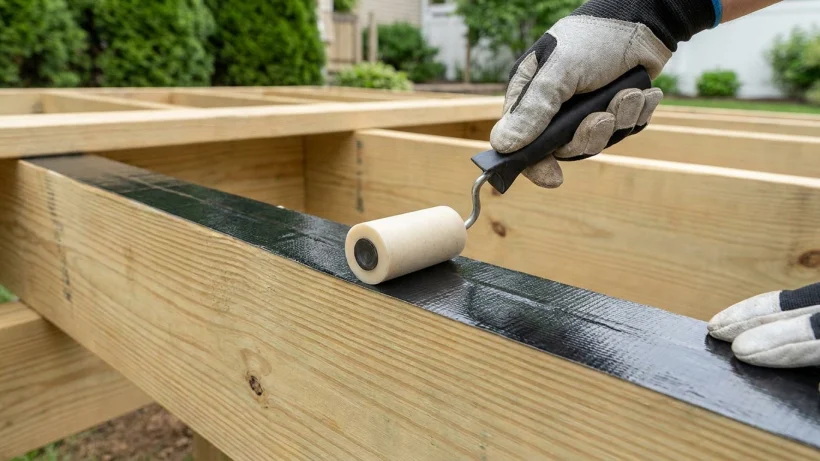
If an inspection confirms the frame is structurally sound, specific upgrades help protect the older framing so its remaining lifespan aligns with the new composite surface.
- Apply butyl joist tape: Self-adhering butyl flashing tape placed across the top of all joists, beams, and rim joists seals old nail holes and creates a waterproof barrier against future moisture.
- Plane and level uneven framing: Older frames settle and twist over time. Shaving down high joists and shimming low points ensures the new composite surface remains flat and uniform.
- Update railing post blocking: Modern building codes require secure internal blocking to prevent railing post wobble. Older framing rarely features the lateral blocking required for code-compliant composite post mounts.
- Improve sub-deck ventilation: Low-clearance decks common in Puget Sound split-level designs need clear space below for cross-ventilation. Clearing debris and soil beneath the frame helps prevent humidity buildup.
When a Complete Rebuild Is the Smarter Investment
Resurfacing an existing frame is not always the best financial or practical decision. In many cases, starting fresh with a new pressure-treated frame yields better long-term performance and lower cost per year of service.
- The frame is 15 to 20 years old: Pressure-treated lumber exposed to Western Washington rain for two decades is usually approaching the end of its useful structural life.
- Widespread structural rot: When rot has reached ledger boards, carrying beams, or support posts, localized repairs become piecemeal and expensive.
- Non-compliant foundation footings: Older decks frequently rest on shallow concrete blocks, undersized pads, or unanchored framing that does not meet current frost depth or lateral load requirements.
- Layout changes: If you plan to expand the deck footprint, add heavy planters, integrate stairs in a new location, or support a future covered patio roof, a newly engineered frame is required.
A qualified contractor can assess your framing condition, check joist spacing, and help you determine whether resurfacing or a complete rebuild will deliver the best return for your home.