Composite vs wood: which deck lasts longest in Western WA rain?
Composite decking often requires less surface maintenance than wood, but the lifespan of a Western Washington deck depends on more than its boards. Drainage, ventilation, framing, installation, and upkeep all matter.
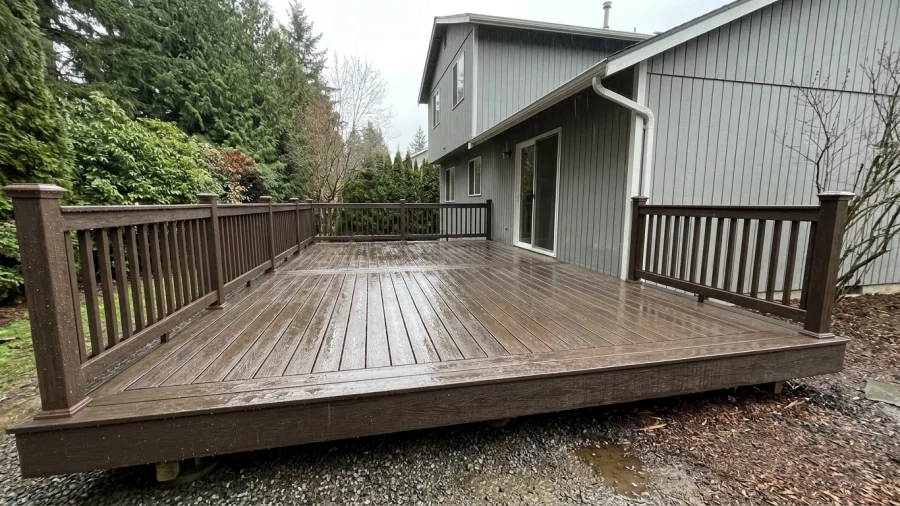
If you are planning a deck in Western Washington, rain is an important part of the composite-versus-wood decision. The most useful comparison is not just how long the boards might last, but how well the entire deck will handle repeated wetting and slow drying.
The short answer: which decking usually lasts longer?
Composite boards often have an advantage when the goal is to reduce routine surface maintenance. They generally avoid wood-board problems such as rot and splintering. That does not guarantee a longer life for the whole deck: framing, posts, connections, and the attachment to the house may still be wood and still need protection from moisture.
There is no single dependable lifespan for either option. Product type, exposure, installation, and upkeep all affect the result. A deck that drains and dries well can perform better than one built with premium boards over poorly detailed framing.
How Western Washington rain affects a deck
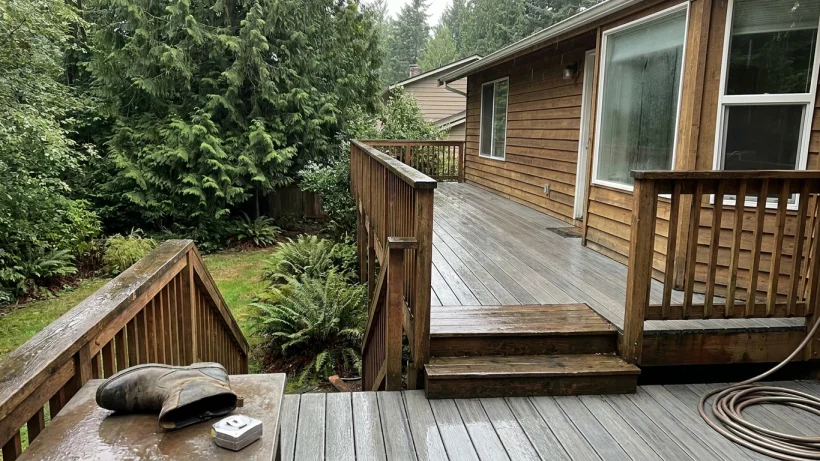
Frequent rain is only part of the challenge. Shaded, north-facing, or tree-covered decks can stay damp long after an open deck dries. Leaves and needles may collect between boards or against the house, holding moisture where it can expose weaknesses in flashing, drainage, and ventilation. Repeated wetting and slow drying can also contribute to wood decay.
Both composite and wood can collect grime or algae that makes the surface slippery. Cleaning needs depend on the product and the site. Rain that drains away is different from water that stands on boards or stays trapped against framing; details that allow water to leave and materials to dry matter with either choice.
Composite decking: lower board maintenance, not maintenance-free
Composite is a manufactured decking product typically chosen to reduce tasks such as staining or sealing the boards. Products differ in composition, surface design, and care requirements, so check the documentation for the specific line rather than assuming all composite decking performs alike.
Composite surfaces still collect dirt, pollen, and algae and need cleaning according to the manufacturer's instructions. Heat underfoot, fading, scratching, and overall appearance can vary by product, color, and exposure. Compare samples in outdoor light, and remember that composite boards do not remove the need to inspect the framing and connections below them.
Wood decking: material choice and upkeep shape its service life
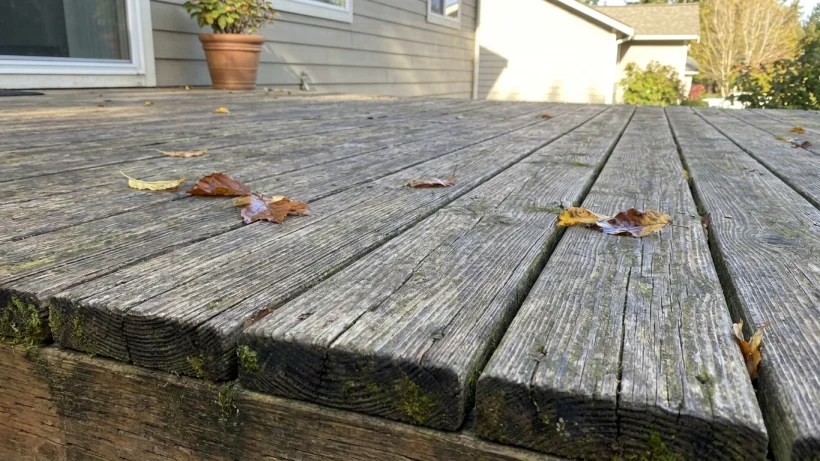
Wood is not one uniform option. Pressure-treated lumber and naturally durable species differ in appearance, characteristics, and care needs. With any wood deck, moisture management and consistent upkeep help keep the boards usable.
Wood may need periodic cleaning and, depending on the selected lumber and finish, staining or sealing to manage weathering. Checks, splinters, discoloration, and decay are possible, particularly where boards stay damp or water is trapped. Follow the lumber and finish manufacturers' instructions rather than applying one maintenance schedule to every wood deck.
The parts beneath the boards can determine the deck’s real lifespan
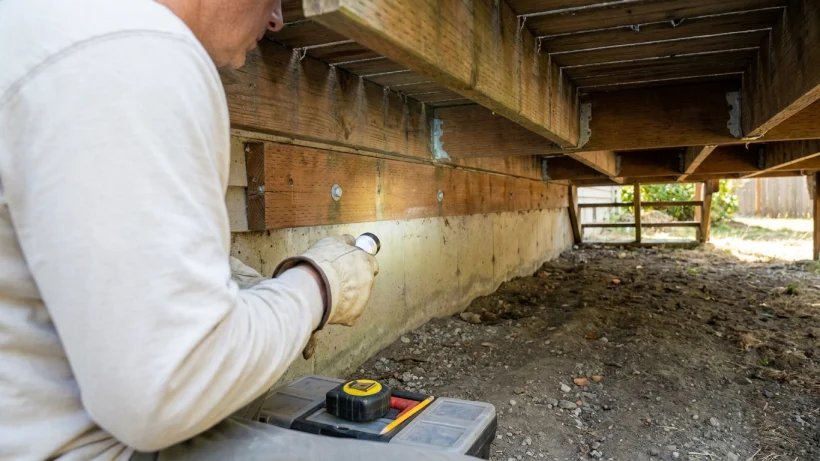
Deck boards are the most visible component, but the framing, posts, connectors, fasteners, and attachment details support the structure. Composite boards are commonly installed over a separate frame, so it is worth understanding what that frame is made from, its condition, and how it will be protected.
Water-management details deserve attention: drainage between boards, appropriate clearance from soil and siding, ventilation beneath the deck, and careful flashing where it meets the house. If an existing deck shows signs of age or moisture damage, evaluate its structure before assuming new surface boards will solve the problem.
Compare the trade-offs before choosing a material
Consider the boards and the supporting structure together, rather than choosing by expected board lifespan alone:
- Upkeep: Composite generally reduces routine board finishing; wood care depends on the lumber, finish, and exposure.
- Moisture: Composite boards resist some wood-board problems, but trapped water can still affect the frame and connections beneath either surface.
- Appearance: Wood offers natural grain and weathering; composite offers manufactured colors and textures that vary by product.
- Comfort underfoot: Surface feel and heat can differ, especially on exposed decks. Compare actual samples outdoors.
- Supporting frame: Confirm its material, condition, and scope of work before comparing board options.
For a specific product, ask how the boards will be spaced and fastened, what ventilation is planned, and what cleaning guidance applies. When comparing written estimates, check that they use the same assumptions for framing, railings, stairs, and removal of the existing deck. Those scope differences can matter as much as the board selection.
A practical way to decide for your home
Composite may be a good fit if you want less frequent surface finishing and are comfortable comparing product-specific appearance and care needs. Wood may be a better fit if you value its natural character and are prepared to inspect and maintain the selected species and finish.
Before settling on boards, consider how much shade the site gets, where water will drain, whether air can circulate below the deck, the condition of its frame, and how you plan to use the space. A clear project scope should identify the material specifications, framing work, moisture-management details, and maintenance guidance for the products being considered.