Deck Drainage and Flashing: Moss Prevention for the Pacific Northwest
Moss on a deck often points to surfaces that stay damp. Learn how drainage, ledger flashing, airflow, and routine care help manage moisture around a Western Washington deck.
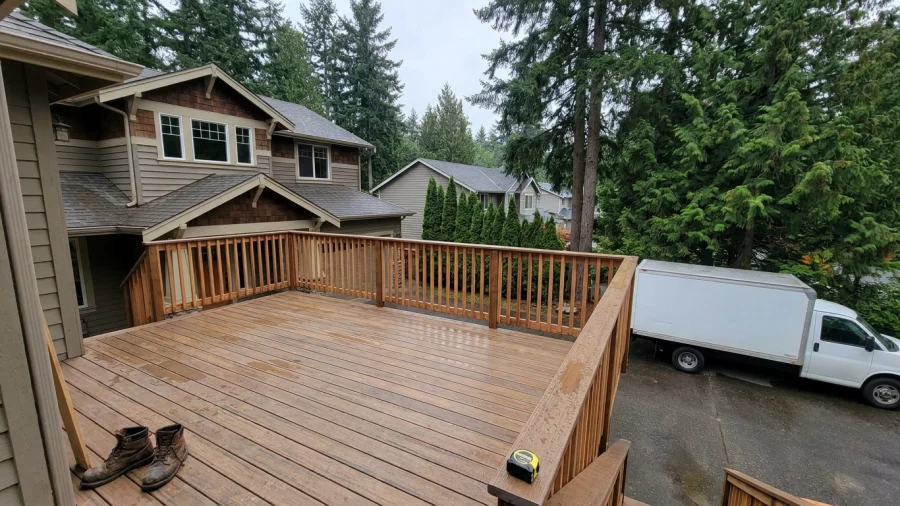
In Western Washington, a deck can stay wet well after the rain stops. When moss keeps returning, the useful question is not only how to clean it, but why that area takes so long to dry. Deck drainage and flashing address different parts of the moisture path: drainage helps move water away, while flashing helps protect the connection to the house.
Why decks stay damp in the Pacific Northwest
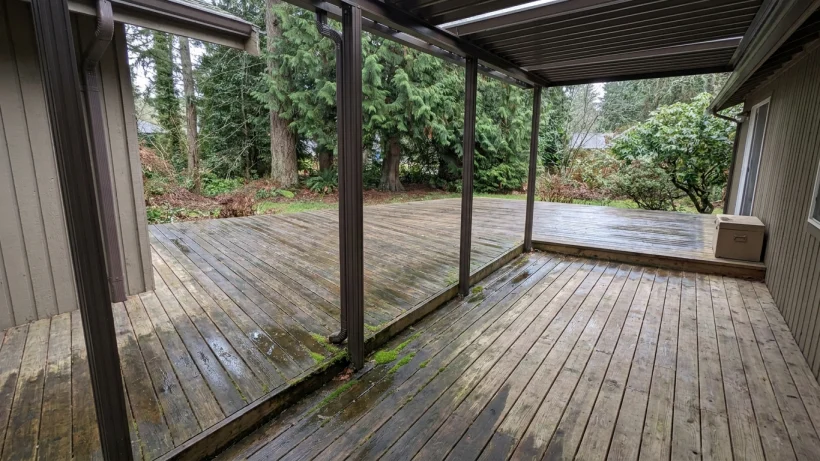
Frequent rain, north-facing exposure, nearby evergreens, and shade from a roof or fence can limit sun and airflow. Covered or enclosed areas beneath a deck may dry slowly too. Moss is more likely where moisture persists, but even a well-drained deck may develop moss in a shaded Puget Sound yard.
Notice where the dampness occurs. Wet boards after a storm are different from water collecting beneath the deck or repeatedly reaching the wall. Deck material, board spacing, layout, maintenance, and site conditions all affect how quickly surfaces dry.
Start with where the water goes
Trace rainwater from the deck surface through board gaps or a drainage system, then to the ground or an outlet. Look for puddles, debris-filled gaps, persistently wet spots, and drips concentrated at the house or deck perimeter. A wet spot alone does not prove structural damage, but a recurring pattern is worth understanding.
Water may also arrive from a downspout, roof edge, sprinkler, or ground that slopes toward the deck. The goal is to direct runoff away from the home without concentrating it where it creates a problem elsewhere, including on neighboring property. Photos taken after several rainy days can make the pattern easier to explain during an assessment.
Deck drainage options depend on the deck design
On an open-board deck, rain normally passes through the gaps between boards. Leaves and needles can narrow those gaps and hold moisture against the decking. A covered deck may receive less direct rain, but wind-driven rain and runoff from nearby surfaces can still reach it.
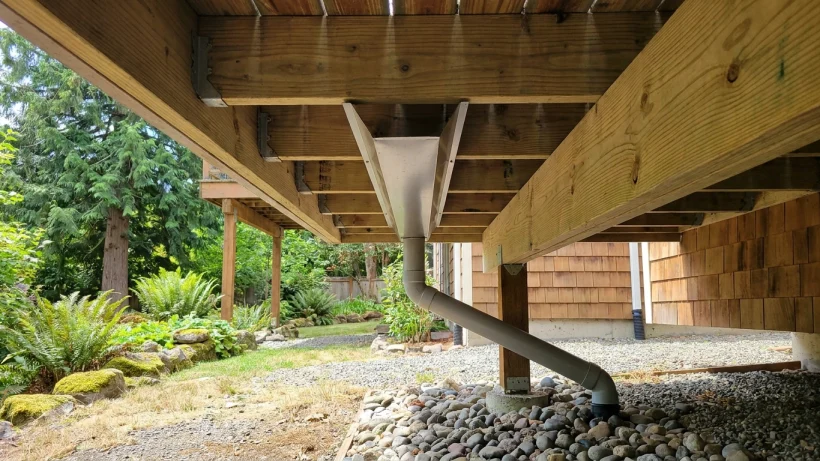
Under-deck drainage products collect water below the deck surface and direct it toward an outlet, which can help keep the space underneath drier. They still need a planned discharge route and access for cleaning. Deck height, joist layout, attachment details, and existing conditions determine what may fit. If an outlet blocks or water becomes trapped around framing, the system may create the damp conditions it was meant to reduce.
Why ledger flashing matters where the deck meets the house
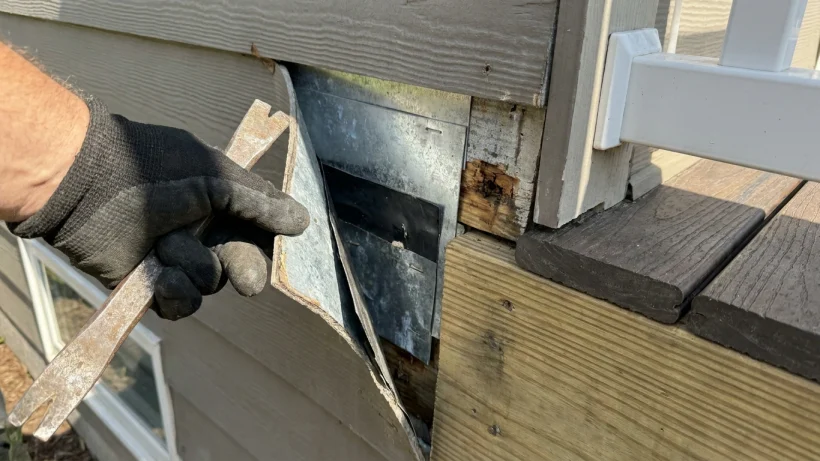
The ledger is the structural member that attaches a deck to the house. At that connection, flashing helps direct water away from the joint and should work with the wall's weather barrier and other drainage layers. The appropriate detail depends on the siding, wall assembly, and existing deck construction; a bead of surface caulk is not a substitute for an integrated flashing detail.
Recurring dampness or staining near the connection, soft or deteriorated material, or water appearing indoors nearby deserves attention. Much of the connection may be concealed. If damage or deck movement is suspected, a qualified professional may need to evaluate it rather than relying on what is visible from the surface.
Reduce moss by helping the deck dry
Clear leaves and needles from board gaps, corners, and drainage outlets so water has a path through. Where practical, trim vegetation enough to improve light and airflow while keeping the planting and privacy you value. These steps address conditions that favor moss rather than just removing what is visible.
Choose cleaners and cleaning methods suited to the deck material, and check manufacturer guidance before using equipment or treatments. Aggressive pressure washing can damage some wood and composite surfaces. If moss returns quickly in the same spot, check for shade, standing water, a blocked outlet, or another persistent moisture source.
A homeowner inspection checklist after rainy weather
A short visual check after rain can show whether the same areas repeatedly stay wet. Observe only from safe, accessible locations.
- Note where water pools, how long surfaces remain wet, and whether runoff moves toward the house.
- Look for debris in board gaps and accessible outlets; check whether downspouts or runoff leave water beside the foundation.
- From a safe position, look for recurring moisture signs near the ledger area and on nearby interior walls or floors.
- Photograph repeated wet spots, staining, or overflow and note when they appear.
Do not remove siding, dismantle deck components, or enter a confined or unsafe area to investigate a hidden connection. Photos and notes can help a professional focus an assessment without putting you at risk.
When drainage or flashing needs a closer assessment
Cleaning may be enough for occasional debris buildup. Persistent water intrusion, unexplained staining, soft or visibly deteriorated material, or a deck that appears to move where it meets the house calls for a closer assessment. The source may involve more than one part of the deck, so a contractor may need to review the surface, drainage route, ledger, and adjoining wall together.
When comparing proposed work, ask which water path it addresses, where collected water will discharge, and how any flashing will coordinate with existing siding and wall layers. A clear written scope should distinguish planned drainage work, flashing work, and repairs that may depend on conditions discovered during inspection.
Plan for drainage as part of the whole deck
Drainage decisions work best alongside the deck layout, material choice, and intended use of the space below. Consider tree cover, shade, roof runoff, ground slope, and whether drainage channels and outlets will remain accessible for cleaning. Where the deck meets the house, plan the connection with the siding and wall's water-management layers rather than treating it as a separate detail.
The practical goal is to move water away from vulnerable areas and give the deck a chance to dry. Western Washington exposure and regular upkeep will still influence how often moss appears.