Deck Lighting and Electrical Safety in Puget Sound Homes
A useful deck lighting plan starts with safe movement and accounts for Puget Sound rain and moisture. Learn where to place lights, what to ask about outdoor components, and when to involve an electrician.
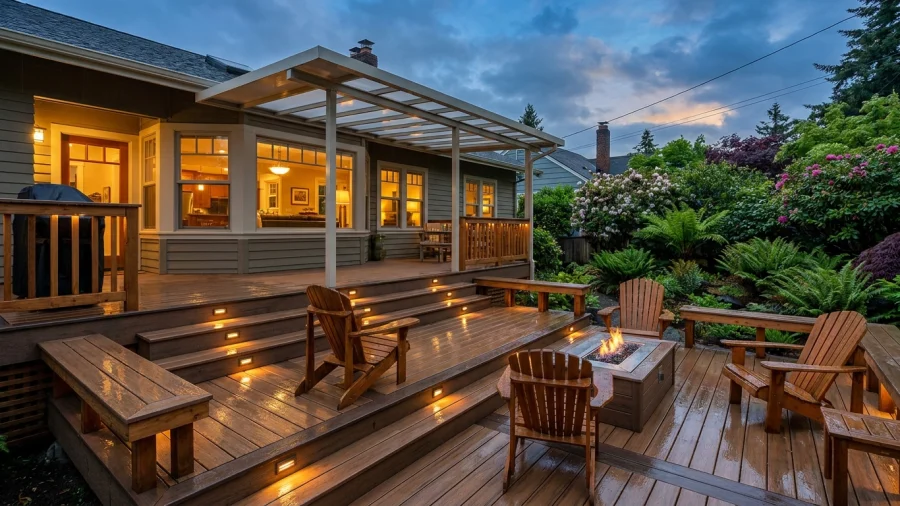
Deck lighting can make evening trips down the stairs easier and extend the hours you use your outdoor space. In Western Washington, a good plan also accounts for rain, persistent dampness, and the need to maintain fixtures and connections over time.
Why deck lighting needs a Puget Sound plan
Frequent rain, shaded areas, and long winter evenings make deck lighting more than a decorative choice. Light for walking, stairs, and doorways serves a different purpose from an accent that highlights a railing or garden. Neither a fixture’s appearance nor its power source alone tells you whether it is suitable for a particular outdoor location.
If you are building or rebuilding a deck, decide where lighting belongs before the framing, decking, and railing details are complete. That leaves room to coordinate wire routes and fixture locations without making avoidable changes later.
Start with the places people need to see
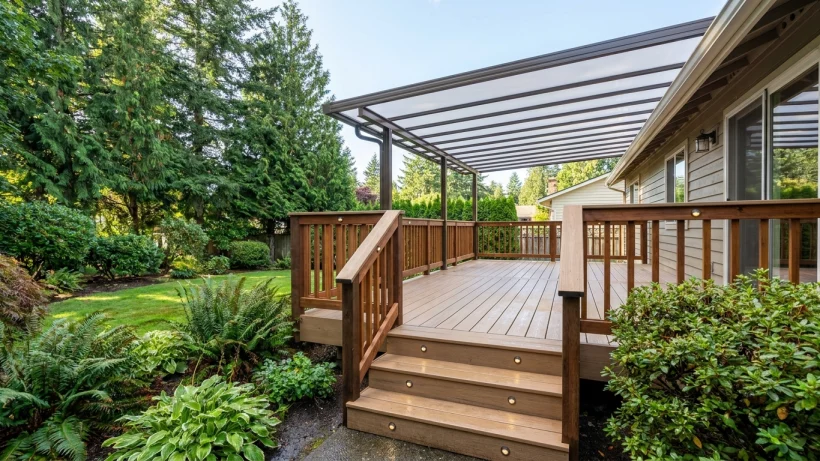
Walk through how your household uses the deck after dark. Start with stairs, changes in level, gates, doors, and the route between the house and yard. Ask others where they notice shadows or awkward transitions; those spots may not be obvious in daylight.
Aim for enough light to recognize the walking surface without shining harshly into the house or a neighbor’s windows. If you cook or serve food outside, consider separate task lighting for that area. Railing, post-cap, and under-rail lights can add useful coverage, but their placement should not interfere with handholds, cleaning, or future repairs.
Compare common deck lighting approaches
Step lights direct attention to changes in elevation. Post-cap and under-rail fixtures can mark a deck’s edges, while recessed deck lights need careful placement so they do not create glare or become difficult to clean. Wall-mounted exterior fixtures may cover a doorway or a broader work area. Compare the light each option provides, not just how it looks when switched off.
Low-voltage systems are common for deck and landscape accents, but they still need components suited to the location, correct installation, and a safe power connection. Solar fixtures avoid a wired connection at the fixture, but output depends on sun exposure, placement, battery condition, and seasonal daylight. When comparing products, ask about light output, color, glare, replaceable parts, and access for maintenance. Check manufacturer labels and instructions against the intended outdoor exposure.
Protect fixtures and connections from rain and moisture
A fixture intended for a sheltered porch may not be appropriate on an exposed deck. Choose fixtures and electrical components that the manufacturer identifies as suitable for each location. Weather resistance depends on the entire installation—including boxes, covers, connectors, seals, and drainage around them—not just the visible light.
Connections should not sit where water collects or where deck use could bury, crush, or damage them. Corrosion-resistant materials and finishes may help in damp settings, but product guidance still matters. Periodically look for cracked lenses, loose fittings, corrosion, water intrusion, or damaged wiring. Leave electrical diagnosis and repairs to a qualified professional.
Electrical safety: know when to call a professional
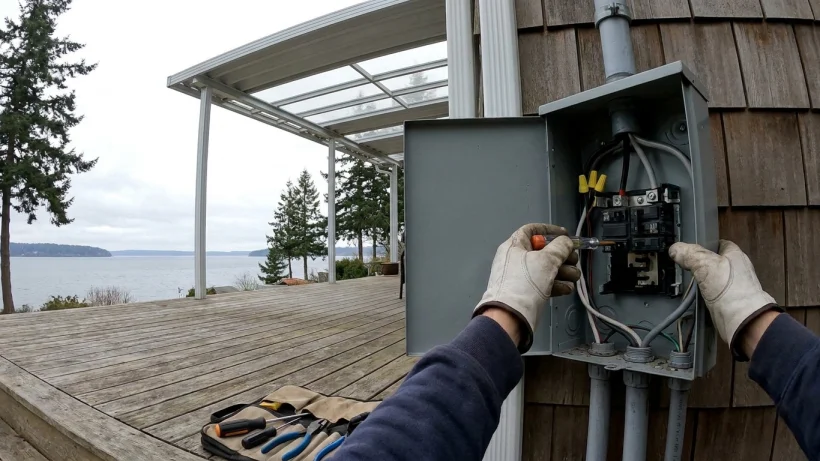
Do not work on energized wiring. Stop using a light or receptacle that shows damage, repeatedly trips a protective device, smells like burning, or appears to have taken on water. A qualified electrician should handle new line-voltage wiring, circuit additions, changes to existing outdoor circuits, and conditions you cannot confidently identify.
Outdoor receptacles and circuits may require protective measures such as GFCI protection; what applies depends on the installation and current local requirements. Before work begins, confirm permit and inspection needs with the local building department or your electrician. Do not bypass a device that trips to keep the lights working.
Coordinate lighting with deck construction and drainage
Set fixture positions, wire routes, switches, and power-source locations before decking and railing details are finalized. The deck builder and electrician should coordinate so wiring does not compromise framing, waterproofing details, drainage, or access for future repairs.
Keep fixtures out of drainage paths and avoid details that hold water against wood or other deck materials. Make sure lights can be cleaned, inspected, and replaced without dismantling major deck components. On an existing deck, have the installer assess framing and available access before assuming wiring can be concealed.
A homeowner checklist before installation
- Mark the stairs, transitions, doors, and walking routes that need functional light; list optional accent locations separately.
- Ask what manufacturer outdoor rating applies at each fixture location and how connections will be protected from moisture.
- Confirm who handles electrical work, permit and inspection questions, and coordination with the deck builder.
- Review how the lights are controlled, what routine upkeep they need, and how failed parts can be reached.
- After installation, check operation and visible fixture condition with the appropriate installer. Seek professional help for electrical concerns rather than opening or modifying wiring.