Deck Repair or Replacement in Puget Sound: How to Decide
A damaged deck board does not always mean the whole deck needs replacing. Learn how to weigh visible wear, moisture exposure, structural concerns, and project scope before deciding what work makes sense.
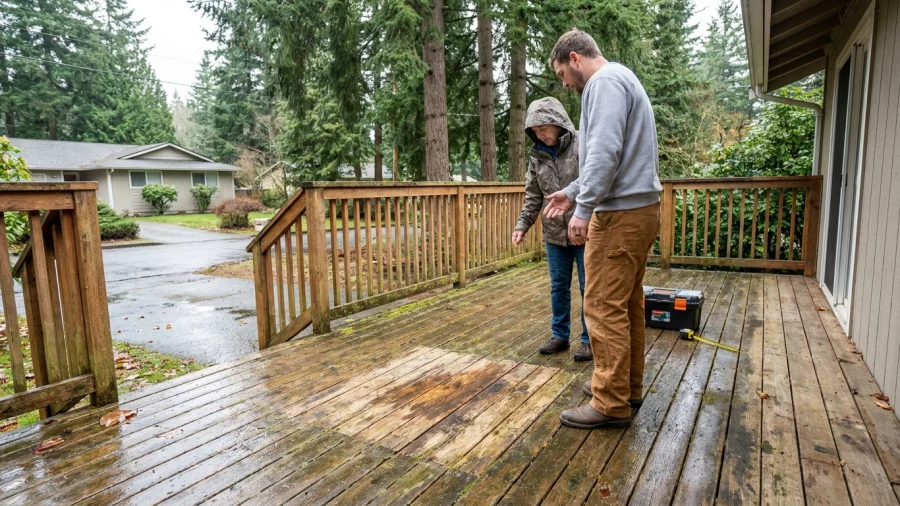
Deciding between deck repair or replacement starts with a question bigger than “Can this board be fixed?” The useful question is whether the damage is limited or whether it points to problems elsewhere in the deck. In Puget Sound, rain and slow drying make moisture exposure part of that assessment, but the deck’s actual condition—not its age or appearance alone—should guide the decision.
Start with the deck’s overall condition, not one damaged board
A cracked board or peeling finish may be a surface issue. Repeated soft spots, loose connections, or decay in several areas suggest a wider problem. Look at where damage appears and whether it is isolated or spread across boards, stairs, railings, and supports. A deck can also look worn on top while its framing remains sound—or look acceptable on top while concealed components have deteriorated.
If the deck moves unexpectedly, wood feels soft or decayed, railings are loose, or supports appear compromised, stop relying on the affected area until it has been assessed. Framing, the connection to the house, and footings cannot always be judged from the surface. Some conditions become clear only during a closer on-site inspection or after damaged material is removed.
Why Puget Sound weather can complicate deck decisions
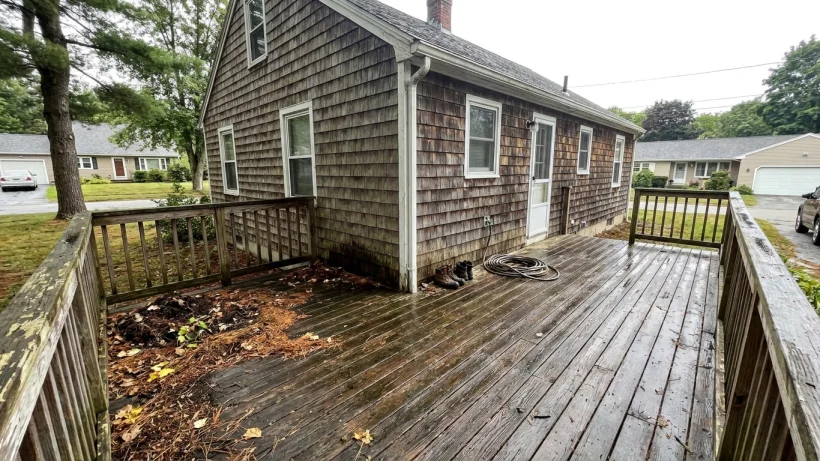
Frequent rain does not affect every deck the same way. Exposure, shade, drainage, and construction details all matter. Water that sits on boards, collects near the house, or stays trapped around connections can contribute to deterioration. North-facing sections and areas beneath trees may dry more slowly than open, sunny parts of the same deck.
Leaves and dirt can hold moisture against surfaces or block the gaps that help water drain. Routine cleaning and checking where water collects can help reveal trouble spots. If damage keeps returning in one area, ask what is causing the moisture to linger. Replacing the visible board without addressing a practical drainage or exposure issue may leave the underlying problem in place.
When a targeted repair may be a reasonable option
A focused repair may make sense when damage is limited, accessible, and surrounded by sound material. Examples include a small number of damaged deck boards, a localized stair problem, or an individual railing component. Before settling on that scope, an on-site assessment should also consider the framing and attachment points associated with the affected area.
Ask whether new materials will fit the existing deck’s dimensions and how closely they will match its appearance. A replacement board may weather differently or have different maintenance needs. The estimate should also state what the repair covers and how additional damage would be handled if it appears once work begins.
Signs a larger rebuild may deserve consideration
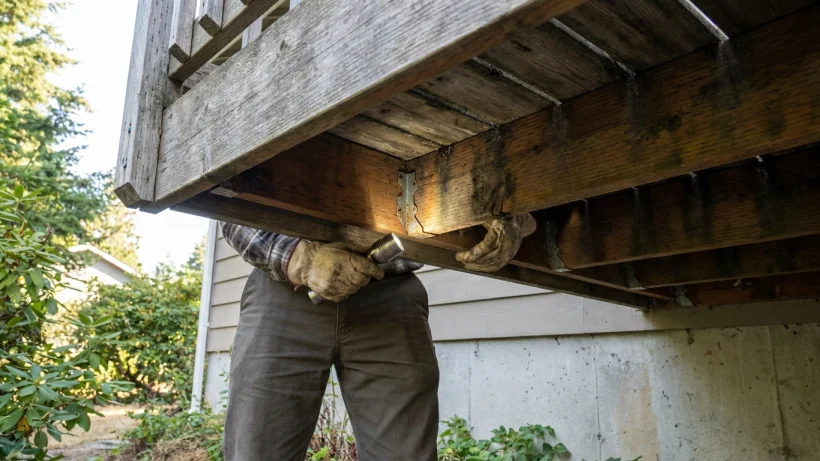
Widespread decay, repeated repairs in different areas, or deterioration in framing and supports can make patching a less complete solution. Persistent movement, multiple loose connections, or concerns across stairs and railings call for an evaluation of the deck as a whole system. No single visible symptom automatically determines whether the answer is replacement, but these patterns warrant a broader look.
A larger project may also be worth comparing if the existing layout no longer works for the household. Repairs can restore a limited area, but they may not solve a deck that is too small or arranged poorly for everyday use. Whether rebuilding is appropriate still depends on an inspection: worn boards alone do not establish the condition of concealed framing, ledger connections, or footings.
Compare the full scope, not just the repair line item
A repair proposal and a replacement proposal may cover very different work. Ask each contractor to identify the damage observed, the work area, and which structural components are included or excluded. Compare materials, demolition and disposal, stairs and railings, site access, and cleanup. A clear scope makes it easier to understand what each option would leave in place.
Ask how concealed damage would be documented and discussed before additional work proceeds. Weigh the finished deck’s expected maintenance needs and how long you want the existing layout to serve your household, not only the immediate work proposed. Permit or approval requirements can vary by location and scope, so check with the relevant local jurisdiction rather than assuming a repair or rebuild is exempt.
A homeowner checklist for the inspection and estimate
Your observations can help focus an inspection, but they cannot confirm that the structure is sound. Note concerns from a safe position; do not walk on or probe areas that feel unstable.
- Note where boards feel soft, water collects, or the deck moves, and whether concerns are more noticeable after rain.
- Take photos of visible issues from a safe position, including their location relative to stairs, railings, and the house.
- Ask which parts of the framing, connections, and supports were inspected and which could not be assessed without removing material.
- Ask whether the proposed scope is a limited repair, a structural repair, or a full replacement—and what findings could change it.
- Request a written description of materials, work areas, exclusions, cleanup, and how changes to the scope will be communicated.
A practical way to make the decision
Consider a targeted repair when the problem is limited, the surrounding structure has been assessed as sound, and the proposed work clearly addresses the affected area and any practical moisture concern. Consider substantial reconstruction or replacement when damage is widespread, structural concerns recur, or the changes you want extend beyond what a focused repair can accomplish.
If important structural areas remain concealed or the cause of damage is uncertain, a qualified on-site assessment is the soundest basis for choosing a scope. The right decision depends on the deck’s condition, how you plan to use it, and what the written proposal actually includes.