Joist Tape for Puget Sound Decks: Is the Extra Protection Worth It?
Learn how deck joist flashing tape protects your structural framing from persistent Western Washington moisture and whether the upgrade makes financial sense.
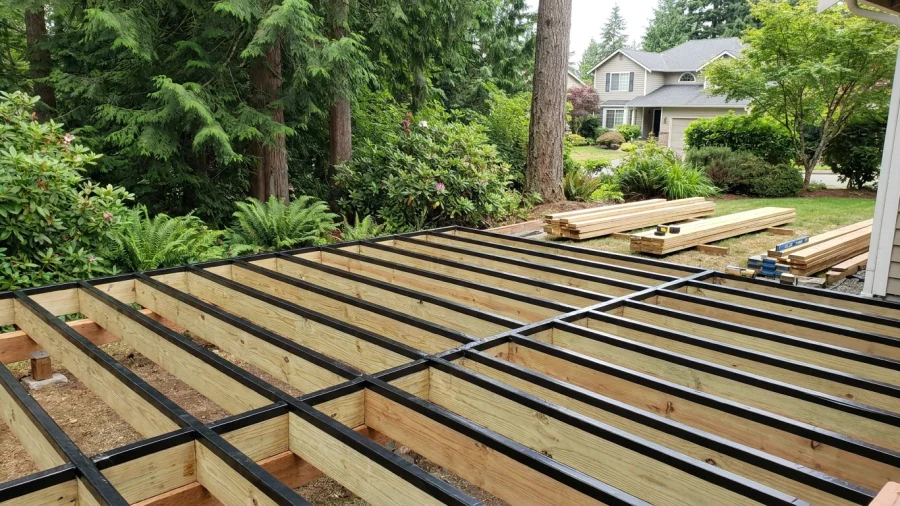
When planning a new deck or replacing surface boards in the Pacific Northwest, homeowners often focus on the decking material itself. Premium composite and PVC boards promise decades of clean appearance with minimal maintenance. However, the lifespan of an outdoor living structure depends entirely on the framing hidden beneath those deck boards.
In Western Washington, chronic wet weather presents a unique threat to standard pressure-treated lumber. Joist flashing tape has emerged as a popular recommendation during deck construction, but homeowners frequently ask whether this extra line item provides practical protection or is simply an unnecessary add-on.
Understanding the Hidden Moisture Trap in Western Washington Decks
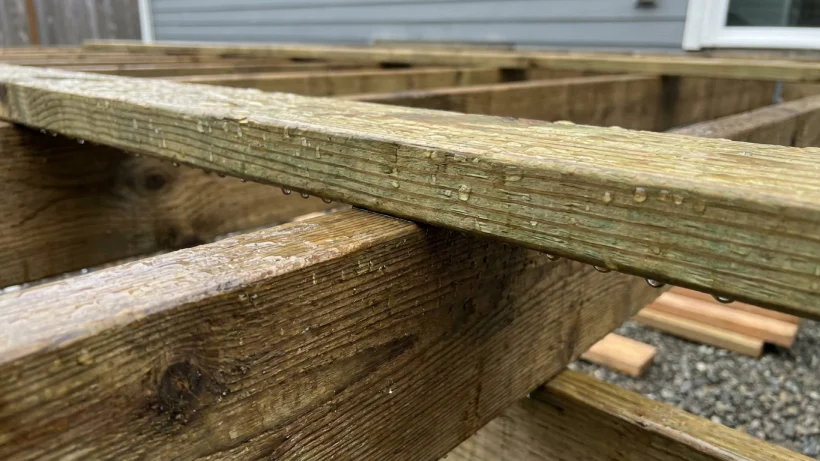
Western Washington weather is characterized by extended periods of cool, overcast drizzle from late autumn through spring. Unlike climates with brief, heavy downpours followed by intense sunshine, our maritime conditions rarely allow building assemblies to dry quickly.
On an outdoor deck, the gaps between surface boards serve as funnels. Rain, fir needles, maple seeds, and organic matter wash through these spaces and land directly on top of the horizontal joists. This debris creates a damp layer that holds moisture against the flat top surface of the wood for weeks or months at a time.
- Extended damp cycles keep lumber crowns saturated without adequate airflow for evaporation.
- Trapped organic debris between deck boards acts like a wet sponge resting on bare framing.
- Every deck screw driven through the decking creates a penetration hole that channels standing water directly into the center of the joist.
- Modern composite and PVC materials can easily last 25 to 50 years, creating an expensive problem if the structural lumber beneath them begins rotting in year 12.
Pressure-treated lumber resists fungal decay and insect damage, but treatment chemicals do not make wood completely waterproof. Over repeated wet and dry cycles, water soaks into the end grain and fastener penetrations, causing the wood fibers to soften, split, and lose their fastener-holding strength.
What Is Deck Joist Tape and How Does It Work?
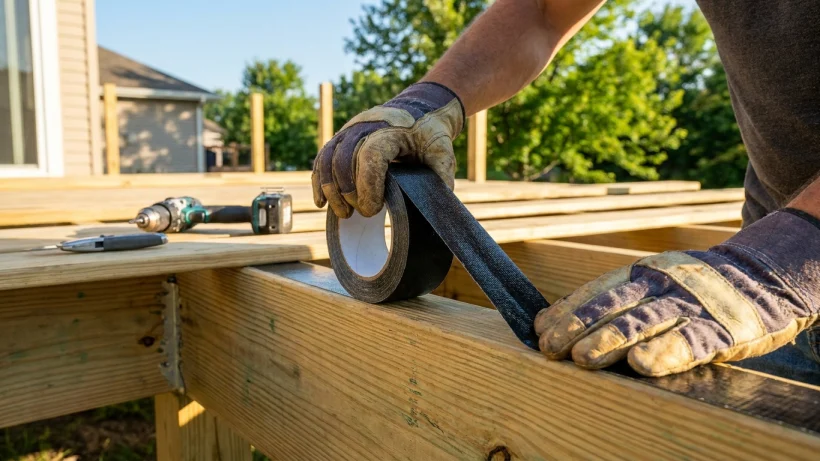
Deck joist tape is a specialized, self-adhering flashing membrane applied directly to the top edges of joists, beams, and ledgers before deck boards are secured. Its primary function is to act as a waterproof barrier between the deck surface and the wooden framing.
The formulation of the adhesive determines how effectively the tape performs in wet, variable climates:
- Butyl-based tapes: The current standard for residential deck framing. Butyl remains flexible across extreme temperature swings, bonds tenaciously to wood, and does not dry out or crack over time.
- Asphalt/bitumen-based tapes: Older flashing technology. While functional, asphalt-based options tend to become brittle in cold temperatures and can dry out faster than modern butyl or acrylic formulas.
- Acrylic-based tapes: High-performance adhesives that bond well in lower application temperatures and offer strong chemical stability, though generally at a higher material price point.
The defining advantage of quality joist tape is its self-sealing capability. When a deck screw passes through the tape, the viscous adhesive grips the shank of the fastener. This seals the entry point against water intrusion, preventing standing water on the joist from finding its way into the fastener hole.
Is the Extra Investment Worth It for Puget Sound Homeowners?
From a material and labor standpoint, joist tape accounts for a relatively minor fraction of the total deck budget. For an average-sized residential deck, the tape itself typically costs a few hundred dollars, alongside the labor required to properly measure, cut, and roll it onto the framing.
Comparing that modest upfront expense to the cost of premature framing failure highlights the value. If framing joists decay while premium deck boards remain in good condition, resolving the issue requires unscrewing or prying up the decking, rebuilding the substructure, and reinstalling or replacing the surface. In many cases, hidden fasteners cannot be cleanly removed, turning a framing repair into a complete teardown.
Critical Application Zones Beyond Standard Floor Joists
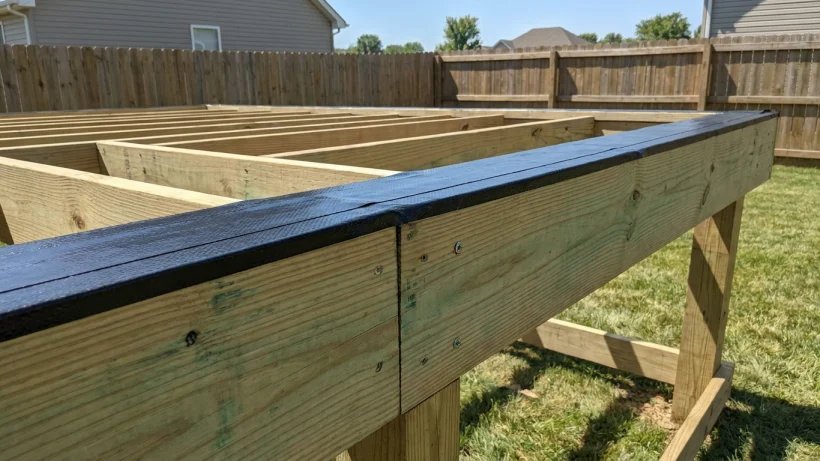
While single floor joists benefit substantially from protection, certain areas within the deck framing carry a much higher risk of moisture collection and structural damage. Applying tape to these high-risk areas is critical during construction.
Laminated Beams and Multi-Ply Framing
When two or three 2x boards are bolted together to form a main carry beam, a vertical seam exists along the entire length of the top edge. Without a waterproof cap, water continuously drains down this seam. Because airflow between tightly sandwiched boards is virtually non-existent, trapped water will rot multi-ply beams from the inside out.
Ledger Boards and Wall Interfaces
The ledger board connects the deck directly to the home's rim joist. Proper metal or vinyl Z-flashing is required by building code, but adding membrane tape over the ledger and behind the flashing adds critical secondary protection against moisture getting behind siding or into the house wall assembly.
Stair Stringers and Rim Joists
Stair stringers experience significant foot traffic and direct weather exposure. Cut stringers have exposed cross-grain cuts on every tread shelf, which absorb water rapidly. Taping stringer treads prevents water from penetrating these exposed end grains beneath the stair boards.
Best Practices for Applying Joist Tape for Maximum Longevity
Joist tape must be installed properly to deliver its intended benefits. Incorrect application can result in peeling edges or trapped air pockets that compromise performance.
- Clean, dry framing: The lumber surface should be swept clean of sawdust, dirt, and standing water. While modern adhesives can adhere to damp wood better than older products, applying tape to clean, dry lumber yields the strongest bond.
- Correct tape width: Single joists (1-1/2 inches wide) work best with tape measuring 1-5/8 to 2 inches wide, allowing a small lip on either side to shed water clear of the edges. Doubled or tripled beams require wider tape (typically 3-1/8 to 4 inches or wider) to cover the full width and seams.
- Firm pressure with a roller: Simply pressing tape down by hand often leaves micro-voids. Using a small hand roller firmly embeds the adhesive into the wood grain and eliminates air pockets.
- Watch installation temperatures: Most butyl tapes adhere best when temperatures are above 40°F. If building during a cold Western Washington winter stretch, keeping tape rolls in a warm vehicle before application ensures better initial tack.
Key Takeaways: Making the Right Call for Your Deck Project
For homeowners in Western Washington, joist tape offers practical, low-cost insurance against the Pacific Northwest's persistent rain. While not strictly mandated by building codes in every jurisdiction, it has become an industry standard practice for high-quality deck installations.
If you are investing in modern composite or capped polymer decking designed to last multiple decades, protecting the framing beneath it ensures both components reach their expected service life together. When evaluating deck proposals, look for clear specifications regarding framing protection, tape materials, and beam flashing to ensure your outdoor living space is built to handle local weather conditions.