Non-Slip Decking for Western WA: Best Choices for Rainy Seasons
Wet-weather footing depends on more than the deck material. Compare surface textures, drainage, stairs, and upkeep to plan a deck that works better through Western Washington’s rainy seasons.
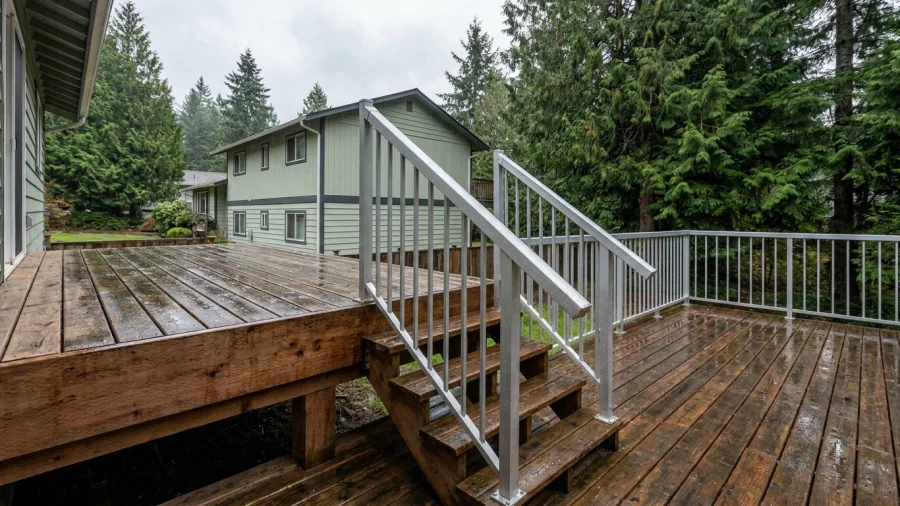
A deck can feel comfortable underfoot on a dry day and slick after a week of Western Washington rain. Choosing non-slip decking for rainy weather means looking at the specific board surface, where water and debris collect, and how the deck will be cleaned. No decking is slip-proof in every condition, but thoughtful choices can improve everyday footing.
Why decks get slippery during Western Washington’s rainy seasons
Rain keeps deck surfaces damp, while pollen, leaves, needles, and algae can form a slick layer on top. North-facing areas, decks beneath trees, and corners with limited airflow may stay wet long after open areas dry. Worn finishes or damaged surfaces can also change how a deck feels underfoot.
A board’s advertised texture does not tell the whole story when it is wet or covered with debris. Notice where people step most often—especially stairs, landings, and the transition from a door to the deck—and evaluate those spots in real conditions.
What to look for in a deck surface for wet-weather footing
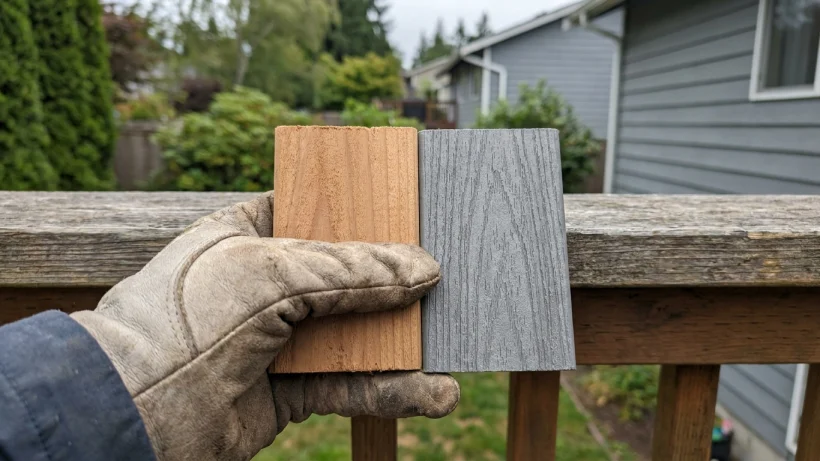
Handle physical samples of the products you are considering. Compare their tread and texture, and ask the manufacturer or installer how each surface is intended to perform and be cared for when wet. A pronounced texture may appeal to some households but feel less comfortable under bare feet; appearance and regular users’ needs matter too.
- Ask whether published traction information identifies a test method and wet or dry conditions. Results from different methods may not be directly comparable.
- Consider whether grooves or surface details trap debris and how easily the boards can be cleaned under the manufacturer’s instructions.
- Review the whole deck system, including fastening details, board edges, stair treads, and landings—not just the main deck boards.
Compare common decking materials for rainy conditions
Wood offers a natural appearance, but its footing depends in part on cleaning and surface condition. Worn finishes, splinters, and organic buildup need attention. If staining or sealing is appropriate, choose and maintain the finish according to the product guidance rather than assuming a coating will solve a traction problem.
Capped composite boards vary in cap design, texture, and care requirements. PVC boards also come in different profiles and surface finishes. Compare specific products and their wet-use guidance instead of assuming every composite or PVC board feels the same in rain.
For any material, consider tree shade, drainage, access for cleaning, barefoot comfort, and the route from the deck to stairs and walkways. No material category is universally safest; layout and upkeep remain important.
Deck design details that help manage water and trouble spots
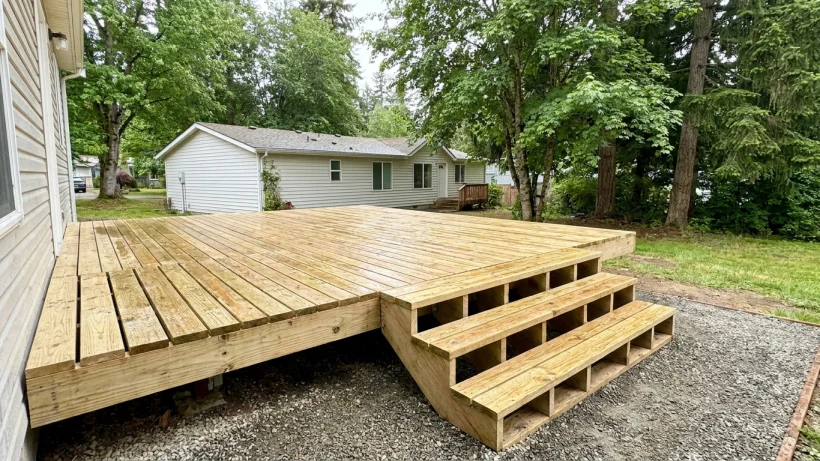
A deck should give water a path away from walking surfaces rather than allow it to pool. Board spacing and other drainage details need to follow the requirements of the selected products and deck system. At the same time, the layout should make it practical to clear leaves from board edges, tight corners, and the area where the deck meets the house.
Dense trees and tall neighboring structures can limit sun and airflow, so account for those conditions when planning the layout and maintenance access. Keep changes in elevation easy to see, particularly at doors and between deck levels. Give stairs close attention: wet leaves on a tread can make both traction and the tread edge harder to judge.
Cleaning and upkeep that can reduce slick buildup
Sweep leaves, needles, and other debris regularly during the wet season, focusing on shaded corners, landings, and stair treads. Clean surface buildup with methods and products permitted by the decking manufacturer. Pressure washing, bleach, and abrasive tools are not appropriate for every material or finish.
During routine cleaning, look for worn finishes, splinters, loose boards, raised fasteners, and places where water stands. If a deck remains slick after appropriate cleaning, look into shade, drainage, and surface condition before applying a coating that may not be approved for the product.
Ways to improve footing on existing stairs and deck areas
Start by noting exactly when and where footing feels uncertain. A stair tread that stays slick beneath a tree may need debris removal and better attention to drainage; a broad area with a deteriorating surface may call for a different repair. Keep walking routes clear of hoses, planters, and stored items, and use extra caution where surfaces remain wet.
Purpose-made traction products may be an option for some stairs or deck surfaces, but check their instructions and compatibility with the existing material first. Do not use a strip or coating to conceal loose boards or damaged stair parts. Structural concerns, persistent pooling, or widespread deterioration warrant a professional assessment.
How to compare options for a Western Washington deck project
Compare proposals as complete plans for your site, not as board selections alone. Rain exposure, tree cover, household use, and the location of stairs can all change which details deserve attention.
- Describe where the deck stays wet, where water collects, and which doors, stairs, and walkways get the most use.
- Compare physical board samples and ask for product-specific wet-surface information, cleaning instructions, and care limitations.
- Review the proposed surface, stair details, drainage approach, and expected upkeep together.
- Discuss existing conditions such as the house connection, site slope, and water beneath the deck.
- Confirm that the plan accounts for local conditions and applicable building requirements without relying on a material label as a slip-proof promise.