Puget Sound Deck Maintenance Calendar: Moss, Rot, and Rain Prevention
A season-by-season guide to keeping a Puget Sound deck cleaner, better drained, and easier to inspect. Learn how to manage moss, spot possible moisture damage, and adjust care for wood or composite decking.
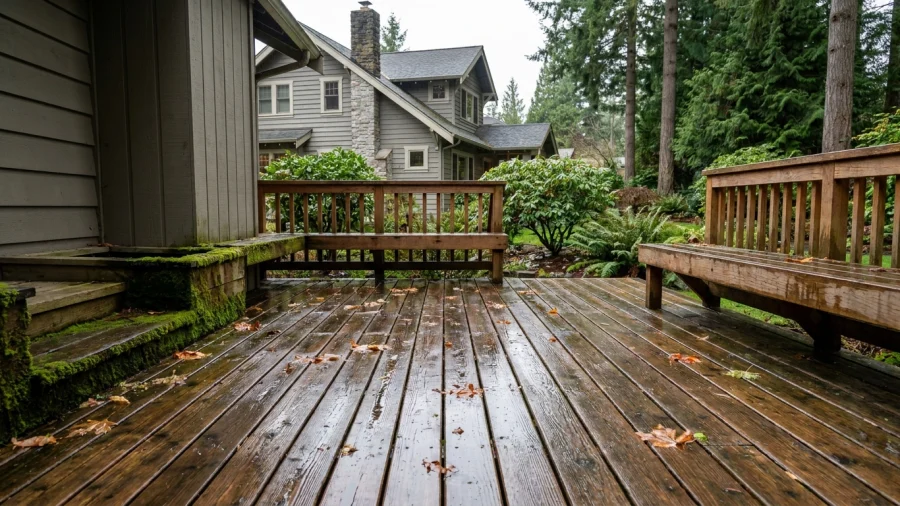
A deck in Western Washington can stay damp long after the rain stops. A manageable Puget Sound deck maintenance routine focuses on clearing debris, helping surfaces dry, and noticing changes before they become larger repairs.
Why Puget Sound Decks Need Seasonal Attention
Frequent rain, long damp stretches, and wind-blown leaves create conditions that encourage moss and slow drying. Shaded boards and areas beneath planters or furniture may remain wet longer than open sections. Leaves caught between boards or against the house can hold moisture where it is harder to see.
A brief recurring look is more useful than waiting for obvious damage. How much care your deck needs depends on its exposure, drainage, design, and materials. Use this calendar as a general guide, and follow the decking and coating manufacturers’ instructions for your specific products.
Your Puget Sound Deck Maintenance Calendar
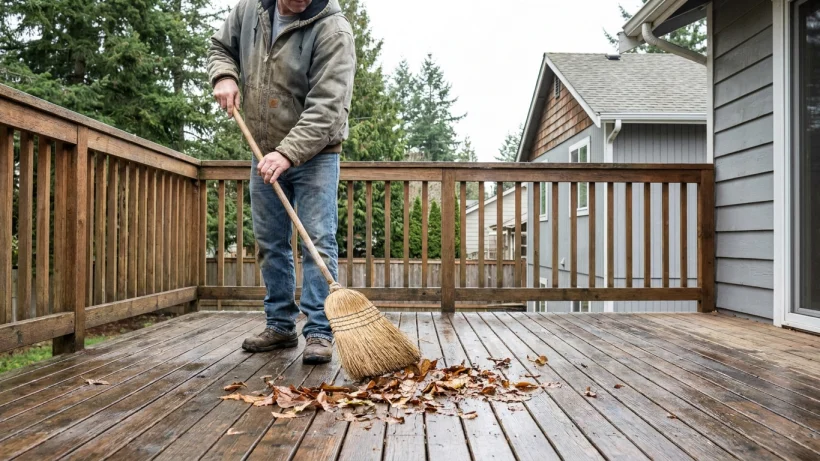
- Fall: Sweep up leaves and branches, clear drainage paths and board gaps, and move planters or stored items that trap moisture against boards or siding.
- Winter: After major wind or rain, check from a safe vantage point for debris, blocked drainage, or newly visible damage. Avoid walking on slippery or unstable areas.
- Spring: Sweep and wash using a method suitable for your deck material. Inspect boards, stairs, railings, and connections, then check whether an existing finish needs attention.
- Summer: Use suitable drier conditions for needed repairs or refinishing, following product instructions for surface preparation and weather conditions. Continue clearing debris from shaded areas.
Between seasonal tasks, make a quick visual check every month or two. Check more often after storms or during prolonged wet weather, especially where water tends to collect.
Moss and Algae: Remove Growth Without Damaging the Deck
Green growth often appears where shade, moisture, and organic debris overlap. Start by removing leaves and helping the surface dry. Where practical, trim back vegetation to improve airflow without unnecessarily sacrificing privacy or plant health.
Choose a cleaner and cleaning method approved for your deck material. Follow the label and manufacturer directions, test an inconspicuous spot first, and take precautions to keep runoff away from sensitive plantings. Aggressive pressure washing can damage wood fibers, coatings, or composite surfaces if used improperly. If growth makes the deck slippery, limit access until the surface has been cleaned and dried.
Prevent Rot by Managing Water and Checking Vulnerable Areas
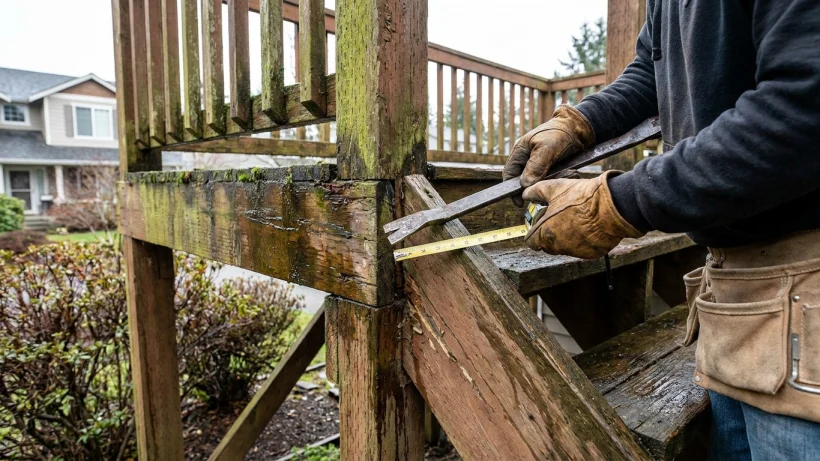
Pay particular attention to board ends, stair treads and connections, railings, the ledger area, and places where the deck meets siding or trim. Look for wood that stays soft or spongy, crumbling edges, recurring dark damp spots, loose connections, or a finish that repeatedly peels in the same place. These are reasons to look closer, not a diagnosis on their own.
Keep gaps and drainage routes free of dirt and leaves. Avoid storing items directly against the house, and move planters periodically rather than leaving boards continuously wet beneath them. Do not hide a suspected moisture problem under new stain or paint before understanding its cause. If deterioration appears near structural connections or a board or stair feels unstable, keep people off the affected area and arrange an appropriate inspection.
Adjust Care for Wood and Composite Decking
Wood decking may need periodic cleaning and a protective finish, but the right timing depends on the wood, sun and rain exposure, existing coating, and finish instructions. Composite decking also needs debris removal and suitable cleaning, particularly in shaded spots where moisture and surface growth linger. Neither material makes the deck maintenance-free.
The visible boards are only part of the deck. Check stairs, railings, fasteners, framing where visible, and drainage regardless of board material. Consult the decking manufacturer’s care guidance before choosing cleaners, tools, or coatings.
A Simple Inspection Routine and When to Get Help
- Sweep the walking surface and clear accessible gaps and drainage areas.
- Look for loose boards, exposed or loose fasteners, and movement in railings or stairs without putting weight on a questionable area.
- Note where moss returns, where water lingers after rain, and which areas appear to deteriorate faster than others.
- Take occasional photos of the same spots to track changes; photos do not replace an inspection.
Suspected structural rot, noticeable movement, unstable stairs or railings, and persistent moisture where the deck meets the house warrant an appropriate professional assessment rather than another round of cleaning. This calendar supports preventive care, but it cannot prevent all weathering or eliminate the need for repairs.