Spotting Hidden Deck Rot: Moisture Signals WA Homeowners Should Check
Rain and shade can leave parts of a deck damp long after its surface looks dry. Learn which moisture clues to watch for, where to look, and when a deck needs a closer inspection.
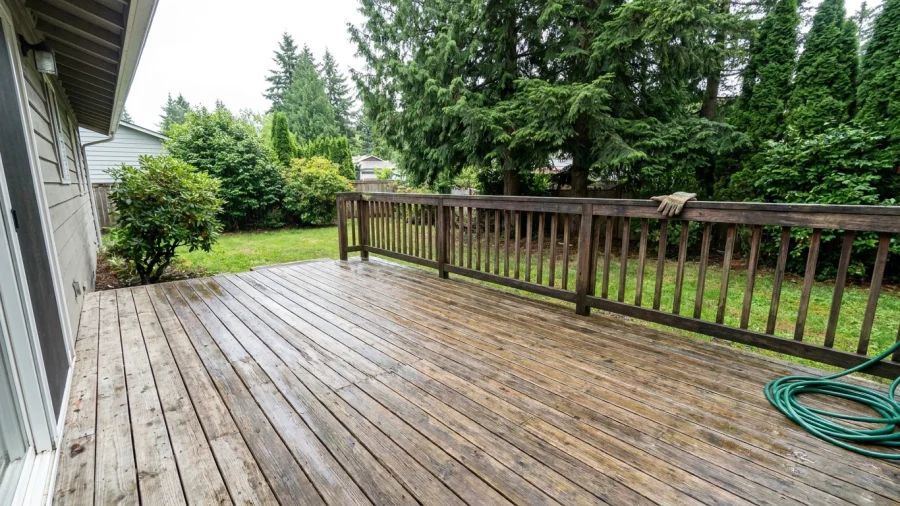
A deck can look weathered without being rotten, and it can look sound on top while moisture affects framing below. For Western Washington homeowners, the most useful approach is to notice where water lingers, record changes, and treat movement or damaged supports as safety concerns rather than trying to diagnose the structure by sight alone.
Why deck rot can stay out of sight in Washington
Wood decay develops when wood stays damp over time; one rainy day or a gray, weathered surface does not establish rot. Frequent rain, shade, dense landscaping, trapped leaves, and limited airflow can slow drying around Western Washington decks. Water may linger at connections or beneath decking even after the walking surface dries.
Paint, stain, fascia boards, and trim can also hide changes in the wood behind them. That is why it helps to consider the whole deck assembly, including its supports and attachment to the house, rather than judging it only by the boards underfoot.
Moisture signals to notice before you inspect closely
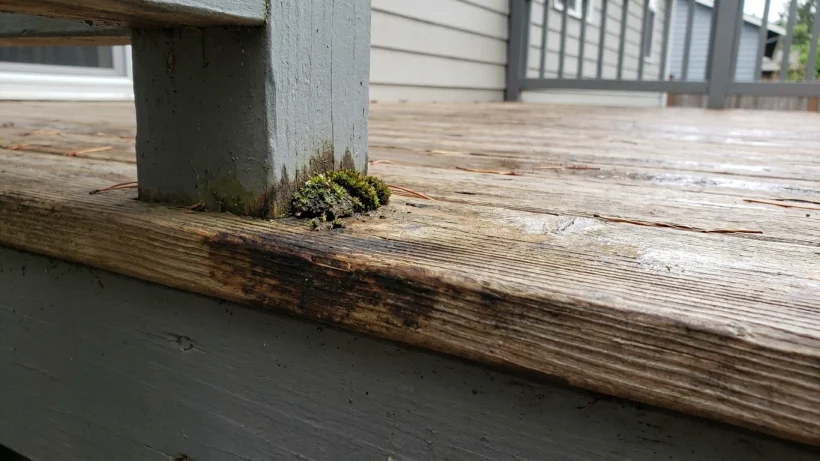
During ordinary use, look for areas that stay damp after nearby boards dry. Dark stains, peeling or blistering finish, recurring water marks, musty odors, and moss or algae in shaded corners can all point to places worth watching. None of these signs proves that wood has decayed; discoloration and coating failure have several possible causes.
Changes in how the deck feels deserve more caution. A board that feels unusually soft during normal walking, a new dip, or unexpected movement may indicate a problem beyond surface wear. Do not keep walking on a section that feels unstable to test it.
Check these deck locations where moisture can linger
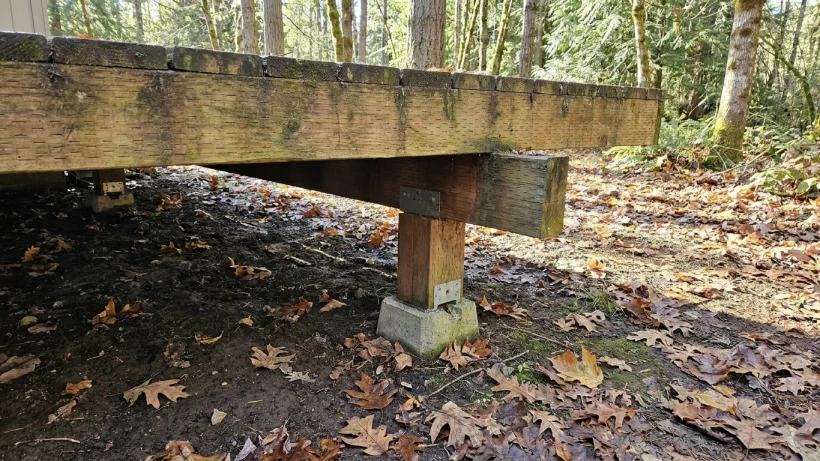
Start with places where water and debris can collect: board ends and gaps; edges beside the house; and joints near stairs, rail posts, and trim. Look for standing water, packed leaves, and finish breakdown. From a safe, accessible position, also look toward the ledger area where the deck meets the house and along the underside for staining, damp debris, or visible deterioration.
- Post bases and the ground around them: note persistently wet soil or runoff directed toward the posts.
- Beam-to-post and joist connections: look for water marks, gaps, or visibly damaged wood without disturbing the hardware.
- Stair stringers and areas beneath planters or stored items: check for trapped debris and limited airflow.
- Nearby downspouts, roof runoff, and sloped ground: notice whether they repeatedly direct water toward deck framing.
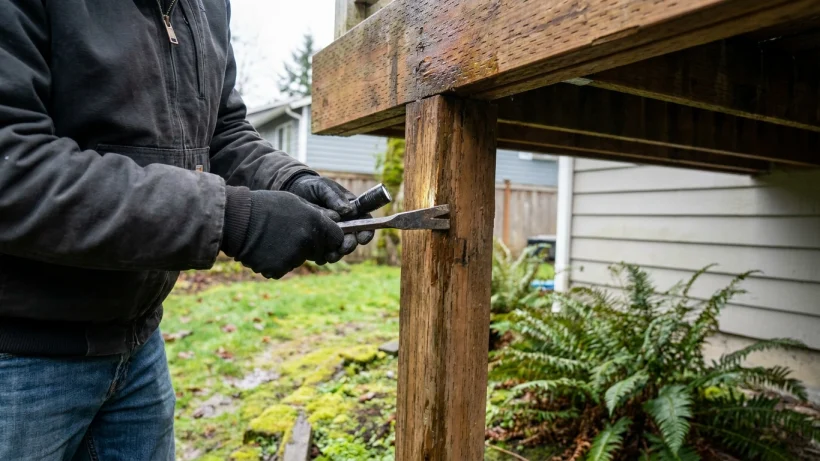
Keep the check visual and accessible. Do not climb beneath an unstable deck, remove structural components, or reach into concealed spaces to investigate.
A cautious homeowner check: what to observe and record
Choose a dry, well-lit time and walk around the perimeter before stepping onto the deck. Note drainage patterns, blocked airflow, and visible damage. If the walking surface feels stable, compare suspect boards with nearby boards to see whether a change appears isolated or extends across several areas.
Take dated photos from repeatable viewpoints, and note when the area was last wet or when you first noticed a change. Avoid forceful probing, cutting wood, removing boards, or testing a questionable spot by jumping or adding weight. Keep children and guests away from loose, sagging, or unstable sections until they have been assessed.
Hidden rot or surface weathering? Clues are not a diagnosis
Sun exposure, worn coatings, dirt, and normal aging can alter a board’s color without indicating decay. Broad, fairly even surface wear is different from localized softness, crumbling wood fibers, separation at a connection, or sagging that gets worse. Those changes warrant closer attention.
The reverse is also true: boards that look sound do not rule out damage to joists, posts, or connections below. An experienced deck professional can examine accessible framing and connections, then determine whether further investigation is needed. A visual homeowner check cannot establish structural safety or the extent of hidden damage.
When to stop using the deck and arrange an inspection
Stop using the affected area and keep others clear if the deck moves unexpectedly, a board gives way, or a support appears compromised. Noticeable sagging, loose railings, shifting posts, and separated connections are potential safety concerns that should not be treated as routine cosmetic wear.
Recurring moisture around structural connections, persistent soft areas, or deterioration that appears to be spreading also merits prompt evaluation. The repair scope depends on which components are affected and how far the damage extends; surface clues alone cannot determine whether a localized repair or broader work is needed.
Reduce the conditions that keep a deck wet
Clearing leaves and dirt from accessible gaps and corners can help water drain and make changes easier to see. Keep the underside reasonably open to airflow, and check whether downspouts or runoff repeatedly wet the framing or collect beside posts. Move planters and stored items as needed so they do not trap moisture against boards, and follow the finish manufacturer’s care guidance where applicable.
After wet weather, revisit areas that previously stayed damp or stained and compare them with your dated photos. These habits can reduce some moisture exposure and help you notice changes, but they do not replace an inspection when the deck shows structural warning signs.