Do You Need Backup Heat with a Heat Pump in Western Washington?
Learn whether modern cold-climate heat pumps require auxiliary electric heat strips or dual-fuel gas backup to keep Western Washington homes warm through winter.
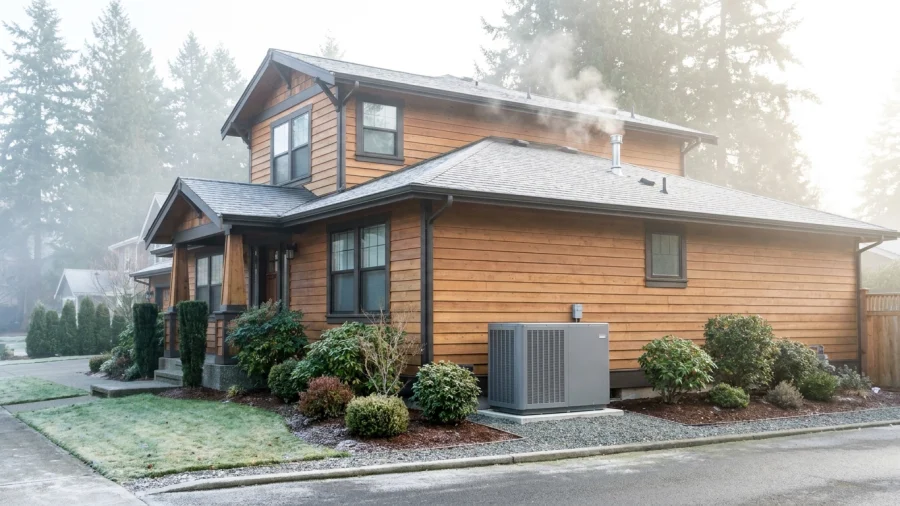
For decades, homeowners in the Pacific Northwest were told that heat pumps could not keep up when temperatures dropped below freezing. Many older systems required noisy, power-hungry electric heat strips or a separate gas furnace to prevent cold indoor drafts during winter cold snaps. As heat pumps become the standard heating and cooling solution across Western Washington, many homeowners wonder whether modern equipment still requires a dedicated backup heating source.
The short answer is that modern heat pump technology has evolved dramatically, but the need for auxiliary or backup heat depends heavily on your specific home, your microclimate, and the type of equipment installed.
Understanding Western Washington Winter Temperatures and Design Loads
To evaluate heating systems accurately, HVAC engineers use winter design temperatures rather than planning for once-in-a-generation weather events. The winter design temperature represents the outside temperature that the local climate stays above for 99 percent of the winter hours.
In the Puget Sound lowlands—including Seattle, Tacoma, Bellevue, Everett, and Olympia—winter design temperatures generally fall between 25°F and 32°F. While sub-freezing mornings are common between December and February, extended periods below 20°F are rare along the I-5 corridor.
However, Western Washington winters present unique challenges:
- High relative humidity between 35°F and 45°F increases frost accumulation on outdoor heat pump coils, triggering regular defrost cycles.
- Occasional Arctic outflow winds pushing through the Fraser River Valley or the Cascade passes can drive localized temperatures down into the teens.
- Prolonged overcast, damp conditions mean homes lose heat steadily without the benefit of passive solar warmth during the day.
Modern Cold-Climate Heat Pumps vs. Legacy Systems
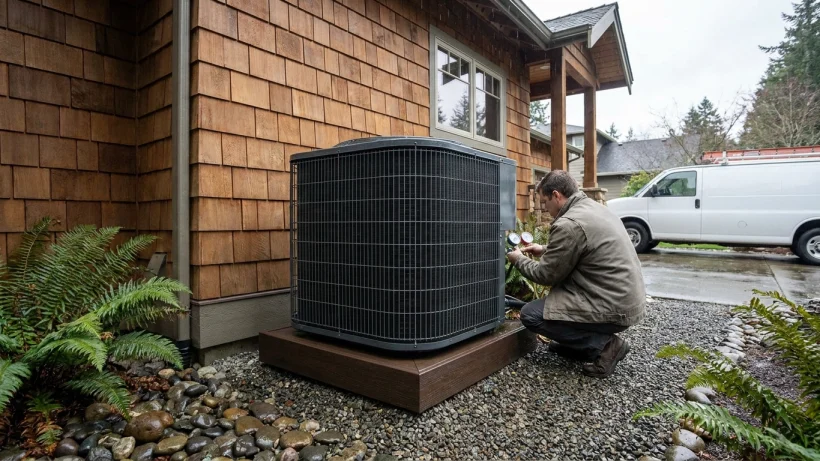
The widespread belief that heat pumps always need supplemental heat comes from the limitations of legacy single-stage equipment. Older systems used fixed-speed compressors that moved refrigerant at a single rate regardless of outdoor conditions. When temperatures dropped below 40°F, their heating capacity and efficiency dropped sharply, leaving them unable to meet the home's heating demand without electric resistance coils engaging.
Modern inverter-driven, variable-speed heat pumps operate on a completely different mechanical principle. The compressor can speed up or slow down incrementally to match the precise heat loss of the structure. Many cold-climate models maintain 100 percent of their rated heating capacity down to 5°F, and continue delivering heat at reduced capacity down to -13°F or lower.
Because standard Puget Sound winter temperatures hover between 35°F and 48°F, modern variable-speed equipment spends almost all of its operating hours directly inside its peak efficiency range. For a well-insulated home in the lowlands, a properly selected cold-climate heat pump can handle local winters entirely on its own.
The Two Main Types of Backup Heat Explained
When backup heat is incorporated into a heat pump design, it generally falls into one of two categories: electric resistance strips or a dual-fuel hybrid setup.
1. Electric Resistance Auxiliary Heat Strips
Electric heat strips are heating coils installed directly inside the indoor air handler or duct trunk line. They function like an oversized toaster element. When the outdoor temperature drops below the balance point where the heat pump can satisfy the thermostat alone, the heat strips turn on to supplement the air stream.
Heat strips also serve two specific operational functions:
- Tempering air during defrost: When the outdoor unit reverses into cooling mode to melt ice off its outdoor coil, heat strips can energize to prevent chilly air from blowing into living spaces.
- Emergency heat: If the outdoor compressor suffers a mechanical failure, the electric strips can be manually switched on at the thermostat to keep the home habitable until repairs are completed.
2. Dual-Fuel (Hybrid) Systems
A dual-fuel system pairs an electric outdoor heat pump with an indoor natural gas or propane furnace instead of an electric air handler. The system uses a programmed switchover temperature (often set between 30°F and 35°F). Above that threshold, the efficient heat pump handles heating. Below that point, the system shuts off the heat pump and runs the gas furnace, which delivers higher supply air temperatures during the coldest nights.
When Backup Heat Is Still Recommended in Western Washington
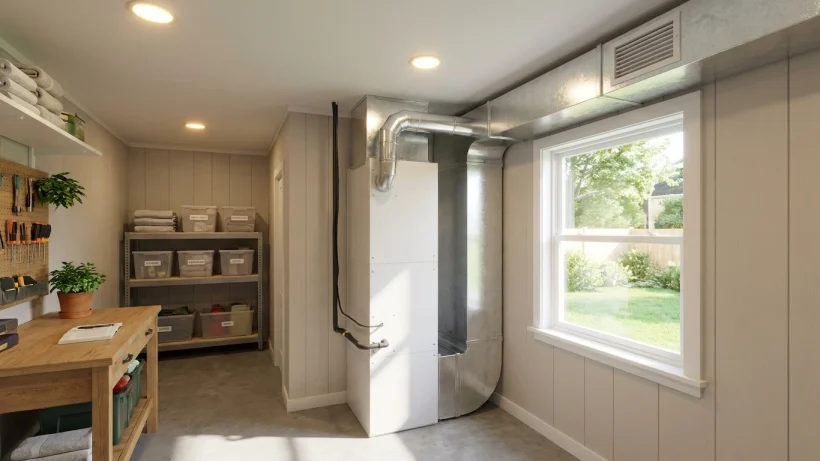
While cold-climate heat pumps are capable of handling regional temperatures, backup heating is still recommended or necessary under specific home and site conditions:
- Older homes with significant envelope leakage: Mid-century homes or pre-1980s houses with uninsulated wall cavities, drafty crawlspaces, or original single-pane aluminum windows lose heat rapidly. Supplemental heat prevents the house from losing ground during prolonged sub-freezing cold snaps.
- Foothill and river valley microclimates: Communities like North Bend, Enumclaw, Buckley, Sultan, and Gold Bar experience lower winter temperatures, heavier snow, and stronger freezing winds than coastal cities like Edmonds, Gig Harbor, or West Seattle.
- Defrost comfort sensitivity: In our damp maritime climate, heat pumps enter defrost cycles frequently during cold, wet weather. Without heat strips to temper the air for those few minutes, supply registers may discharge cooler air that some occupants find noticeable.
- Undersized electrical panels: If an older home has a 100-amp electrical panel and existing natural gas service, adding a dual-fuel hybrid heat pump allows the homeowner to avoid the cost of an immediate electrical service upgrade while still enjoying heat pump efficiency most of the year.
The Operating Cost and Electrical Trade-Offs of Backup Heat
Choosing whether to install auxiliary electric heat strips involves evaluating operating efficiency and your home's electrical capacity.
Electric resistance heat has a Coefficient of Performance (COP) of 1.0, meaning one unit of electricity produces exactly one unit of heat. By comparison, an inverter heat pump operating at 30°F often delivers a COP of 2.5 to 3.5, producing nearly three times as much heat per watt of electricity consumed. When auxiliary heat strips engage frequently, winter electricity bills rise substantially.
From an electrical infrastructure perspective, heat strips draw significant amperage:
- A typical 10 kW heat strip kit requires a dedicated 60-amp double-pole breaker.
- A larger 15 kW kit often requires two separate dedicated breakers (such as a 60-amp and a 30-amp circuit).
- On a 100-amp or 150-amp electrical panel that also powers an electric range, clothes dryer, or EV charger, adding heat strips may trigger the need for a 200-amp service panel upgrade.
How to Determine the Right Heat Pump Configuration for Your Home
Selecting the right balance between heat pump capacity and supplemental backup heat requires looking at the home as an interconnected system rather than relying on equipment tonnage rules of thumb.
- Request an accurate heat loss calculation: An HVAC contractor should perform a Manual J calculation that accounts for your home's square footage, orientation, window types, and existing insulation levels rather than guessing equipment size.
- Evaluate the building envelope: Adding blown-in attic insulation or replacing drafty single-pane windows lowers the home's total heating load. In many cases, air sealing and insulation allow you to install a smaller, fully cold-climate heat pump without needing auxiliary heat strips.
- Assess your electrical panel capacity: Check your main electrical panel to see if space and available service amperage exist for electric heat strip circuits, or whether a dual-fuel setup makes more sense.
- Review your comfort priorities: If your household prefers warm supply air during freezes or wants guaranteed emergency heating redundancy if an outdoor unit encounters a service issue, installing a sized heat strip package or maintaining a dual-fuel connection provides peace of mind.