Duct Leakage in Puget Sound Homes: Signs, Testing, and Sealing
Leaky ducts can contribute to uneven comfort and wasted heating or cooling, but the symptoms have other possible causes. Learn what to check safely, how professionals test ductwork, and what a sound repair plan may include.
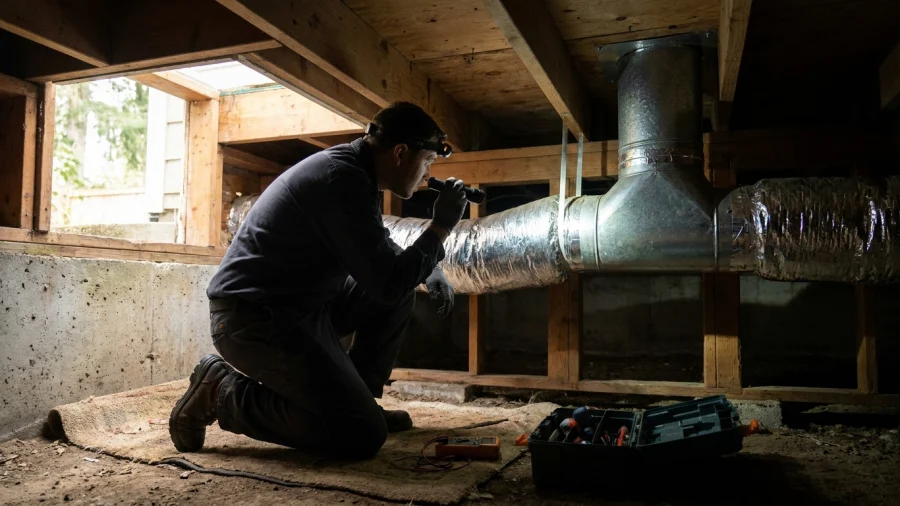
A room that never feels quite right may have an airflow problem, but that does not necessarily mean the ducts are leaking. In Puget Sound homes, a useful first step is to separate what you can observe from what requires an HVAC inspection or measured test.
Why duct leakage matters in Puget Sound homes
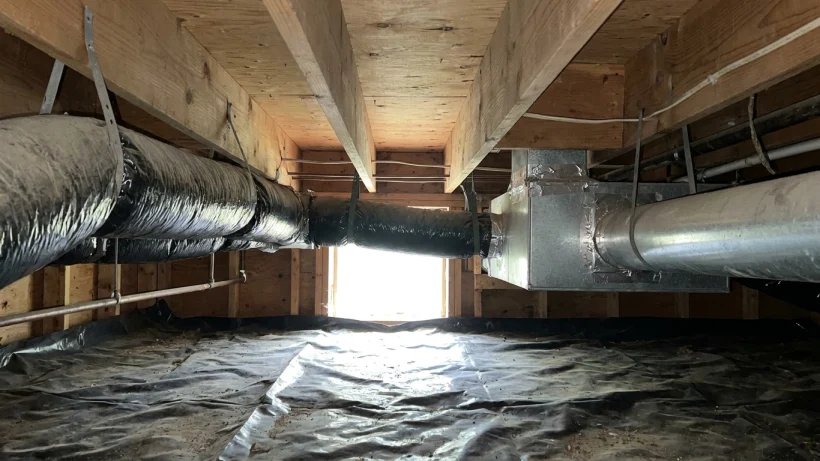
Supply ducts deliver heated or cooled air to rooms; return ducts carry air back to the HVAC system. A supply leak can release conditioned air before it reaches a room. Depending on its location and operating pressure, a return leak can draw air from an attic, crawl space, garage, or other unintended area into the system.
Duct location matters. Runs through unconditioned spaces face different temperatures than the rooms they serve, and Western Washington’s damp crawl spaces and cool seasons make damaged insulation or nearby moisture worth investigating. Wind-driven rain can also contribute to moisture problems around a home. Still, uneven temperatures or higher energy use may come from equipment condition, controls, insulation, or air leaks in the house rather than the ducts.
Common signs that may point to leaking ductwork
These signs are clues, not proof. Note whether they persist while the system is running normally and supply registers are open and unobstructed:
- One room consistently gets much less airflow or feels different from similar rooms.
- Dust or drafts appear near accessible duct joints or gaps around registers. Dust alone does not establish that a duct is leaking.
- The system runs for long periods or comfort varies by room. A dirty filter, closed damper, or poorly balanced or undersized ductwork could also be involved.
- Visible duct sections are disconnected, crushed, poorly supported, or damaged.
- A musty odor or dampness occurs near ductwork. This calls for a moisture investigation, not an assumption that sealing will solve the problem.
Simple observations homeowners can make safely
With the HVAC system operating normally, compare airflow at similar supply registers and write down which rooms are consistently different. Make sure registers are open and clear of furniture or rugs, and look for obvious gaps around their edges without removing equipment panels. Record whether symptoms occur during heating, cooling, or particular weather conditions.
If ducts are plainly visible from a safe, accessible area, look for separated joints, crushed flexible duct, loose supports, or damaged insulation. Do not enter a confined or wet crawl space to investigate. Avoid disturbing suspected mold or asbestos-containing material, and leave wiring, refrigerant lines, and combustion equipment to qualified professionals.
How HVAC professionals test for duct leakage
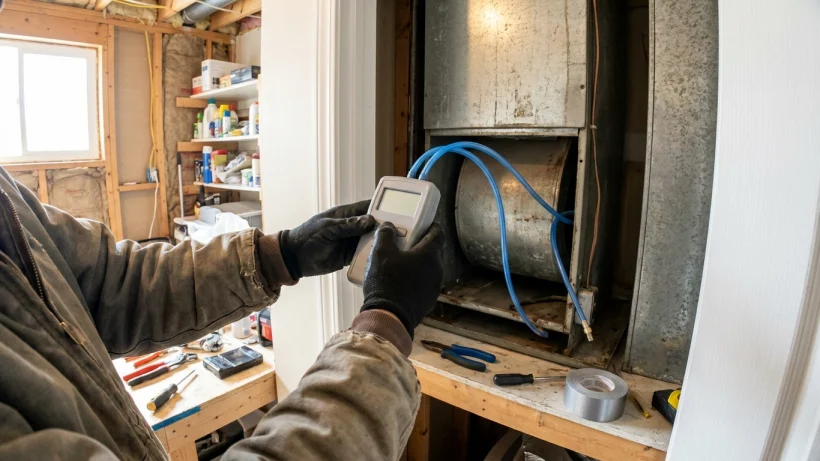
A visual inspection can reveal accessible damage, loose connections, missing insulation, and problems with duct routing or support. It cannot reliably rule out leaks in concealed runs. For a measured assessment, a technician may temporarily seal openings and use test equipment to pressurize or depressurize the ducts. The airflow needed to maintain the test pressure helps estimate leakage under those test conditions.
A technician may isolate sections or use other diagnostic tools to narrow down likely leak locations. Ask which ducts were included, how inaccessible sections were handled, and whether any result will be compared with a test after repairs. Methods and results depend on the system and setup. A whole-house blower-door test answers a different question: it measures leakage through the home’s building envelope, not ductwork alone.
What proper duct sealing and repair can involve
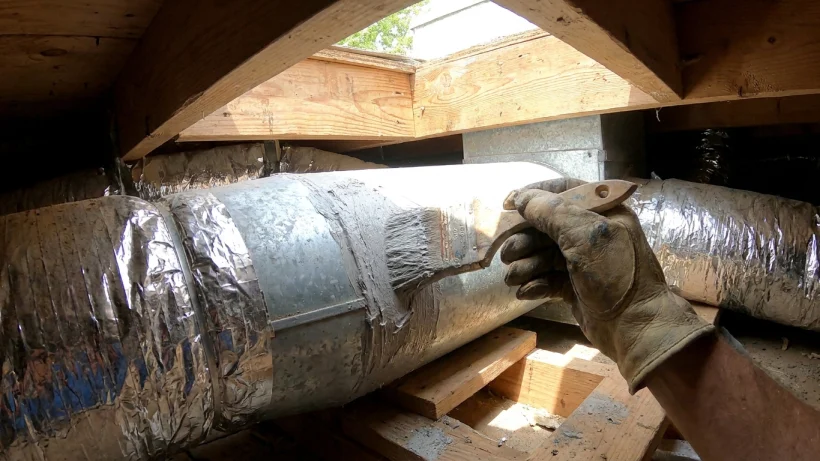
The appropriate repair depends on duct type, damage, and access. Work may involve reconnecting separated sections, securing joints, repairing damaged duct, and sealing suitable seams and connections. HVAC mastic or listed foil HVAC tape may be appropriate for certain joints; ordinary cloth-backed household duct tape is not a durable substitute for duct-sealing materials.
Flexible ducts also need proper support and routing without crushing or sharp bends. A torn or badly installed section may need repair or replacement rather than a coating over its surface. Air sealing and insulation are separate tasks: insulation on ducts in unconditioned areas should remain intact, while wet insulation calls for investigation of the moisture source before it is covered or replaced. Even well-sealed ducts will not, by themselves, correct poor airflow balancing, equipment sizing, blocked registers, or dampness.
Questions to ask before approving duct work
A clear scope should connect each proposed task to an observed condition or test result. Before approving work, consider asking:
- Which duct sections and specific problems does the work address, and which areas cannot be accessed?
- Is the recommendation based on visible damage, measured leakage, comfort symptoms, or a combination?
- Does the scope cover sealing only, or also duct repair, replacement, support, insulation, or moisture investigation?
- How will completed work be checked, and will before-and-after measurements be documented if testing is included?
- Does the written estimate separate identified repairs from optional recommendations and explain any limits on the assessment?
When to investigate duct leakage—and when to look elsewhere
Visible disconnected or damaged ducts, persistent room-to-room comfort differences, or duct runs near apparent moisture problems are reasonable grounds for a professional inspection. If a symptom is mild or recent, start with unobstructed registers and a clean, correctly fitted filter, following the equipment manufacturer’s guidance.
If an assessment finds little duct leakage, other possibilities include airflow balancing, duct design, equipment maintenance, insulation, and air leakage through the home itself. Diagnosing the cause before choosing a repair helps keep the work focused on the actual duct condition and the home’s layout.