Duct Moisture and Mold: Preventing HVAC Problems in Western Washington
Damp ductwork can have several causes, from condensation to a leak elsewhere in the home. Learn what to check safely and when to seek a closer inspection.
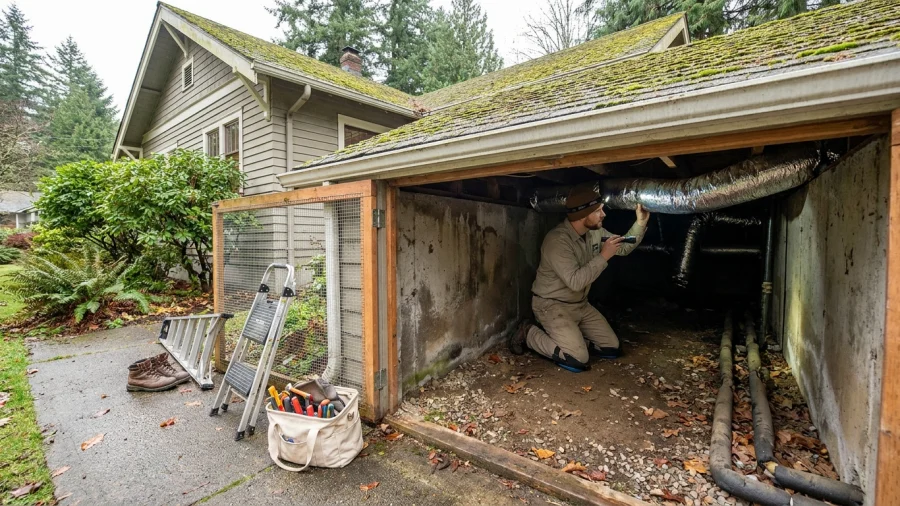
If you notice a musty smell near a vent or damp insulation around a duct, start by looking for moisture—not assuming there is mold inside the HVAC system. In Western Washington, rain, damp crawlspaces, and seasonal temperature changes can all affect ductwork. Finding where water or humid air is coming from is the first step toward a lasting fix.
Why duct moisture deserves attention in Western Washington
Many homes have ducts running through crawlspaces, attics, garages, or basements. Those spaces can be cooler or more humid than the living areas the ducts serve. Persistent dampness may corrode metal, damage duct insulation, cause odors, or create conditions that support microbial growth. That does not mean every duct system has mold: a stain or musty smell alone cannot tell you whether growth is present or where moisture began.
How moisture gets onto or into ductwork
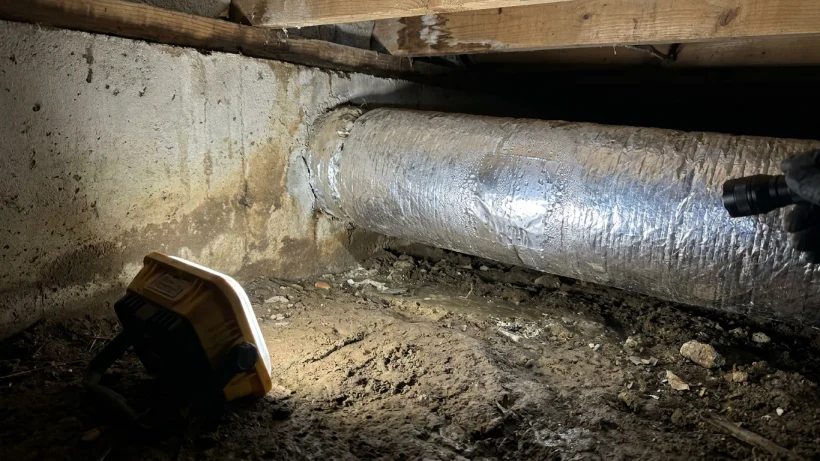
Condensation forms when humid air meets a sufficiently cool surface. It may appear on a duct exterior where insulation is missing or damaged, or where air leaks expose cool surfaces to humid air. The pattern often changes with weather and whether the system is heating or cooling.
Water can also reach ducts from a roof or plumbing leak, foundation seepage, or a damp crawlspace. The source may be well away from the HVAC equipment. Disconnected or poorly sealed ducts can draw damp attic or crawlspace air into the system. Where cooling equipment produces condensate, a blocked or leaking drain is another possibility. High indoor humidity, inadequate ventilation, or a whole-house humidifier adding too much moisture can contribute as well.
Signs homeowners can notice—and what they do not prove
- Recurring water droplets or dampness on visible duct surfaces.
- Wet, sagging, or compressed duct insulation; rust or water staining.
- A persistent musty odor that seems stronger when the HVAC system runs.
- Unexplained moisture near a register or HVAC equipment.
Dust on a register, an odor, or one discolored patch does not confirm mold inside a duct or identify a leak. Note which rooms are affected, when the sign appears, and whether the system is heating, cooling, or off. Avoid disturbing suspected growth. If it is extensive, keeps returning, or accompanies an ongoing leak, seek an appropriate professional assessment.
Safe checks to make before calling a professional
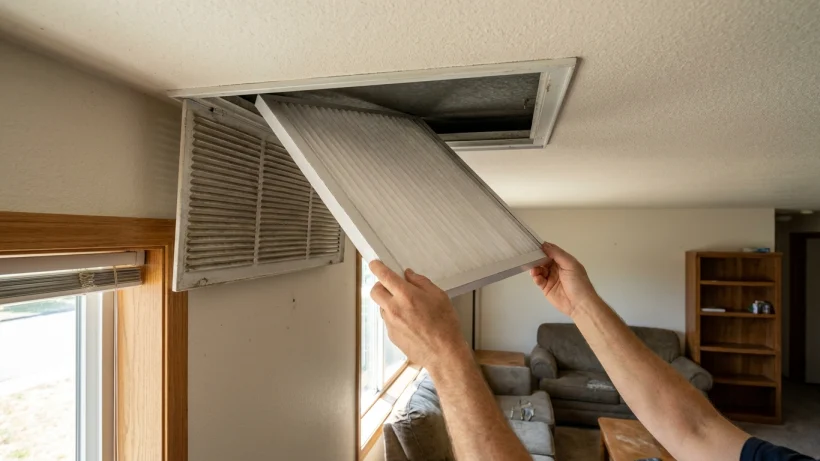
From safely accessible areas, look around the air handler, visible duct runs, and registers for active water, wet insulation, or an obvious loose connection. If your system has a condensate drain, check the accessible outlet and surrounding area for signs of a backup or leak. Inspect or replace the filter according to the equipment and filter instructions; a dirty filter can affect airflow, but it is not a mold diagnosis.
Look for obvious plumbing or roof leaks and signs of dampness in an attic or crawlspace only if you can reach the area safely. Do not enter an unsafe space, cut into sealed ducts, scrape suspected growth, or spray household cleaners inside ductwork. A consumer mold test is not a substitute for locating and correcting the moisture source.
Prevention: control moisture at its source
Repair water-entry problems—such as roof, plumbing, foundation, or condensate-drain leaks—before treating a damp duct surface as an isolated issue. Where ducts pass through unconditioned spaces, an HVAC professional can assess whether their insulation and air sealing fit the duct location, condition, and surrounding construction. Address standing water or persistent dampness in crawlspaces and attics using an approach appropriate to the home's design, rather than simply covering up wet material.
Use bathroom and kitchen exhaust fans that vent outdoors, manage indoor humidity without overusing a humidifier, and keep supply and return grilles clear. These measures support intended airflow and help limit excess moisture, but they do not replace repair of an active leak.
When an HVAC or moisture inspection is warranted
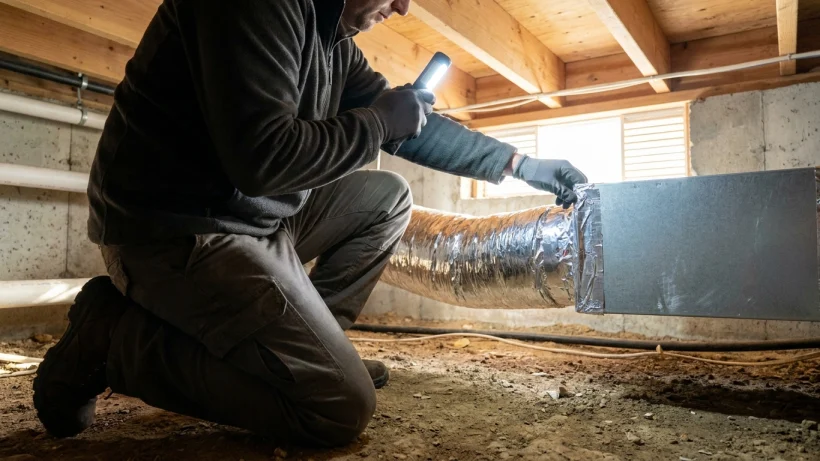
Arrange an evaluation if condensation keeps returning, duct insulation stays wet or deteriorates, odors consistently coincide with system operation, visible growth appears, or moisture returns after cleanup. An HVAC professional can assess duct connections, insulation, airflow, equipment drainage, and system operation. Significant water damage or suspected growth elsewhere in the building may also call for a qualified building-moisture or mold specialist.
A useful inspection should explain the suspected moisture source, the evidence behind that conclusion, and which proposed work addresses the cause versus damaged material. The scope of inspection and any remediation depends on what is found. Duct cleaning alone will not correct a leak or recurring condensation.
A practical moisture-prevention checklist
- Record where and when dampness or odors appear, including whether the system is running.
- Prioritize active leaks and persistent dampness before considering duct cleaning.
- Maintain filters and condensate drains according to equipment guidance.
- For any proposed repair, ask what source is suspected, how the work addresses it, and what the inspection could not verify.