Heat pump vs furnace: choosing the right heating for Washington winters
Heat pumps, furnaces, and dual-fuel systems can all heat Washington homes. The right choice depends on your local winter conditions, existing equipment, utility rates, and the installation your home needs.
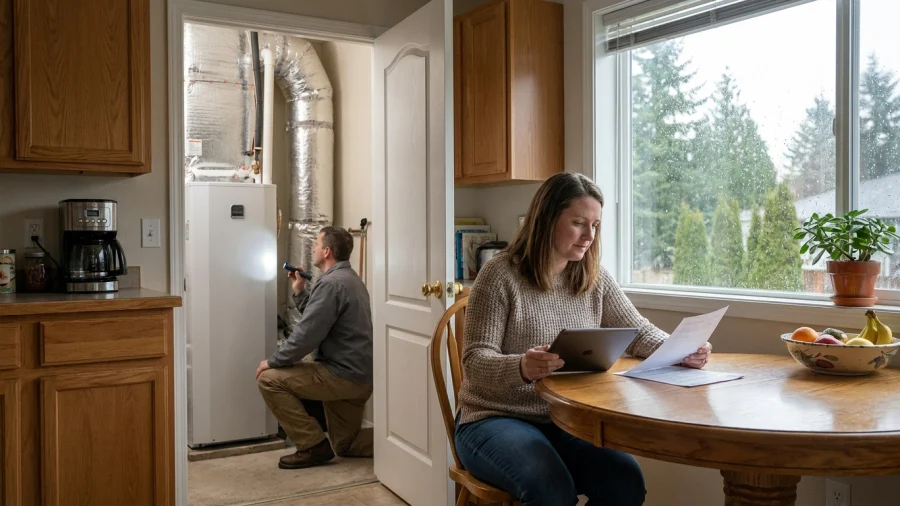
Comparing a heat pump vs furnace in Washington starts with the house, not a claim that one system is always better. A damp Puget Sound winter, an occasional cold snap, existing ducts, and available utilities can all affect comfort and operating costs. Here is how the options work and what to check before choosing.
Why Washington’s winter climate matters
Many Western Washington homes spend winter in long stretches of cool, wet weather rather than sustained extreme cold. Temperatures still drop during cold snaps, and winter conditions can be different in inland areas, foothills, and Eastern Washington. A heating plan should reflect the temperatures where the home is located, not a statewide average.
Damp weather and changing temperatures make steady indoor comfort important. Heating works alongside air sealing, ventilation, and moisture control; no heating system alone fixes condensation or poor airflow. Results depend on the equipment selected, how it is installed, the condition of the home, and outdoor conditions.
How a heat pump heats a home
A heat pump moves heat from outdoor air into the home instead of burning fuel on site. Many models reverse that process to provide cooling in summer. Ducted systems distribute air through ducts, while ductless systems serve rooms through indoor units.
Cold-climate models are designed to provide useful heat at lower outdoor temperatures, but heating capacity and efficiency vary by model and conditions. In damp or cold weather, an outdoor unit may periodically run a defrost cycle to clear frost. That is normal operation; persistent ice, inadequate heat, or unusually frequent defrosting deserves professional assessment.
How a furnace heats a home
A gas furnace burns fuel to heat air. An electric resistance furnace uses electric heating elements instead. Both typically use a blower and ducts to deliver warm air throughout the house, producing the familiar warm-air feel during a heating cycle.
A furnace’s fuel use and comfort depend on its condition and controls, duct airflow, and how well the home holds heat. A furnace does not typically provide cooling on its own; homeowners who want air conditioning need a separate cooling system.
Heat pump vs furnace: the practical differences
Heat pumps transfer heat using electricity. Gas furnaces generate heat by burning fuel, while electric resistance furnaces generate it with heating elements. That difference does not establish which system will cost less to run in a particular home. Specific equipment performance, local electricity and gas rates, and heating habits all matter.
- Comfort: Heat pumps may deliver less-hot supply air and run for longer periods than a furnace. Proper sizing, airflow, and thermostat settings affect how either system feels.
- Cooling: A heat pump can provide both heating and cooling. A furnace needs a separate air conditioner if cooling is a priority.
- Home fit: Existing gas service, electrical capacity, and the condition and size of ducts can change the work required for either option.
- Efficiency: Equipment ratings help compare models, but they do not replace a home-specific heating load calculation or a sound installation plan.
When a heat pump may be a good fit
A heat pump is worth comparing when you want heating and cooling from one system, are replacing electric resistance heat, or prefer to reduce on-site fuel use. Cold-climate equipment may work well for many Washington homes, provided the chosen model can meet the home’s heating load under local winter design conditions.
Before settling on a system, check whether existing ducts are sized appropriately, sealed, and in good condition. Ductless equipment may be an option where ducts are absent or unsuitable. Electrical service and panel capacity also need review; some installations require upgrades. Depending on the equipment, location, and comfort preferences, supplemental or backup heat may be part of the design for colder periods.
When a furnace or dual-fuel system may make sense
Replacing a furnace is worth comparing when a home already has gas service and usable ducts, particularly if cooling is not a priority. A dual-fuel system pairs a heat pump with a furnace. Its controls select or coordinate the heat sources according to the equipment and setup, giving the furnace a role as alternate or supplemental heat.
There is no universal temperature at which every dual-fuel system should switch over. The control strategy should account for equipment performance, local utility rates, and homeowner preferences. If the existing furnace uses electric resistance heat, compare heat pump options as well as replacement furnace equipment. Neither a furnace nor a dual-fuel system is automatically cheaper or more reliable; condition, fuel costs, equipment choice, and installation quality affect the outcome.
Look beyond the equipment: sizing, ducts, and the home envelope
Heating equipment should be sized from a home-specific load calculation, not square footage alone or the capacity of the old unit. An oversized or undersized system can cause comfort and performance problems regardless of whether it is a heat pump or furnace.
Ask about duct leaks, insulation around ducts, airflow restrictions, and rooms that are consistently too cool. Air sealing, insulation, windows, and ventilation also influence heating demand and comfort. A complete design should explain how the proposed system addresses cold-weather capacity, airflow, controls, and any supplemental heat.
Compare estimates and expected operating costs carefully
A headline equipment price does not show the full project. Compare the proposed models and the scope for controls, electrical or gas work, duct modifications, removal of existing equipment, and commissioning. Request model numbers and performance information for the specific equipment, including heat-pump capacity in colder weather when relevant.
Operating-cost estimates are most useful when they use your household’s actual utility rates and heating patterns. Check assumptions about thermostat settings, supplemental heat, and changes to ducts or electrical service. Weather and future rates can alter the result. If an estimate mentions rebates, incentives, or tax provisions, verify current eligibility and program rules rather than treating them as guaranteed savings.
Questions to ask before choosing
These questions can help reveal whether a recommendation fits your home and whether the proposal covers the work required:
- What heating load calculation and local winter design conditions were used to size the system?
- How much heat does the proposed heat pump deliver in colder conditions, and what supplies heat if demand exceeds its capacity?
- Are the ducts, electrical service, and controls suitable? Are needed changes included in the proposal?
- How will the system handle defrost, supplemental heat, or heat-pump-to-furnace changeover, if applicable?
- What commissioning and airflow checks are included, and what ongoing maintenance does the equipment need?
- Which parts of the estimate are assumptions or allowances, and what might change after inspection of the existing system?
A simple way to narrow the decision
Compare heat pumps when combined heating and cooling, replacing electric resistance heat, or reducing on-site fuel use are priorities. Compare furnace replacement if existing gas equipment and ducts are serviceable and you prefer to keep a furnace-based setup. Include dual-fuel when you want heat-pump operation with a furnace available for alternate or supplemental heat.
These are starting points, not final recommendations. The strongest choice is the one supported by a home-specific heating load calculation, a review of the proposed equipment and existing infrastructure, and an installation scope that makes cold-weather operation clear.