How to Read an HVAC Replacement Estimate in Washington
An HVAC replacement estimate should explain more than the total price. Learn how to compare equipment, sizing, installation work, exclusions, and written terms for a Western Washington home.
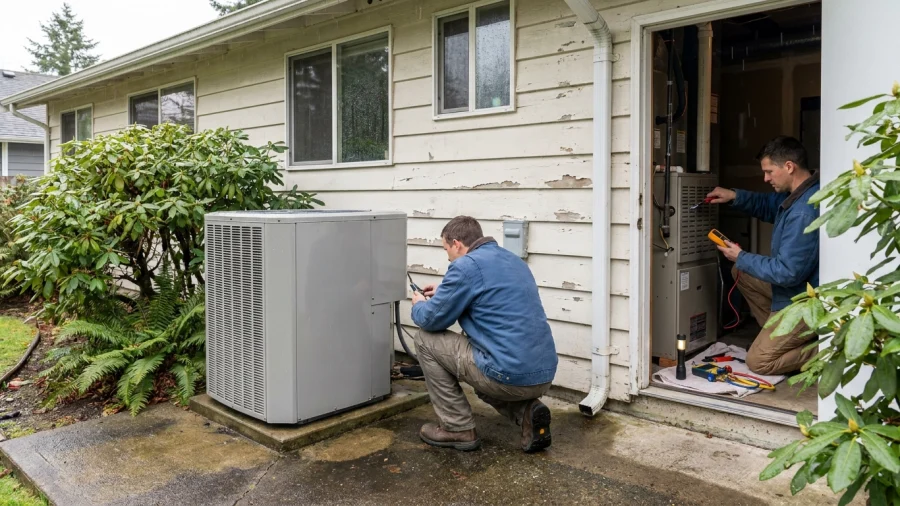
An HVAC replacement estimate can be hard to compare when each contractor describes the work differently. For a Western Washington home, the useful question is not just what the system costs, but what equipment and work the price includes—and what remains uncertain.
Start with the full scope, not the bottom-line number
First, confirm that each proposal addresses the same project: a furnace replacement, a heat pump installation, or replacement of both heating and cooling equipment. The estimate should identify your home and the system or areas covered. Then compare the work, materials, assumptions, and exclusions before comparing totals.
Check whether the price includes labor, disconnection and removal of existing equipment, disposal, startup, and system testing—not just the new unit. A brief description is not necessarily a problem, but it is a reason to request a more specific written scope.
Identify the equipment being proposed
Find the equipment type, manufacturer, model numbers, capacity, and included components. A heat pump proposal should identify the outdoor unit and its matched indoor equipment, such as an air handler. A furnace proposal should identify the furnace and any cooling equipment included in the price.
Check whether the thermostat, filter cabinet, electrical components, refrigerant lines, and condensate-management equipment are new, reused, or outside the scope. Compare efficiency ratings only for comparable system configurations; ask which ratings apply to the proposed combination and what they mean for your home. Confirm that the listed models are the ones intended for installation and how any substitution would be approved.
Look for how the system was sized for your home

The capacity of the old unit is a starting point, not a complete sizing explanation. Ask what the contractor considered: square footage, insulation, windows, air leakage, layout, additions, and duct condition. Ask whether a load calculation or another documented sizing assessment was performed, and request a plain-language explanation of the result.
Describe rooms that run cold, uneven temperatures, or equipment that cycles frequently. A drafty older house and a renovated house may have different needs even in the same Western Washington climate. Bigger equipment is not automatically better; the proposal should explain how the selected system is expected to meet the home's heating and cooling needs.
Check the installation work and site-specific details
A complete scope should say how existing equipment will be disconnected, removed, and disposed of. As applicable, look for duct connections or modifications, sealing, refrigerant lines, electrical connections, thermostat wiring, and condensate drainage. Ask which parts of the existing system were evaluated and which repairs or airflow adjustments are included.
For a heat pump, confirm the proposed outdoor-unit location. Ask about airflow, service access, drainage, and exposure to rain, leaves, or other debris. If duct damage, inadequate wiring, or another concealed condition is discovered during installation, the estimate should explain how the additional work and cost will be discussed and approved.
Understand permits, inspections, and project coordination
Permit and inspection requirements can depend on the location and work involved. Look for a statement saying whether related tasks and fees are included, excluded, or still to be determined. Ask which requirements apply to your project, who will coordinate them, and whether electrical or other trade work is covered by the same estimate or a separate scope.
Confirm the expected sequence of work, approximate installation duration, and any access or preparation needed from you. The proposal should also make clear how the contractor will communicate if an inspection or site condition changes the plan.
Read the price, allowances, exclusions, and payment terms
Determine whether the total is a fixed quoted amount, an estimate subject to stated conditions, or a figure that depends on selections or site findings. For each allowance, ask what item or quantity it covers and how a different selection would change the amount.
Read exclusions as closely as inclusions. Common items to clarify include duct repairs, electrical upgrades, carpentry, wall or ceiling repairs, and accessories not specifically listed. Review the payment schedule, deposit, accepted payment methods, and what must happen before each payment is due. Any change to scope or price should be documented and approved before additional work proceeds.
Compare warranties and post-installation support carefully
Separate the manufacturer's equipment coverage from any workmanship coverage the contractor provides. Ask where to review the manufacturer's current terms and request the duration, scope, exclusions, and claim process for any contractor coverage in writing. A phrase such as “full warranty” does not replace the specific terms.
Check whether registration or routine maintenance affects coverage and who is responsible for those steps. Also confirm whether startup, system checks, and a walkthrough of controls and filter care are included, along with the documentation you will receive after installation.
Use a side-by-side checklist before choosing
Put each proposal into the same comparison categories so differences in wording do not hide differences in scope:
- System type, model numbers, capacity, efficiency ratings, and the stated basis for sizing.
- Removal and disposal; duct, electrical, controls, and drainage work; startup, permits, inspections, and cleanup.
- Allowances, exclusions, unresolved site conditions, and how potential extras would be priced and approved.
- Payment terms, written warranty information, and post-installation documentation.
Ask each contractor the same core questions: What is included? What is excluded? How was the system selected? Who handles permits? How are changes approved? Keep the estimates and written revisions together so you can check the final agreement against the scope you discussed.