HVAC Replacement in Puget Sound: How Weather Delays and Rainy Seasons Affect Your Schedule
Rain, wind, temperature swings, and seasonal demand can all affect HVAC replacement timing in Puget Sound. Learn which installation steps are weather-sensitive and how to plan for schedule changes.
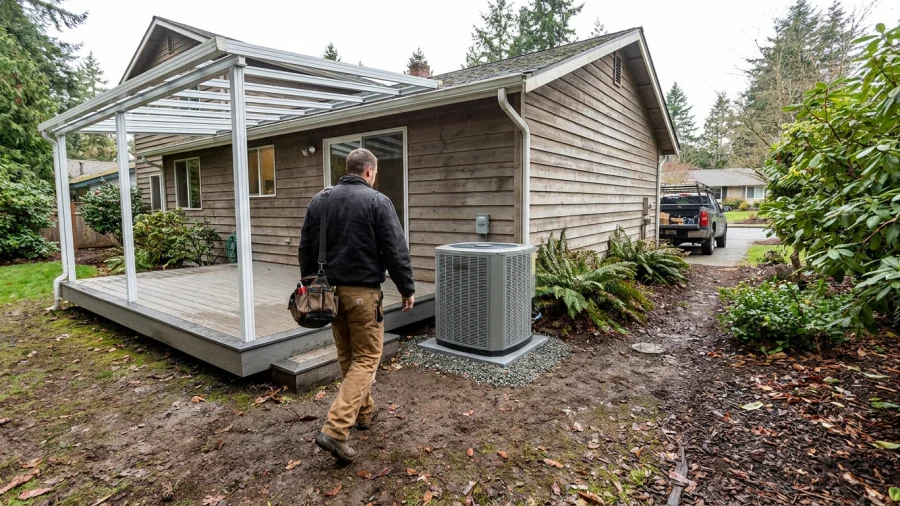
Planning an HVAC replacement in Puget Sound means allowing for more than the installation work itself. Weather can change when exterior tasks are safe or practical, while equipment delivery, site conditions, and project approvals can also affect the schedule. Knowing what may shift helps you plan without assuming every rainy day will stop the job.
Why Puget Sound weather can affect HVAC replacement schedules
Western Washington sees frequent rain, damp ground, and occasional strong winds. Cold snaps and hot spells can also change how urgently homeowners need their systems. Conditions vary across the region, and their effect on a project depends on the equipment being installed, where it sits, how crews reach it, and how much exterior work is involved.
A rainy forecast does not automatically mean a delay. Some work can proceed indoors or outdoors when conditions are suitable. If a date changes, it is worth asking whether weather is the cause or whether equipment availability, a permitting step, or an unexpected site condition is affecting the plan.
Which parts of an HVAC replacement are most weather-sensitive?
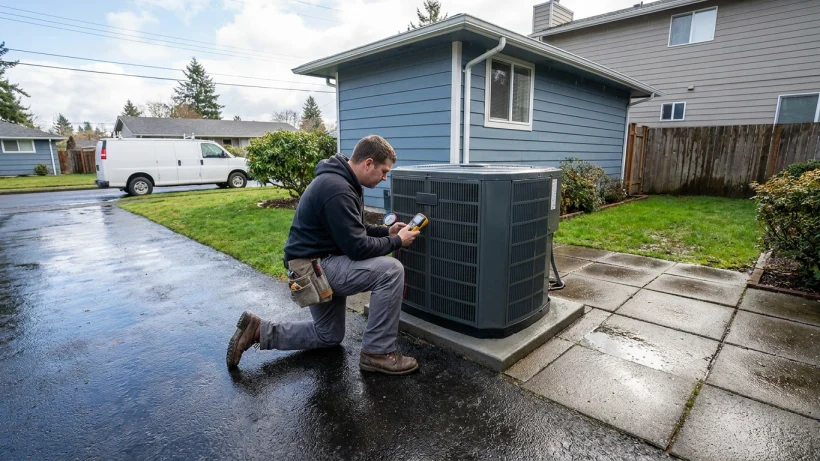
Outdoor work may involve moving equipment, setting and connecting an outdoor unit, or completing exterior penetrations and line-set work. Rain, wind, standing water, slippery surfaces, and difficult access can affect safe handling or particular installation steps. A crew may adjust the work sequence or wait for safer conditions rather than apply one weather rule to every job.
Indoor tasks may include removing old equipment, installing new components, adjusting duct connections, and checking system operation. The exact mix depends on the home and whether the replacement involves a furnace, heat pump, air conditioner, or other equipment. Technicians need to assess the site, follow equipment instructions, and use safe work practices for each step.
How rainy-season timing differs from summer and cold-weather scheduling
In fall and winter, a failed heating system can make replacement more urgent. Wet ground, shorter daylight, and occasional cold snaps may complicate exterior work or access. Rainy-season installations can still move forward when the site and required tasks allow; the useful question is which parts of your project need a drier or safer weather window.
Spring and summer may provide more comfortable conditions for some outdoor work, but heat waves can increase demand, and contractor calendars vary. There is no universally best season. If your system is aging or unreliable, planning before peak heating or cooling demand may give you more room to compare options and accommodate a schedule change.
What can cause a delay beyond the forecast?
A proposed installation date depends on the job being ready. Equipment selection, special-order components, and delivery timing can affect the start date. Once work begins, a crew may find electrical, venting, duct, drainage, or access conditions that need evaluation before installation can continue as planned.
Permit and inspection requirements vary by project and jurisdiction, so ask what applies to your installation and how those steps fit into the schedule. Even when materials and approvals are ready, a changed forecast, unsafe access, or a wet work area may call for a short postponement or a revised sequence.
How to plan an HVAC replacement around uncertain weather
A clear written scope makes schedule conversations more useful. It should help you identify where work will happen and what is expected to be completed. Before settling on a date, check that equipment is available and any required project approvals are accounted for.
- Ask which tasks are outdoors, what conditions could affect them, and how schedule updates will be shared.
- Clear a safe route to indoor equipment and the outdoor unit; move belongings and secure pets near the work areas.
- Ask how your home will be kept comfortable if weather or an unexpected issue extends the work. Do not assume a temporary heating or cooling option is included.
- Leave some flexibility around the appointment, especially during heavy rain, wind, extreme temperatures, or periods of high demand.
Questions to ask when comparing HVAC replacement schedules
A proposed date is most helpful when you understand what it depends on. These questions can help you compare how contractors plan an HVAC replacement in Puget Sound:
- What is the expected work sequence, and which steps depend on outdoor conditions?
- How far in advance will the appointment be confirmed, and how will a weather-related change be communicated?
- Are equipment delivery, project approvals, and known site requirements included in the proposed timing?
- If installation takes more than one visit, what determines the return date, and how will the system be left between visits?
Treat an exact completion date as a plan, not a guarantee, until the scope, equipment, site conditions, and applicable requirements are confirmed. A useful schedule explains what is known, what could change, and how you will be kept informed.