Should I add a whole-house dehumidifier for Tacoma's damp winters?
A Tacoma winter can make a home feel clammy, but that does not always mean it needs a whole-house dehumidifier. Learn what to measure and check before comparing equipment.
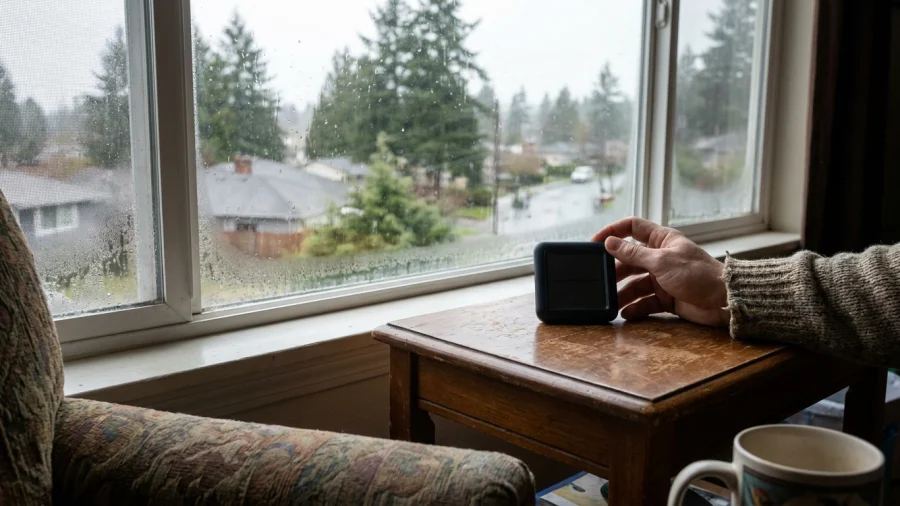
Tacoma’s cool, rainy winters can make indoor moisture more noticeable. Before adding equipment, find out whether humidity is actually elevated and where the moisture is coming from. A whole-house dehumidifier can be useful in some homes, but it will not fix a leak or replace needed ventilation.
Why a Tacoma home can feel damp in winter
Persistent window condensation, musty odors, and clammy-feeling rooms can point to excess indoor moisture. Cooking, showers, and drying laundry indoors all release moisture, especially when exhaust fans are not used or air circulation is limited.
A damp feeling is not proof of high humidity. A cool room, drafts, or cold window surfaces can also affect comfort and cause condensation in a particular spot. Homes differ in their ventilation, insulation, heating, and moisture sources, so outdoor weather alone cannot tell you whether your home needs dehumidification.
Measure humidity and look for the moisture source first
Start with a simple hygrometer in rooms you use regularly. Record relative humidity at different times of day and note when you see condensation or notice odors. About 30% to 50% indoor relative humidity is a common reference range, not a guarantee of comfort or a substitute for assessing your home. A single reading is less useful than a pattern.
Look for plumbing, roof, or window leaks; damp crawlspaces; blocked or unused bathroom and kitchen exhaust fans; and dryers that do not vent properly outdoors. Use exhaust fans during moisture-producing activities and keep airflow clear where practical. Persistent condensation, visible mold, or water intrusion calls for attention to the underlying condition. A dehumidifier cannot repair a leak or remove water-damaged materials.
When a whole-house dehumidifier may make sense
Whole-house equipment may be worth evaluating when readings remain elevated and moisture symptoms recur in several rooms after obvious sources and ventilation problems have been addressed. Depending on its design and the home’s layout, a permanently installed system can dry air circulated across more of the home than a single portable unit.
If the issue is limited to one room, a portable dehumidifier may be a more practical first step. It can also help you assess whether removing moisture improves that area. Neither option has a predictable result without considering the moisture load, equipment capacity, controls, installation, and condition of the home.
How it works with your heating and ventilation system
A whole-house dehumidifier dries indoor air and is typically connected to ductwork or set up to circulate air through a dedicated arrangement. The right configuration depends on the existing furnace or heat pump, duct layout, airflow, controls, installation space, and a suitable path for condensate drainage. Not every system can use the same connection or control strategy.
Dehumidification uses electricity and may change when fans or other HVAC components run. Ask how the proposed equipment will operate, where its collected water will go, and what maintenance it needs. Heating raises air temperature, while ventilation exchanges indoor and outdoor air; neither automatically resolves an ongoing moisture source. An HVAC assessment should explain why a particular setup is proposed and how its performance will be checked after installation.
Whole-house versus portable: questions to compare
A portable unit offers flexibility for a targeted room but needs space and regular attention to its water collection or drain. A whole-house system offers integrated operation and potentially broader coverage, with more installation planning. Match the choice to the scale of the measured problem rather than the dampness you feel on one day.
- How will humidity be controlled, and what happens when the target setting is reached?
- How is condensate collected or drained, and what filters or routine maintenance need attention?
- What equipment, controls, connections, electrical work, and drainage work are included in the estimate?
- What assumptions does the estimate make about the existing ductwork and airflow?
A useful comparison explains what each option can reasonably treat. It should not depend on a promised utility-bill reduction, a guaranteed comfort change, or a claim that equipment alone will prevent mold.
A practical decision checklist for Tacoma homeowners
- Record humidity readings in more than one lived-in room and note when condensation or musty odors appear.
- Check apparent leaks, damp areas, and bathroom, kitchen, and laundry exhaust concerns; address problems you find before choosing equipment.
- Decide whether the issue is confined to one area, where a portable unit may be useful, or persists across the home.
- If the concern remains, ask an HVAC professional what moisture source they suspect and how the proposed equipment fits the ductwork, airflow, controls, and drainage needs.
- Ask what maintenance is required and how humidity and system operation will be evaluated after installation.
Visible mold, recurring water intrusion, or a persistent musty odor warrants investigation of the underlying moisture condition. Dehumidification may help manage indoor humidity, but it is not a substitute for correcting that cause.