Should I Seal Ducts First or Replace HVAC in Puget Sound Homes?
Leaky ducts and aging HVAC equipment can cause similar comfort problems. Learn how to assess both before deciding what work should come first.
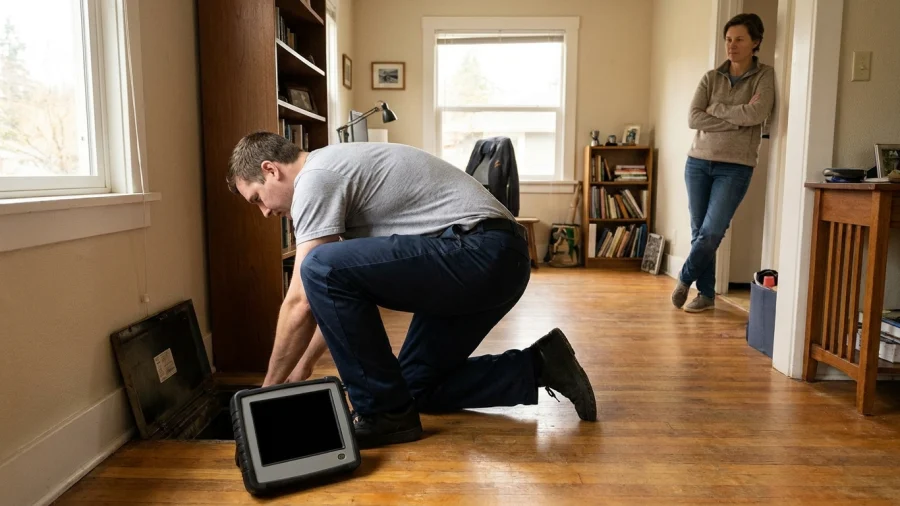
A chilly bedroom, weak airflow, or rising energy use can leave Puget Sound homeowners wondering whether to seal ducts or replace HVAC equipment. The answer depends on what is actually causing the problem. Checking the ductwork and the heating and cooling system together can help you choose the right work—and avoid replacing one part of a system while overlooking another.
Start with the problem you are trying to solve
Uneven temperatures do not, by themselves, prove that ducts are leaking or that a furnace or heat pump needs replacement. Restricted airflow, inadequate duct insulation, thermostat settings, and equipment condition can also affect comfort. Likewise, duct sealing cannot make failing or unsuitable equipment perform as it should. Start by describing the symptoms, then have both the equipment and duct system evaluated before committing to a project.
How leaky ducts affect a Puget Sound home
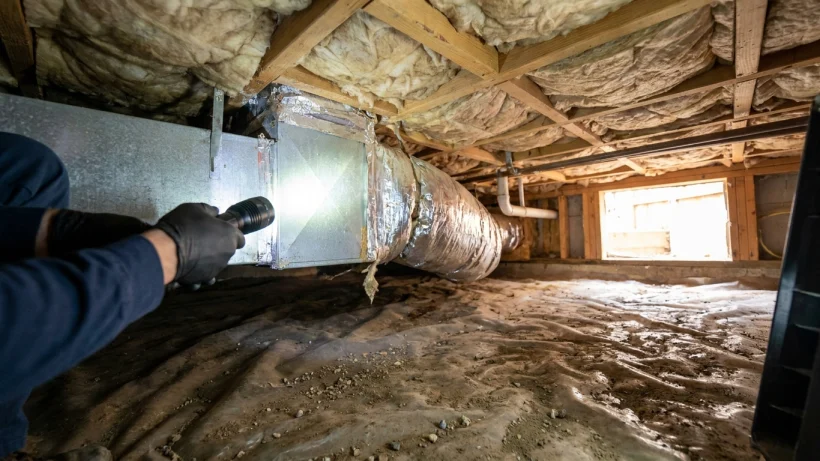
Supply ducts carry conditioned air to rooms. A leak in a supply run can release that air into an attic, crawlspace, or garage instead. Return ducts pull air back to the equipment; leaks on that side can draw air from surrounding spaces into the system. Either problem can affect comfort and how the system operates, particularly when ducts pass through areas outside the heated living space.
Duct layouts vary across Western Washington homes. Some runs are largely within conditioned space; others, especially in older homes, pass through crawlspaces or attics. Loose joints, disconnected sections, and damaged insulation are worth investigating, but a visual inspection alone cannot show the full extent of leakage. In damp locations, an assessment should also account for moisture, insulation condition, and how ducts and penetrations are repaired.
When duct sealing may be the first step
If the equipment runs reliably but certain rooms stay uncomfortable or airflow seems weak, investigating the ducts first may clarify whether replacement is necessary. Visibly disconnected runs, poor connections, or ducts routed through unconditioned space make that investigation especially worthwhile.
Repairing and sealing accessible leaks can help more conditioned air reach the rooms it is meant to serve. The effect depends on where the leaks are, how extensive they are, and whether other airflow problems remain. Ask whether duct leakage or airflow measurements would help establish a baseline and confirm the result, rather than relying only on visible clues.
When HVAC replacement should be evaluated at the same time
Repeated breakdowns, persistent performance problems, or equipment approaching the end of its useful service life are reasons to evaluate replacement alongside duct repairs. Sealing leaks can change airflow, so duct condition and the system's ability to deliver air should inform any replacement plan.
A new unit should not be selected solely by copying the old unit's size or making a quick visual estimate. The home's heating and cooling needs and the duct system's condition both matter. If replacement is already planned, clarify whether duct repairs, sealing, and airflow balancing are included in that scope or will be proposed separately.
A practical order of operations
- Record which rooms are uncomfortable, when problems occur, and any equipment symptoms. Note whether issues change during cold, wet weather or warmer periods.
- Have a qualified professional inspect the equipment and accessible ducts. Ask what testing, if any, will be used to assess leakage and airflow.
- Address safety or equipment-operability concerns before treating duct sealing as the only solution.
- Use the findings to choose targeted duct work, equipment replacement, or a coordinated project.
- After the work, ask how system operation and airflow will be checked.
Questions to ask before approving the work
- What evidence points to duct leakage, equipment condition, or both as the source of the problem?
- Which duct sections are accessible, which are not, and what work is proposed for each?
- Will you test duct leakage or airflow? What will the results help us decide?
- If equipment is being replaced, how will duct condition affect system selection and setup?
- What is included or excluded in the written estimate, and how will completed work be checked?
- What warranty terms apply to the products and installation work? Can I review those details in writing?
Bottom line: assess ducts and equipment before choosing the sequence
If the HVAC system is operating well and duct leakage or poor air delivery is suspected, investigating the ducts first can be sensible. If equipment is unreliable or replacement is already under consideration, assess the ducts and airflow as part of that decision. For many Puget Sound homes, the best answer is a coordinated plan based on inspection, appropriate testing, and a clear scope—not a fixed rule that ducts or equipment must always come first.