Can a patio cover double as a rainproof outdoor room in Puget Sound winters?
A patio cover can make outdoor space more usable during Puget Sound rain, but open sides, runoff, and winter dampness limit how dry and comfortable it will feel. Here’s what to consider when planning shelter for your patio.
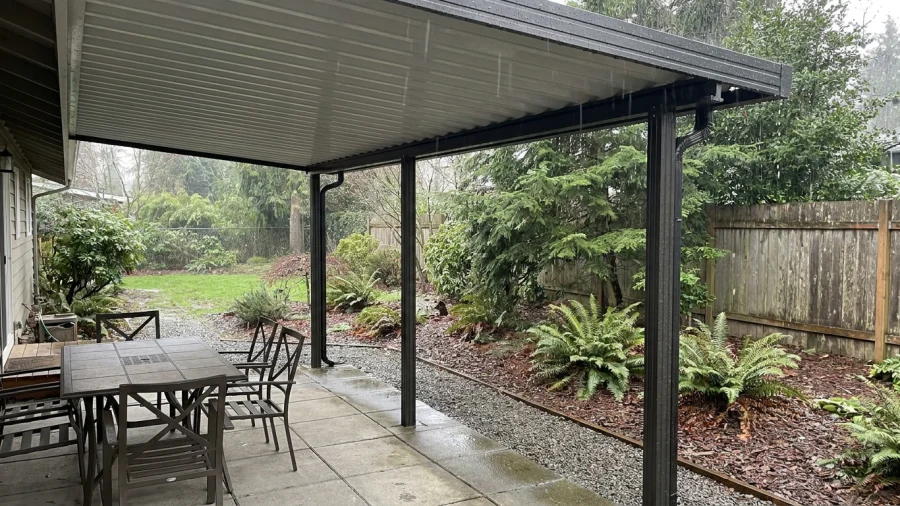
A patio cover can turn a seldom-used winter patio into a more practical place to step outside, sit for a while, or keep outdoor furniture sheltered. In Western Washington, though, rain rarely falls straight down all season. The best design starts with a clear idea of how you want to use the space and which weather conditions it needs to handle.
What “rainproof outdoor room” means in a Puget Sound winter
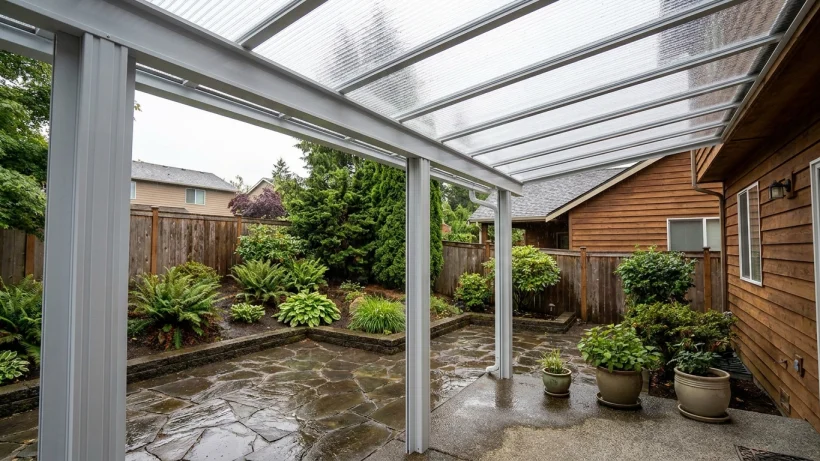
A roof can keep much of the rain falling from above off furniture and paving beneath it. That makes a covered patio different from an uncovered one, but it does not make it a fully enclosed room. Gusts can carry rain through open sides, and the air can remain cold and damp even when the surface under the roof is dry.
Think about what “usable” means for your household. A sheltered spot for a quick meal may need less protection than a space intended for long winter gatherings. If you plan to store cushions or other items outside, consider whether they will stay dry near exposed edges, not just whether the roof covers them.
How roof coverage, slope, and runoff affect rain protection
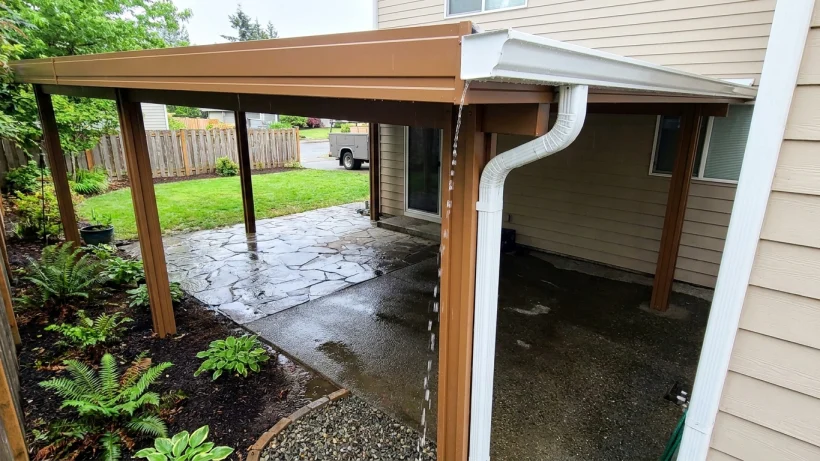
The roof’s depth and width determine how much patio is sheltered from rain falling vertically. A cover that barely reaches the edge of a dining table may leave chairs in the wet. Roof height, wind direction, and nearby walls or fences also affect how far rain can travel beneath the cover.
Water leaving the roof needs a planned route. The roof slope, gutters where appropriate, and discharge location should work together so runoff does not splash onto seating, collect beside the house, or create puddles at the patio edge. Look at the existing paving and drainage during a wet-weather site review when possible; a sunny-day layout alone will not show where water tends to go.
Open sides, wind-driven rain, and optional screening
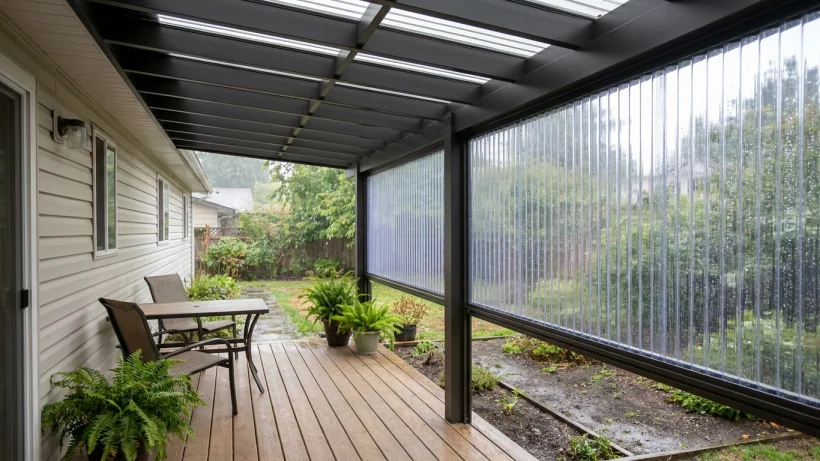
An open-sided patio keeps views and airflow, but it also leaves room for sideways rain. The most exposed edge depends on the home’s orientation, neighboring buildings, fences, and landscaping. Notice which side gets wet during the storms that typically make your patio uncomfortable.
Partial side panels, screens, or other wind barriers may reduce exposure in that direction. They can also change daylight, views, ventilation, and how open the patio feels. A screen is not a guarantee against heavy or wind-driven rain; its usefulness depends on the specific system and site. Choose side protection based on observed conditions rather than assuming every edge needs to be closed.
Choosing a roof material: daylight, upkeep, and the feel of the space
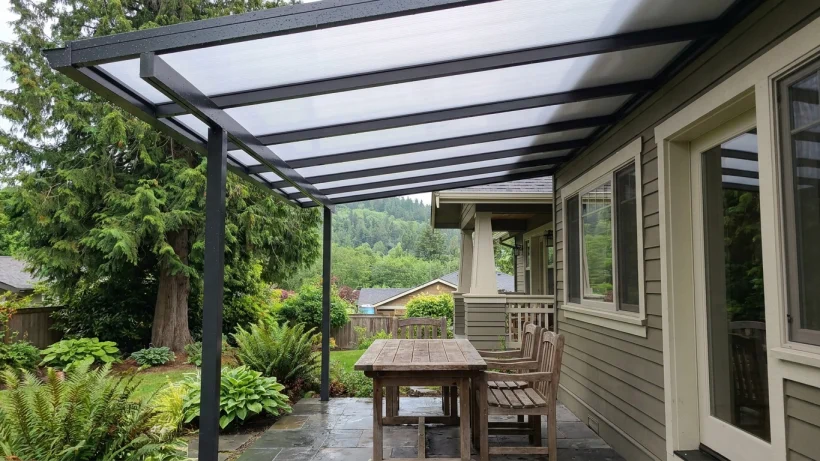
An opaque roof, such as a solid aluminum option, generally creates more shade. A translucent system, such as one using ACRYLITE panels, may let more daylight reach the patio and adjacent windows. The actual light level depends on the selected product, roof layout, and surroundings, so compare options in the context of your home rather than by material name alone.
Consider how the roof will look alongside the siding and trim, and how much light you want indoors during short winter days. Samples and a clear view of the proposed roof structure can help. Whatever material you choose, plan for routine upkeep, including clearing gutters and drainage paths and following the manufacturer’s cleaning guidance.
Can it stay comfortable enough for winter use?
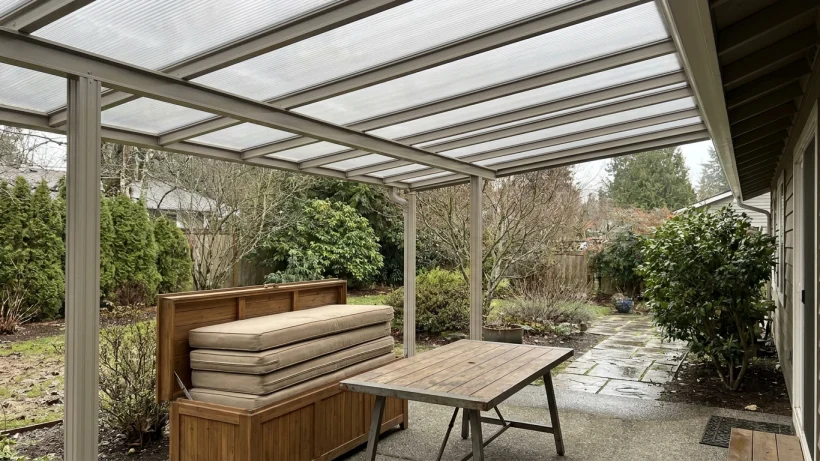
Overhead shelter does not remove outdoor humidity, wind, or low temperatures. A covered patio can be pleasant for some winter uses without feeling like an indoor living room. Place seating away from the most exposed edge, give cushions a dry storage spot, and consider whether the paving feels comfortable and stays free of standing water.
If lighting or heating is part of the plan, account for it while designing the cover and have applicable electrical or heating work assessed by qualified professionals. Closing in more sides may improve shelter, but it can also reduce airflow, affect daylight, and make condensation more noticeable. The space should remain easy to ventilate and maintain.
A homeowner checklist before planning a patio cover
- Watch a typical wet, windy day: where does rain blow in, and which parts of the patio stay usable?
- Measure the area needed for seating, cooking, or storage, and note nearby doors, windows, eaves, and drainage routes.
- Decide how much daylight, openness, and privacy you want, and whether one exposed side needs added protection.
- Ask how the proposed roof will slope, where runoff will discharge, and what maintenance its materials require.
- Clarify which weather conditions the design is meant to handle and when rain may still reach the space.
The practical answer: more usable in rain, but not automatically rainproof
A well-planned patio cover can make an outdoor space much more usable during ordinary Puget Sound rain by providing overhead shelter. It will not automatically keep an open patio dry during windy storms or make winter air warm and dry.
Judge a proposed design by your site’s exposure and everyday use: the roof footprint, runoff path, desired daylight, and balance between open sides and added protection. Those details tell you more about winter usability than the label “rainproof patio cover.”