Designing a Western WA Patio Cover: Drainage, Moss Prevention, and Year-Round Comfort
A useful Western Washington patio cover starts with a plan for rainwater, damp surfaces, and everyday use. Learn how to weigh drainage, daylight, maintenance, and comfort before settling on a design.
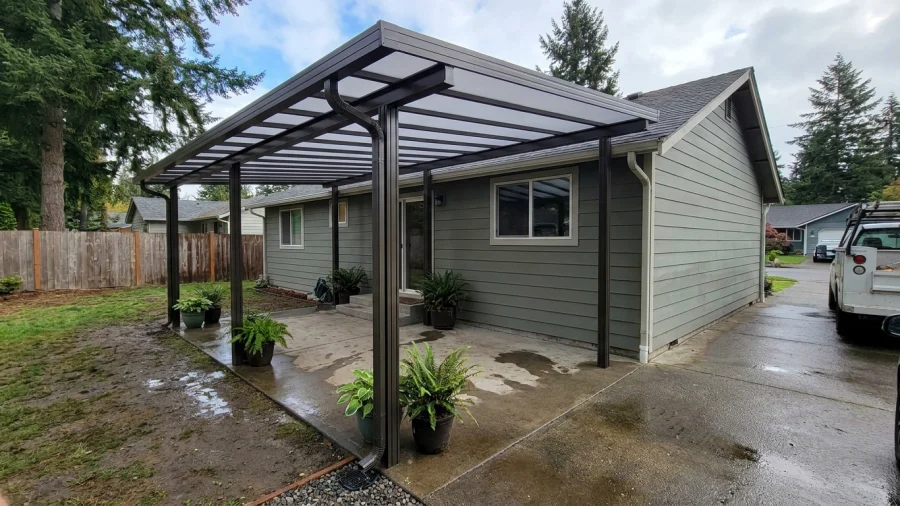
A patio cover can make outdoor space more useful in Western Washington, but the roof style is only one part of the decision. Where rainwater goes, how quickly nearby surfaces dry, and how much daylight reaches the house all affect how the finished space feels. Start with the site and the way you want to use it, then compare designs against those needs.
Start with how rain moves across your yard
Watch the patio during a steady rain if you can. Note where runoff from the house lands, where wind pushes rain, and whether water flows in from a slope, driveway, or other hard surface. Puddles, muddy borders, and splash marks on siding can reveal problems that a new cover should not make worse.
Map the patio’s relationship to doors, the foundation, planting beds, and existing drains. Also note which areas stay shaded or wet long after rain stops. These observations can help determine the cover’s footprint and where its runoff should go.
Decide what needs shelter. A dining table, stored cushions, a grill area, and a walking route to the yard each call for a different amount of coverage. A footprint that works for furniture may still leave a frequently used doorway exposed to wind-driven rain.
Plan roof runoff and drainage before choosing the look
Roof pitch and orientation determine which edge receives runoff. Consider that edge in relation to seating, walkways, neighboring property, and the house. Gutters and downspouts may help direct water, but their placement matters: a downspout that empties beside the patio or foundation can create a new wet spot.
Discuss where collected water will discharge and how that plan fits existing site drainage. Do not assume the soil can absorb additional runoff, especially where the ground remains saturated for long periods. The project team should assess site-specific conditions and applicable local requirements before construction.
Ask how the design will perform during heavy rain and wind-driven rain. A cover provides overhead shelter, but open sides and changing wind direction mean it will not keep every part of the patio completely dry.
Reduce the damp conditions that encourage moss and algae
Moss and algae are more likely to develop where surfaces stay shaded, leaves collect, and air moves slowly. A patio cover cannot guarantee a moss-free space, but thoughtful placement and upkeep can reduce persistent dampness.
- Leave practical access to roof edges and gutters so leaves and debris can be cleared before they block drainage.
- Consider whether the cover will shade paving, steps, or siding that already dry slowly.
- Keep planters and stored items clear of drains and away from surfaces where they trap moisture against the house.
- Compare roof and frame materials for their cleaning needs, and follow the manufacturer’s care guidance rather than relying on unverified treatments.
Sunlight and airflow can help nearby surfaces dry, but more exposure may mean less rain protection. The right balance depends on the patio’s orientation and which areas you most want to shelter.
Balance rain protection with daylight and ventilation
A solid roof can offer more overhead shelter and shade. A translucent roof option may admit more daylight to the patio and the rooms behind it. Neither choice is automatically better: consider the patio’s exposure, summer sun, and the light reaching adjacent windows and doors during darker months.
Roof and frame colors also affect how the structure looks alongside siding, trim, and existing outdoor materials. Review samples in the light where the cover will be installed, and ask about product-specific care and performance for the roof system you are considering.
Keep ventilation in the plan. A patio cover is still an open outdoor structure, so air movement and outdoor temperatures remain part of the experience. Its height, roof choice, and open sides can all affect whether the space feels bright and comfortable or shaded and still.
Design for comfort beyond the rainy season
Picture a cool morning, a sunny afternoon, a windy day, and an extended stretch of light rain. Cover size, height, orientation, and openness influence shade and airflow as much as rain protection. A larger roof may shelter more furniture, for example, while also changing the light at nearby windows.
Place furniture and walking routes on the plan before settling on post locations. Allow room to move between the house and yard without stepping into runoff or a muddy edge. If lighting, heating, or other additions are being considered, discuss suitable placement and installation needs early with qualified professionals.
A roof can extend the times you use a patio, but it will not control temperature or weather like an enclosed, conditioned room. Planning around that distinction helps set useful expectations for year-round use.
Use a focused checklist when comparing designs and estimates
Compare proposals against the same questions so differences in scope are easier to spot:
- Where will roof water go? Are gutters, downspouts, discharge points, and any needed drainage work included?
- What are the proposed roof and frame materials, dimensions, and color choices? What routine maintenance do they require?
- How does the design account for daylight at nearby windows, airflow, access, furniture, and the way the patio will be used?
- What preparation, installation work, and cleanup does the estimate include? Which items are excluded or depend on conditions found on site?
- What product documentation and written warranty details are available? What do their stated coverage and limitations actually say?
A clear design and estimate should show how the cover handles water as well as how it will look. That makes it easier to compare options on the conditions that matter most in a Western Washington patio cover: drainage, manageable maintenance, useful daylight, and everyday comfort.