How to Clean and Maintain Your Patio Cover in the Pacific Northwest
A practical homeowner's guide to safely cleaning aluminum and acrylic patio covers, removing seasonal debris, and preventing moss buildup.
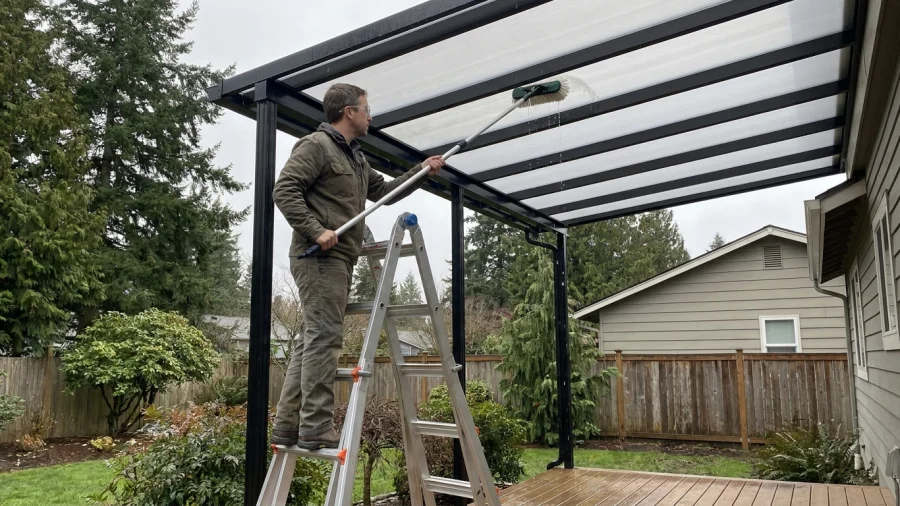
A well-built patio cover extends your outdoor living season right through Washington's rainy months. However, the same environment that makes these covers so valuable also introduces constant moisture, falling evergreen needles, and heavy spring pollen. Routine cleaning and maintenance are essential to keep your patio cover looking new, protect light transmission through acrylic panels, and ensure water drains away from your home.
Why Pacific Northwest Weather Demands Routine Patio Cover Care
The damp, shaded environment of the Puget Sound region creates the perfect conditions for organic growth. If left alone, constant moisture on horizontal and sloped surfaces encourages moss, algae, and mildew. Additionally, our heavy tree canopy means sap, leaves, and pine needles frequently accumulate on exterior structures.
- Routine care stops moss and algae before they establish roots in structural seams.
- Clearing debris maximizes the amount of natural light that transmits through clear or frosted acrylic panels during dark winter months.
- Preventative maintenance keeps integrated gutter systems clear, ensuring proper drainage during heavy rainstorms.
Essential Tools for Cleaning Your Patio Cover
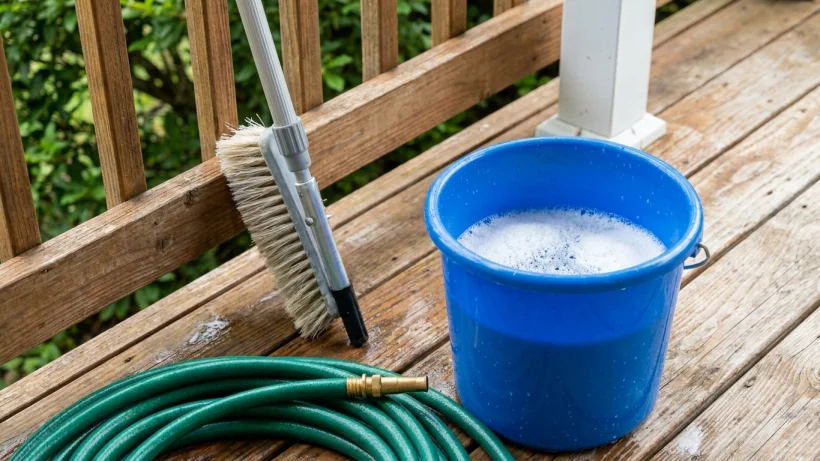
Using the correct supplies is the most important part of patio cover maintenance. Abrasive materials can scratch acrylic roof panels and dull the powder-coated finish on aluminum frames. Gather these safe, gentle tools before you begin.
- A soft-bristle brush attached to a telescoping pole, allowing you to reach the roof safely without climbing onto the structure.
- A bucket of mild liquid dish soap mixed with warm water. Avoid harsh chemicals, bleach, or ammonia.
- A standard garden hose equipped with an adjustable spray nozzle.
- A stable step ladder to help you reach higher angles safely.
Step-by-Step: How to Clean a Patio Cover
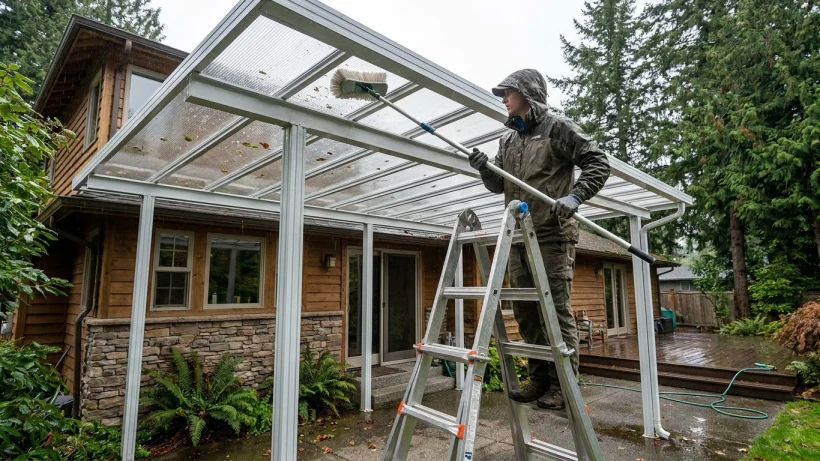
Washing your structure systematically from top to bottom prevents dirt from running down onto areas you have already cleaned.
- Step 1: Safely clear loose debris. Use a soft broom or a leaf blower on a low setting to remove dry leaves and pine needles from the roof panels and gutters.
- Step 2: Pre-rinse the structure. Use your garden hose to spray the entire cover, loosening surface dirt and grime.
- Step 3: Wash the roof panels. Working in small sections, gently scrub the top panels with your soapy water and soft-bristle brush.
- Step 4: Clean the frame. Wipe down the aluminum posts, beams, and gutters using a soft sponge and soapy water.
- Step 5: Rinse thoroughly. Spray the entire structure down with clean water before the soap has a chance to dry, which prevents a cloudy film from forming on acrylic panels.
Removing Moss, Algae, and Stubborn Stains
If you notice green algae buildup along the edges of the frame or stubborn organic stains from wet leaves, resist the urge to scrub vigorously. Instead, mix a gentle solution of equal parts water and white vinegar in a spray bottle. Apply this directly to the problem areas and let it soak for five to ten minutes. The mild acidity will break down the organic matter, allowing you to wipe it away easily with a soft sponge. Always follow up with a thorough clean water rinse.
Aluminum vs. ACRYLITE: Material-Specific Care Tips
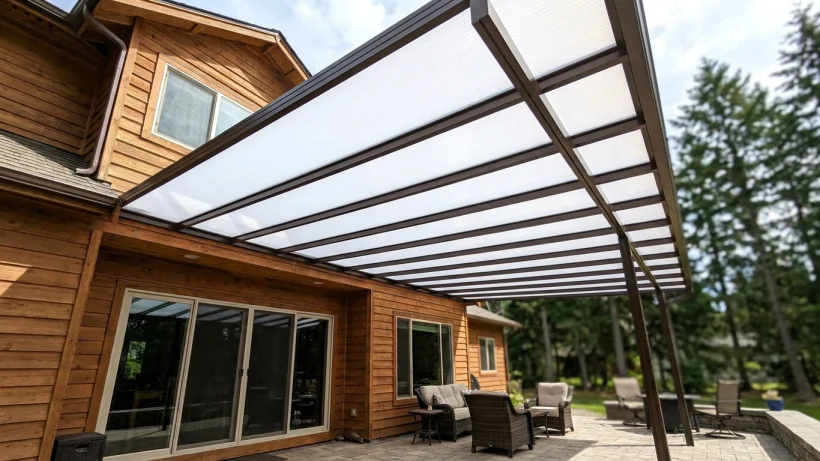
Modern patio covers often combine sturdy metal frames with translucent roof panels. Each material requires slightly different handling to maintain its appearance and longevity.
- Aluminum Frames: Focus on keeping the powder-coated finish free of dirt buildup and carefully monitor the internal downspouts. Clogged posts can lead to standing water inside the frame.
- ACRYLITE Panels: Scratch prevention is the primary goal. Never use paper towels, stiff brushes, abrasive sponges, or window squeegees with hard metal edges. Microfiber cloths or synthetic chamois leathers are best.
- Managing Static: Acrylic surfaces can naturally build up a static charge, which attracts dust shortly after cleaning. Wiping the panels dry with a damp chamois helps dissipate this static.
Seasonal Maintenance Checklist for Washington Homes
Breaking your maintenance tasks into a quick seasonal routine prevents debris from hardening and makes deep cleaning much easier over the lifespan of the structure.
- Spring: Give the structure a thorough wash to rinse away sticky sap, heavy pollen, and winter grime.
- Summer: Perform light dry dusting and occasionally wipe down the support posts to keep the outdoor living space feeling fresh.
- Fall: Frequently remove fallen leaves and pine needles before they decompose and clog the integrated gutters.
- Winter: Visually inspect the gutters and downspouts during heavy downpours to ensure water is flowing freely away from the patio.