Patio Cover Lighting: Safe, Code-Ready Wiring in Western WA
Plan patio cover lighting alongside the cover itself. This guide covers fixture exposure, wiring coordination, electrician questions, and local permit checks for Western Washington homeowners.
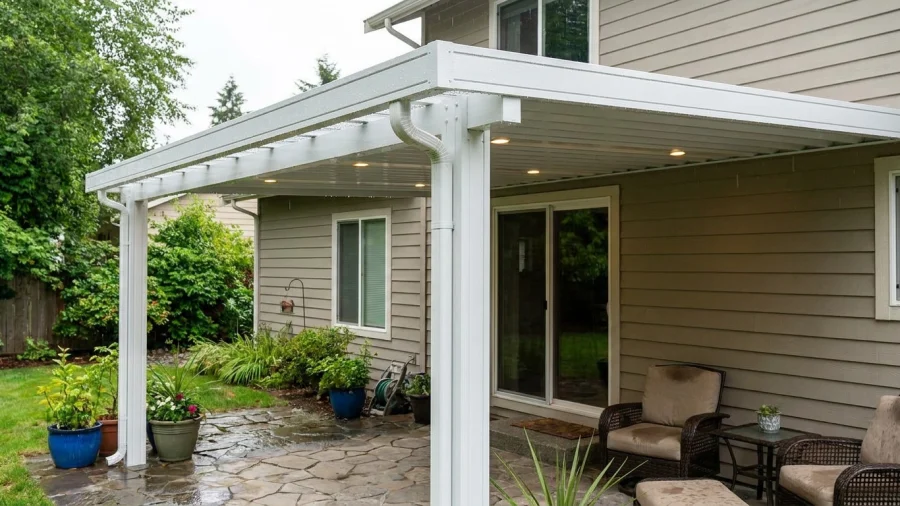
A patio cover can make an outdoor space more useful through Western Washington’s long, damp evenings. Lighting works best when it is planned with the cover, rather than added after the framing and roof panels are in place. The cover installer and a qualified electrician can help determine what fits the design and what the electrical installation requires.
Plan lighting before the patio cover is installed
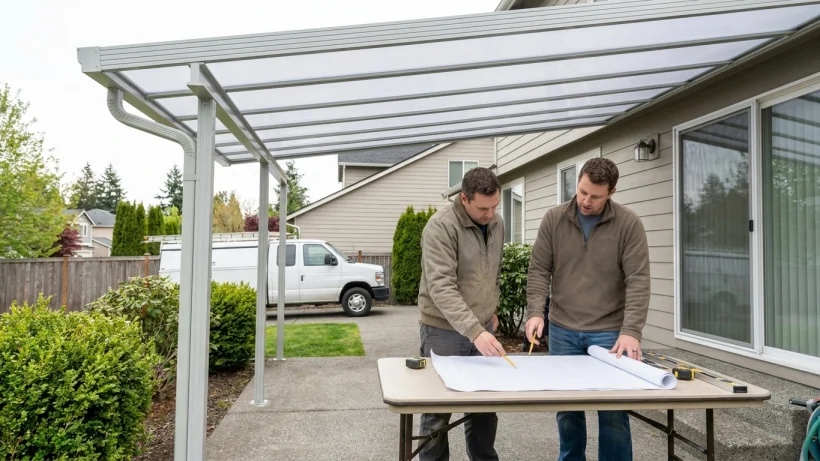
Start with how you expect to use the space. Dining may call for light over a table, while reading or cooking may need more focused illumination. For occasional gatherings, consider whether separate lighting zones would be useful.
Mark possible fixture locations, switches, controls, and outlets while the cover design is still flexible. Framing, beams, roof panels, drainage, and access all affect where wiring can go. Have the installer and electrician review the layout together; do not assume a particular roof style or cover material can accommodate a proposed route without checking the specific design.
Choose fixtures for a damp, exposed outdoor setting
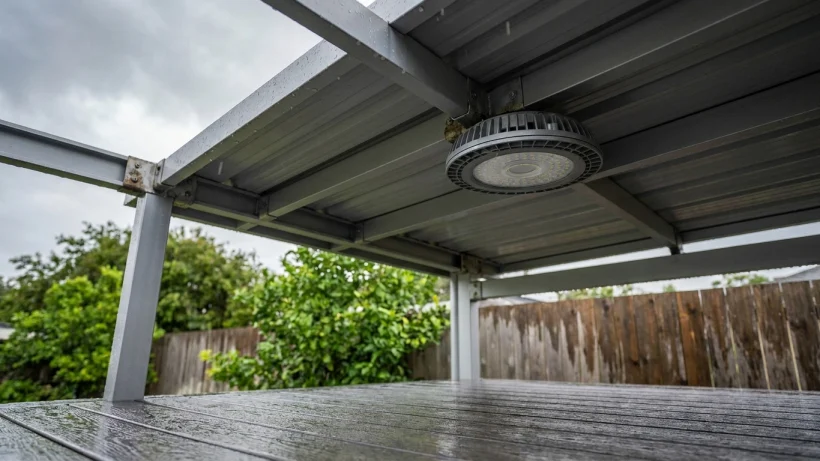
Being under a roof does not necessarily keep a fixture dry. Wind-driven rain can reach the edges of a patio cover, and condensation or persistent dampness can affect areas that appear sheltered. Ask the electrician to identify each fixture’s actual exposure and confirm that the fixture and its components are suitable for that location. Check manufacturer ratings and installation instructions rather than choosing by appearance alone.
Think about where the light will fall as well as how the fixture looks. A bright fixture near eye level can create glare, while translucent or reflective roof panels may change how light spreads. Choose locations that can be reached for cleaning and maintenance, and discuss materials and finishes that will hold up to the site’s moisture exposure.
Understand the safety questions an electrician should review
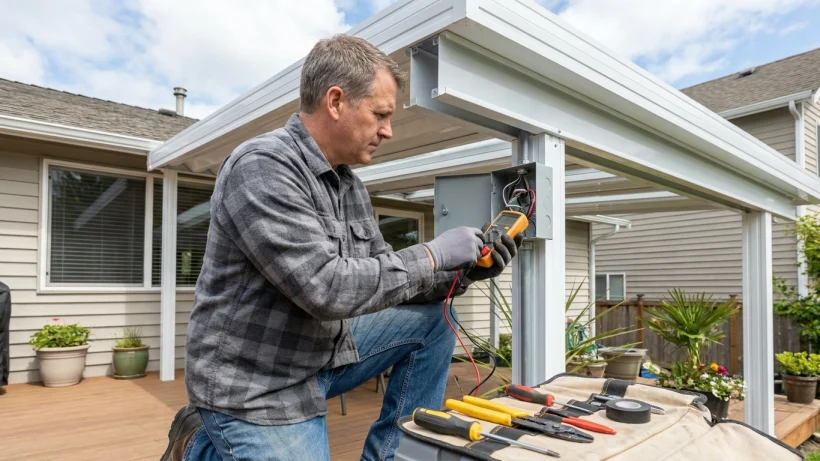
A qualified electrician should assess the existing circuit, expected load, grounding, and proposed connection points before deciding how to supply the lights. Ask what electrical protection the layout requires, including whether GFCI protection applies. The correct wiring method, boxes, connectors, and protective devices depend on the installation and current requirements.
Wiring and components must be appropriate for their location and protected from moisture and physical damage. Connections should not be hidden where they cannot be accessed as required. Likewise, cables should not be routed through beams or cover components without an approved method for that installation. Plug-in decorative lights and extension cords are not a substitute for properly planned permanent wiring.
Check permits, inspections, and local requirements
Electrical permit and inspection requirements depend on the work and the authority responsible for the project location. Before work starts, ask the electrician what the proposed installation requires and confirm the details with the relevant city or county permitting authority. This is especially important if the plan adds a circuit or changes existing wiring.
If an inspection is required, coordinate its timing with the patio cover installation so wiring can be reviewed at the appropriate stage, before it is covered where applicable. A general guide cannot establish that a particular project is code-compliant; current local requirements and site conditions determine the final approach.
Coordinate the wiring route with the cover structure
Review the proposed route against beams, drainage paths, roof panels, and any moving components. Depending on the cover design, an electrician may propose a concealed route, a surface-mounted route, or another approved pathway. The aim is a protected installation that does not interfere with the cover’s function or create places for water to enter.
Ask how junctions and other service points will remain accessible where required. Improvised holes or attachments can compromise cover components, so routing and mounting details should be agreed on before installation. Leave practical access for replacing fixtures and servicing electrical parts later.
Use a homeowner checklist before work begins
A clear written scope helps the cover installer, electrician, and homeowner work from the same plan. Use these questions when reviewing the design and estimate:
- Which fixtures, switches, controls, and outlets are included, and who will supply them?
- Who will perform the electrical work, check permit requirements, and arrange any required inspection?
- Where will wiring run, how will it be protected, and how does the route fit the cover materials and drainage?
- Could the condition or capacity of the existing electrical system change the planned scope?
- How will the completed lighting be checked, and what fixture, permit, and installation information should be kept for future maintenance?
Settling these points before construction reduces avoidable changes and helps keep the electrical plan aligned with the patio cover design. The final details should reflect the actual site, selected products, and the electrician’s review.