Patio Cover Ventilation: How to Avoid Damp Buildup in Puget Sound
A patio cover can make outdoor space more usable in wet weather, but it will not keep every surface dry. Learn how airflow, drainage, cover design, and everyday habits affect dampness beneath a covered patio.
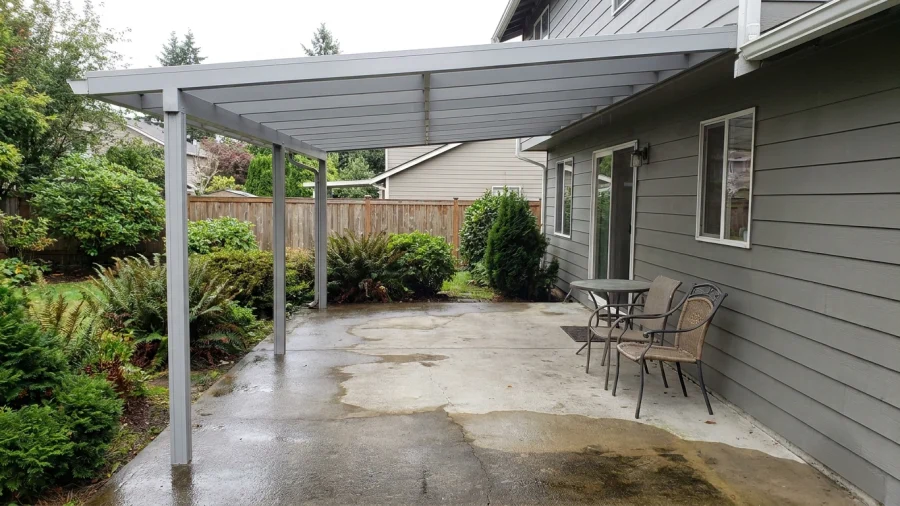
In Western Washington, a roof over the patio is only one part of keeping the space comfortable. Effective patio cover ventilation depends on air moving through the space, while good drainage limits the water that needs to dry. Before changing a cover design, it helps to identify where the moisture starts.
Why covered patios can stay damp in Puget Sound
A patio cover reduces direct rain from above, but wind-driven rain can still enter from the sides. Even when rain stays out, frequent drizzle, low sun, nearby trees, and limited air movement can leave shaded concrete and furniture slow to dry.
Moisture can also come from wet cushions or tools stored under cover, damp planting beds, or the ground beneath the patio surface. An open-sided cover is an outdoor shelter, not a conditioned room, so some seasonal dampness is normal.
Start by finding where the moisture is coming from
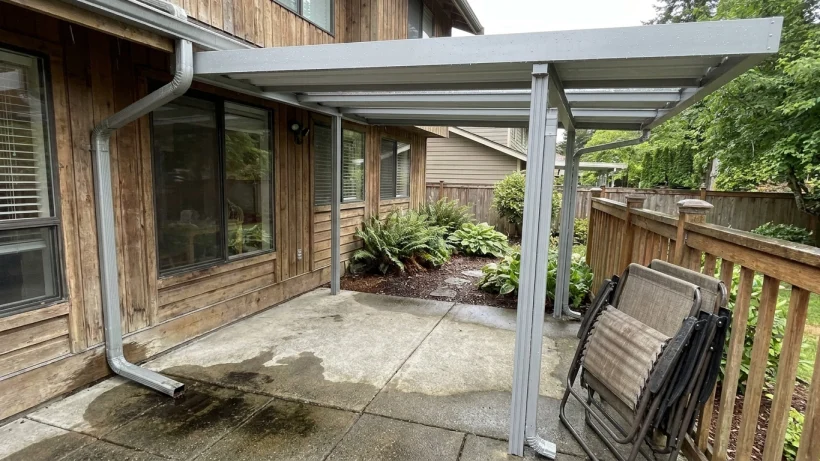
Notice when and where dampness appears. Wet chairs after a windy storm suggest a different source than droplets on the underside of a cover after a cool night. A patio that stays wet during calm weather may have a drainage or airflow problem.
- Check roof edges and downspouts for runoff, dripping, and splashback.
- Look for standing water on the patio and in adjacent planting beds.
- Note whether moisture collects on furniture, the cover underside, the house wall, or the ground.
- Compare what you see over several wet and dry days before settling on a cause.
Plan for crossflow, not just an opening in the roof
Air needs a path into and out of a covered area to help damp surfaces dry. Open sides often let breezes move through; close-set fences, solid screens, and dense landscaping can slow that movement. Consider the patio’s wind exposure and nearby obstructions when planning its layout.
A roof vent or gap may be appropriate for some systems, but it will not guarantee a dry patio and should not be added without regard to the cover’s design. The aim is to preserve useful airflow while still limiting the wind-driven rain that reaches the space.
Choose a cover layout that balances shelter and drying
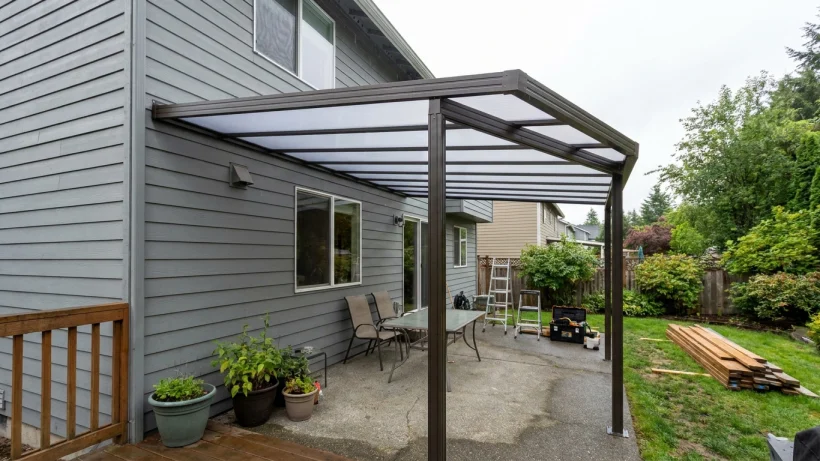
Roof projection and placement affect how much rain the cover blocks, particularly near its outer edge. A deeper cover may shelter more of the patio, but the best fit depends on the site’s wind exposure, orientation, and how the space will be used.
Solid and translucent roof materials admit different amounts of daylight, which can change how shaded the patio feels. Compare those options using the selected system’s product guidance. Side panels and screens can improve shelter while reducing breezes, especially when they close off multiple sides. Consider nearby doors and windows as part of the same layout decision.
Make drainage and the ground surface part of the solution
Ventilation cannot dry a spot that is continually being soaked. Check where the cover’s runoff will go and whether water spills repeatedly onto the patio, a walkway, or a planting bed that splashes back onto furniture and siding.
Low spots, pooling, and runoff from nearby surfaces deserve a site-specific look. Patio slope and drainage details should be assessed rather than improvised. Where the cover includes gutters or other drainage paths, keep them clear as part of routine maintenance.
Use everyday habits to help the space dry
Small changes can keep moisture from lingering in the places a breeze cannot reach.
- Let wet cushions and fabrics dry in a breezier location when practical instead of stacking them under cover.
- Leave some space between walls, furniture, storage bins, and planters so air can move through corners.
- Avoid storing persistently wet items beneath the cover, and occasionally move furniture to check the surface underneath.
- After storms, remove leaves and debris that trap water around the patio or block drainage points.
When persistent dampness needs a closer look
Repeated pooling, water entering where the cover meets the house, or dampness that persists after a dry spell may point to more than normal outdoor exposure. Pay particular attention if adjacent siding, trim, or a door area stays wet.
When the source is unclear, an appropriately qualified professional can assess the drainage, cover details, and surrounding construction. Adding ventilation alone may not resolve a water-management or building-envelope issue.
A practical pre-installation checklist for Puget Sound homeowners
- Identify existing wet spots and decide where the new roof runoff will be directed.
- Review which sides will remain open and whether fences, screens, or landscaping will restrict airflow.
- Consider how roof material, projection, orientation, and attachment details fit the home and intended patio use.
- Check the manufacturer’s guidance for cleaning and drainage maintenance required by the specific system.