How to Protect Your Landscaping During a Puget Sound Roof Replacement
A little planning can help protect plants, paths, and outdoor features during roof replacement. Use this guide to prepare your yard, coordinate with the roofing crew, and check the area after cleanup.
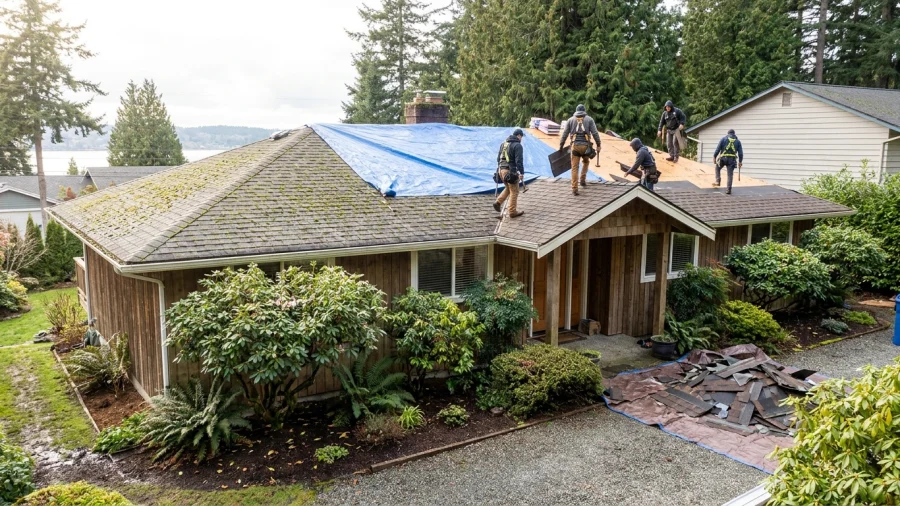
Roof replacement brings people, materials, and debris close to the ground around your home. If you have established garden beds, a narrow side yard, or a lawn softened by Puget Sound rain, a site-specific plan can reduce avoidable impacts. Some preparation is easy to handle yourself; debris control and work-zone protection should be coordinated with the roofing crew.
Why roof replacement can put landscaping at risk
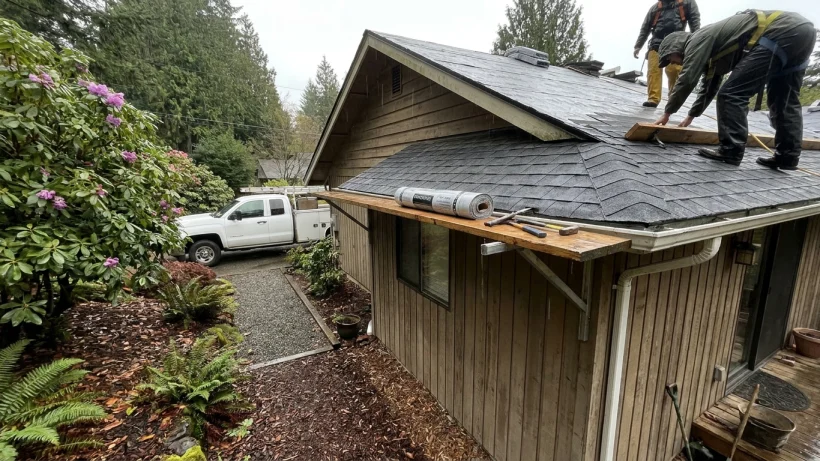
During tear-off and installation, old roofing, underlayment, nails, and packaging can fall near the eaves. Ladders, material staging, worker routes, and equipment may also affect beds, lawn edges, paths, and narrow side yards. That does not mean damage is inevitable, but it does mean the yard deserves a place in the project plan.
Established shrubs, delicate plants, raised beds, and low branches may each need a different approach. In Western Washington, wet ground can become soft enough that repeated foot traffic leaves ruts or compacts soil. Recent rain and the condition of your access routes are worth discussing before work starts.
Walk the property with the roofing contractor before work begins
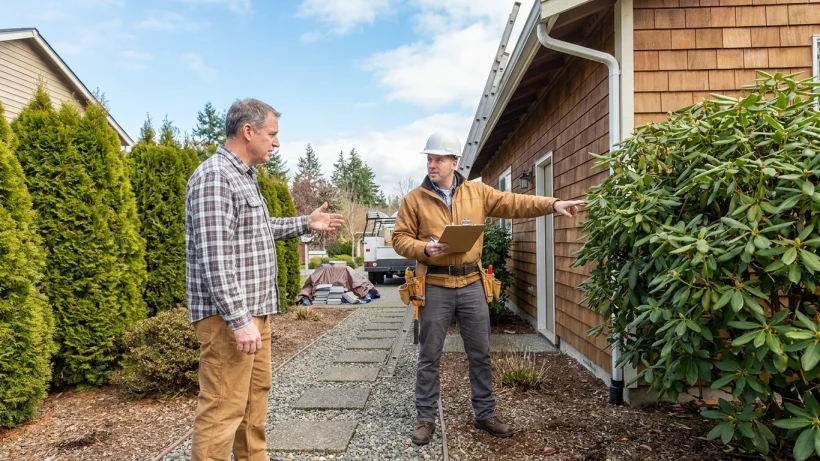
A short walkthrough helps you and the project lead agree on what needs attention. Point out prized or fragile plants, new planting, vegetable beds, irrigation components, outdoor lighting, and delicate paving. Then identify likely ladder positions, material drop and collection areas, staging spots, and the routes workers expect to use.
Ask how the crew plans to manage falling debris and protect areas beneath the roof edge. The right measures depend on the home, landscaping, and roofing scope, and they may need to change as work moves around the house. Take dated photos of beds, lawn edges, paths, and outdoor features beforehand. Confirm who will move or protect items and who will contact you if a planned route or protection method needs to change.
Prepare plants, containers, and outdoor features
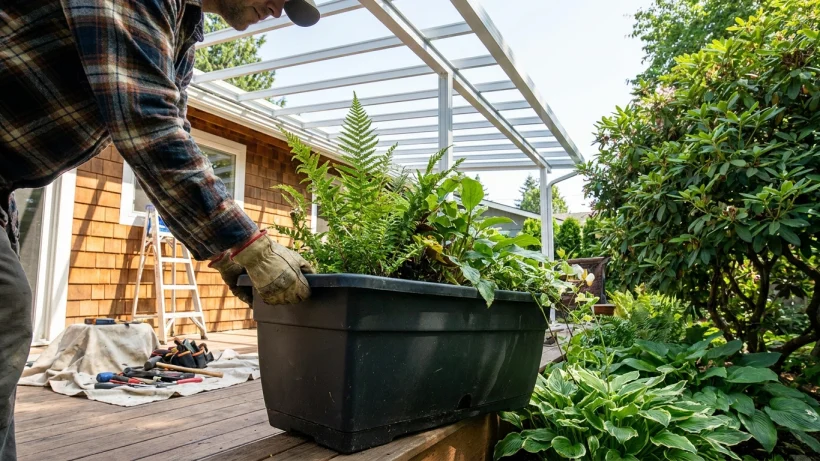
Move portable planters, garden ornaments, patio furniture, and other lightweight items away from the work zone when you can do so safely. If a small branch clearly blocks access, trim it only if it is easy to reach and safe to handle. Larger or high branches call for qualified help. Avoid heavy pruning or transplanting valuable shrubs immediately before the job unless a knowledgeable professional recommends it.
Show the crew where irrigation lines, low-voltage lighting, drain outlets, and other easily missed features are located. Ask before covering plants: a covering may limit debris exposure, but it can also press down growth, restrict airflow, or trap moisture if left in place. Agree on who will place, adjust, and remove any protection.
Plan for debris control, access, and wet-weather conditions
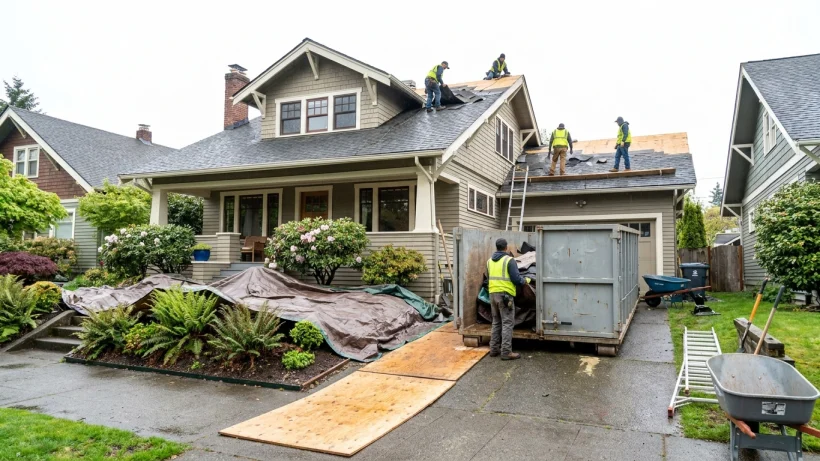
Ask where tear-off debris will be directed and collected, and how close those areas will be to beds and paths. Discuss protection beneath roof edges and at ladder or access points. Coverings and barriers may need to shift as the crew works on different sections, so the plan should allow for adjustments rather than assume one setup will serve the whole job.
If rain has softened the ground, discuss how workers and material deliveries can reach the roof without unnecessary traffic across lawn or planting beds. Confirm how the project lead will handle an unexpected obstacle, such as a hidden irrigation line or an access route that proves unsuitable. Keep household members and pets out of active work and debris zones, and follow the crew’s site-safety instructions.
Check the yard during the project without entering work areas
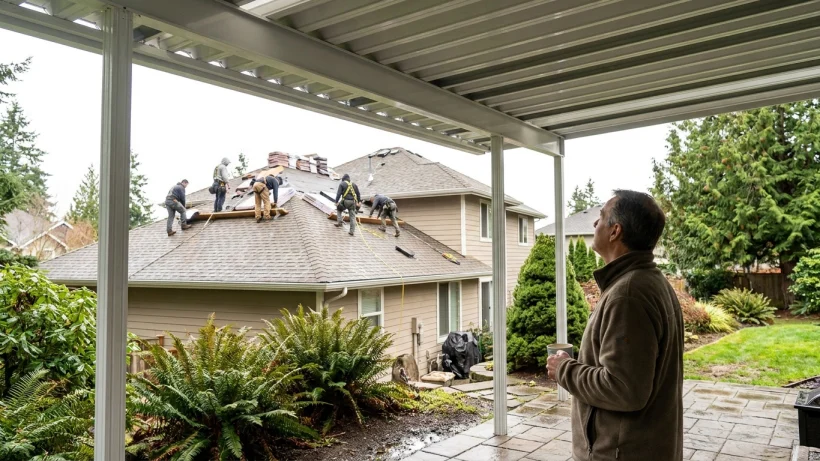
Agree on a convenient way to reach the project lead if you notice a concern. You can observe the landscaping from a safe distance, but do not walk beneath active roof work or into areas reserved for crew access. If a covering shifts or a plant appears exposed, tell the crew instead of adjusting materials near the work zone or climbing a ladder. Ask the crew to flag damage or access problems they discover so you can discuss them promptly.
Inspect landscaping and outdoor areas after cleanup
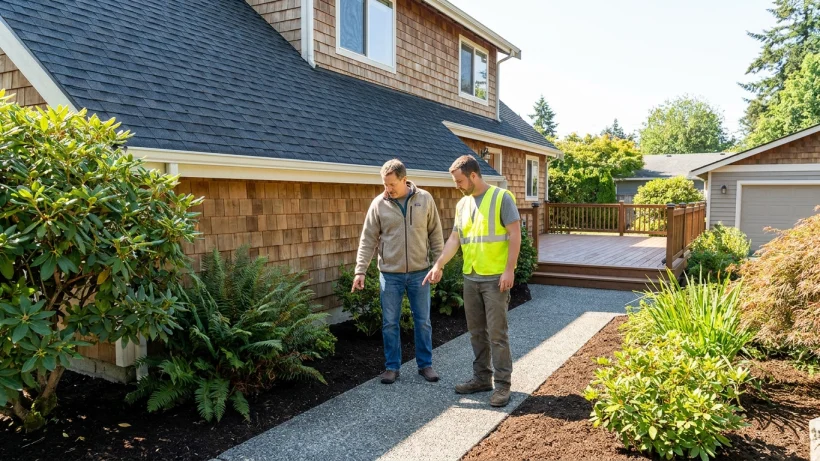
Once the crew says the work area is safe to enter, walk the perimeter with the project lead. Look at garden beds, lawn edges, paths, downspout outlets, and places used for ladders or staging. Check accessible areas for visible roofing scraps or nails, and ask what cleanup methods were used. Leave sharp debris for the crew to handle.
Photograph bent branches, disturbed mulch, or other concerns and discuss them while the job details are fresh. Give plants their normal care afterward. Changes in appearance can have several causes, including weather, so avoid assuming every sign of stress came from the roofing work.
Use a simple landscaping-protection checklist
- Before: Photograph existing landscaping, identify fragile features, move portable items, and show the crew irrigation and lighting locations.
- Coordinate: Confirm access routes, staging and debris areas, the plant-protection approach, and the best contact during the job.
- During: Keep people and pets clear of work zones and report concerns from a safe location.
- After: Walk the perimeter when it is safe, note concerns, and discuss cleanup or follow-up with the project lead.