Preparing Your Western WA Roof for Solar: What to Ask Your Contractor
Solar planning starts with a sound roof and a clear division of work. These questions can help Western Washington homeowners coordinate roofing and solar projects before installation.
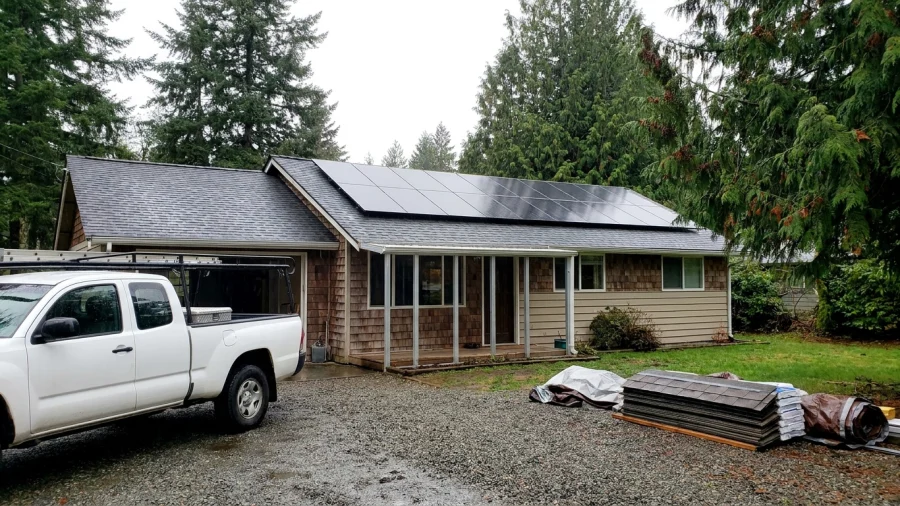
Preparing a roof for solar involves more than finding a sunny place for panels. In Western Washington, the roof also needs to manage frequent rain, and future repairs may be harder to reach once panels are installed. A roof assessment and a clear plan between the roofing and solar contractors can help you make decisions in the right order.
Start with the roof’s condition and remaining service life
Ask a roofing contractor to assess the roof up close before the solar layout is finalized. The assessment should cover the roof covering, flashing, valleys, existing penetrations, and visible signs of moisture intrusion—not just what can be seen from the ground. Moss, staining, and debris are reasons to look more closely, but they do not by themselves mean the roof needs replacement.
Ask what repairs may be needed soon, how the contractor reached that conclusion, and what they can reasonably say about the roof’s remaining service life after an on-site inspection. Share those findings with the solar contractor. If replacement is likely in the near future, compare reroofing before solar installation with the disruption of having panels removed and reinstalled later.
Ask how roof work and solar installation will be sequenced
Before signing separate agreements, establish the order of roof inspection, any repairs or reroofing, final solar design, and panel installation. Ask who confirms that the roof is ready for solar and what criteria they use. If reroofing is planned, the roofing scope and panel layout should be coordinated before materials and work dates are finalized.
- Who handles roof repairs found after work begins, and how will a change in scope be approved?
- If panels are already on the roof, who removes and reinstalls them?
- Who communicates weather delays, schedule changes, and handoffs between crews?
Put the agreed sequence and each contractor’s responsibilities in writing so neither crew has to guess what the other has completed.
Understand the attachment and water-management details
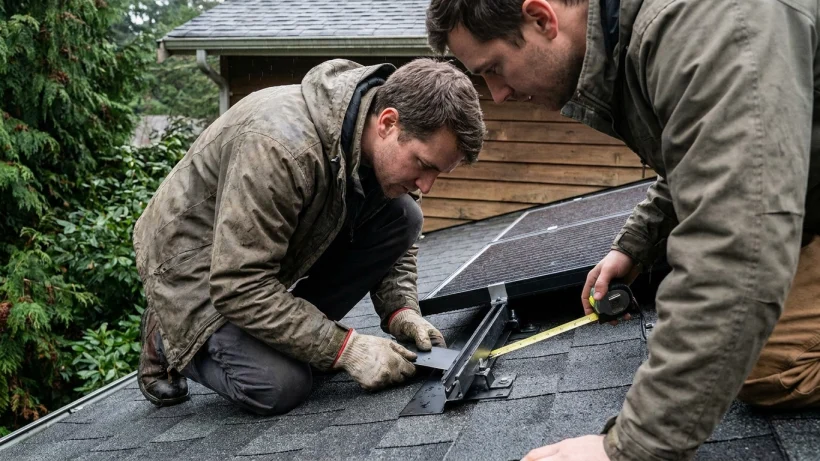
Ask the solar installer to show where attachments and any roof penetrations will go. Have the installer explain how each attachment works with the roof covering and flashing, who installs those details, and who checks the completed work. This matters in a rainy climate: water needs a reliable path past every point where equipment meets the roof.
Review the proposed locations near valleys, roof edges, vents, skylights, and other areas where water flows or roofing components meet. Ask what inspection records or photos will document the finished attachments. No single mounting method is right for every roof; the appropriate details depend on the roof type, its condition, and the solar design.
Check roof structure, layout, and system compatibility
Ask how the proposed layout accounts for roof shape, orientation, shading, and usable area. Have the design team identify any concerns about framing or added loads, and ask who will evaluate them if needed. A visual look at the roof alone does not confirm structural capacity.
Point out existing or planned skylights, plumbing vents, attic vents, and future roof work that could affect placement. Ask whether the roofing material and mounting components are compatible and what product information supports that choice. The layout should also explain which roof areas are excluded and why.
Include attic ventilation and moisture control in the conversation
Ask the roofer to note the home’s existing attic ventilation approach and any visible concerns during the roof assessment. Then ask whether panel placement would limit access to vents or other components that may need maintenance. Solar panels do not automatically create a ventilation problem, but the plan should account for the roof that is already there.
If you have noticed condensation, damp insulation, or other attic moisture, have the cause assessed before adding equipment over more of the roof. If ventilation changes are recommended, ask why they fit this specific roof assembly and which contractor would perform the work.
Clarify permits, inspections, and who owns each task
Ask the solar provider which permits and inspections are included in its scope, who performs the electrical work, and how that work is coordinated. If roofing repairs or replacement are part of the plan, ask whether they need separate documentation or inspections and who will arrange them. Requirements can vary by community, so confirm current details with the contractors and relevant local authorities.
A written division of responsibilities should identify who handles roof attachments, electrical connections, roofing repairs, cleanup, and follow-up if an issue is found. It should also make clear whom you contact when a question involves both the roof and the solar equipment.
Compare written scopes before choosing a project plan
Compare proposals by what they actually include: the roof assessment, proposed repairs, roofing materials and work areas, attachment method, and panel layout. Check exclusions and ask how additional roof work discovered during installation would be documented and approved. An estimate is a planning tool, not a guarantee that concealed conditions will not change the scope.
- Check how workmanship and product coverage are described, who provides each document, and what conditions or exclusions apply.
- Look for a workable schedule, a plan for communicating changes, cleanup expectations, and named points of contact.
- Keep inspection findings, product information, agreements, and completion records together for future roof and solar maintenance.