Roof Deck Moisture: Spot Hidden Damp Before Replacing in Washington
Signs of moisture beneath a roof can help you plan a replacement, but they do not reveal the full cause or extent of damage. Learn what you can safely observe from inside and how to discuss the findings during a roof assessment.
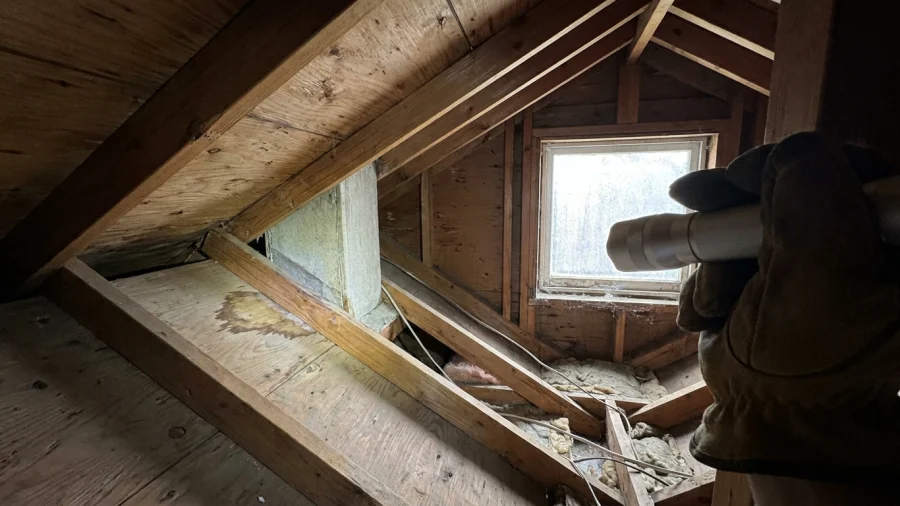
Before replacing a roof, it is worth noting any signs of dampness you can safely see from inside the home. Those observations can make the inspection and estimate conversation more specific. They cannot, on their own, tell you whether the roof deck needs repair.
Why check for roof-deck moisture before replacement?
The roof deck is the sheathing beneath the roofing materials, commonly plywood or oriented strand board. Moisture can affect that sheathing, nearby framing, insulation, or interior finishes. A stain on one surface does not establish where the water came from or how far it traveled.
A new roof covering does not automatically resolve every moisture source. In Western Washington, frequent rain makes roof water management important, while damp attic conditions can also raise questions about ventilation and indoor moisture. The useful first step is to document clues and have the conditions assessed—not to judge the deck’s structural condition from a quick look.
Safe places to look for clues from inside the home
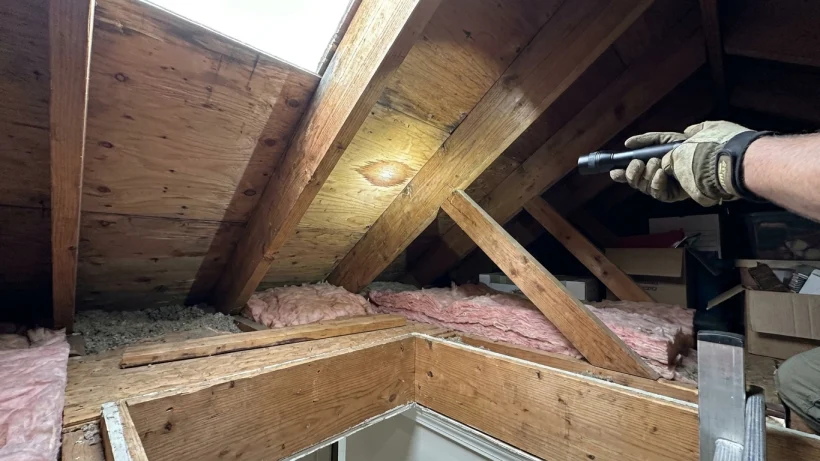
On a dry day, you may be able to look from a stable, properly installed attic access point. If access is difficult or you see exposed wiring, suspected damage, or another hazard, stay out. From a safe position, use a flashlight to view the underside of the deck, rafters, and nearby insulation. Do not push, scrape, lean on, or walk across areas you cannot safely reach.
- Look for dark or water-marked wood, damp-looking surfaces, droplets, rusty fasteners, and insulation that appears wet or compressed.
- Check ceilings and upper wall corners for recurring stains, peeling finishes, or bubbling paint. These can also have causes unrelated to the roof.
- Leave the exterior inspection to a qualified professional. Do not walk on a roof, particularly one that is wet, mossy, steep, or otherwise unsafe.
What different moisture signs may—and may not—tell you
Fresh droplets or visibly damp wood may indicate current moisture, but the source still needs tracing. An old, dry stain may be left from a past leak; note where it is and whether it changes after rain. Soft, swollen, flaking, or visibly deteriorated sheathing deserves prompt professional attention. Do not probe it yourself.
Condensation or frost-like signs can relate to indoor moisture and attic ventilation conditions as well as roof leakage. Timing and location matter. A musty odor, damp insulation, or staining near a chimney, skylight, vent, or valley gives an inspector a place to investigate, but proximity alone does not prove that feature is the source.
Common moisture pathways in rainy Pacific Northwest conditions
Worn roofing, damaged flashing, and details around roof penetrations can let water into the assembly. Wind-driven rain can test edges and transitions; debris-filled gutters or poor drainage may also direct water where it does not belong.
Not every damp attic starts with rain. Warm, moist indoor air can reach a cold attic and condense when air sealing or ventilation conditions are inadequate. Plumbing or bath fans that discharge into or near the attic can produce similar symptoms. Several conditions can overlap, so a sound assessment may need to consider both the roof exterior and the attic or interior.
Document what you see before requesting a roof assessment
Take clear photos from a safe, stationary position. Include a wider view that shows where a mark sits, not just a close-up. Record the room or attic location, date, recent weather, and whether the area looks wet, dry, or different from an earlier observation. Note nearby features such as a vent, chimney, skylight, or valley without assuming they caused the problem.
Keep descriptions factual: “brown stain below the north-side roof slope” is more useful than naming an unverified leak source. If water is actively entering the home or damage is changing quickly, arrange timely professional evaluation. Avoid contact with wet electrical fixtures or materials.
Questions to ask when comparing roof replacement estimates

Share your notes and photos, then ask what the contractor was able to inspect and whether the attic observations were considered. Some deck conditions remain concealed until the existing roofing is removed, so the written estimate should explain how those discoveries will be handled.
- What existing roof layers will be removed, and when will the exposed deck be inspected?
- If damaged sheathing is found after tear-off, how will the repair be described, documented, approved, and added to the scope?
- How does the proposed roof system address flashing, ventilation, and other details relevant to the observed conditions?
- What is included for materials, removal, disposal, and possible deck repairs, and what is excluded?
Compare the scope behind each total, not just the total itself. A clear deck-repair process is more informative than a vague allowance that does not explain what happens if hidden damage is found.
When to bring in a professional
Active leaks, recurring stains, visibly deteriorated sheathing, persistent attic dampness, and moisture near roof penetrations warrant professional assessment. Do not enter an attic with unsafe access, suspected structural weakness, standing water, or electrical hazards.
A roof replacement inspection should verify conditions in the field, and some concealed deck damage may not be visible until tear-off. If additional work is needed, have the contractor explain the findings, corrective work, and scope changes in writing before that work proceeds. The practical approach is to observe safely, document accurately, and let field inspection—not guesswork—determine what needs attention.