Understanding Roof Replacement Costs in Washington
A practical guide detailing how roof replacement costs are calculated, how to read an estimate, and what factors drive the final price in Western Washington.
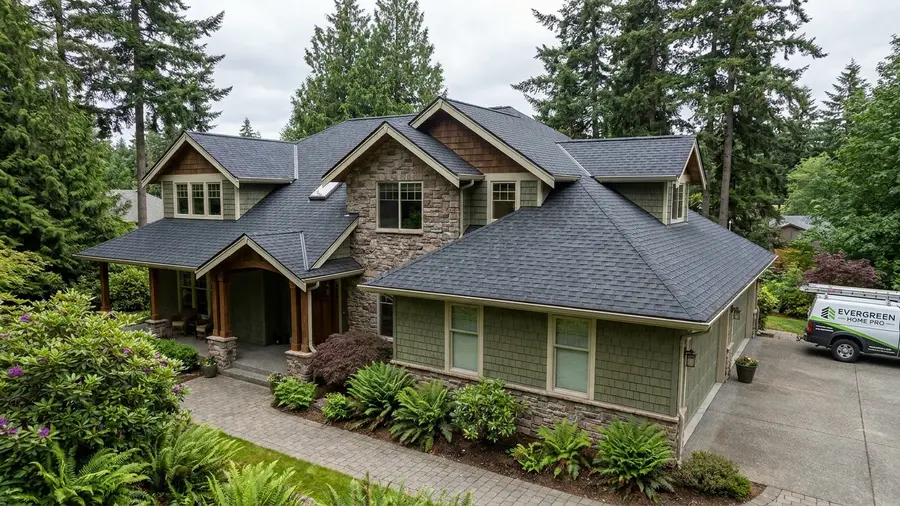
Replacing a roof is one of the most significant investments you will make in your Pacific Northwest home. When it comes time to collect bids, the numbers can vary widely between contractors. Understanding what goes into a roof replacement cost in Washington helps you make an informed decision, avoid surprise charges, and ensure your home is protected against heavy seasonal rains and wind.
What Drives Roof Replacement Costs in Washington?
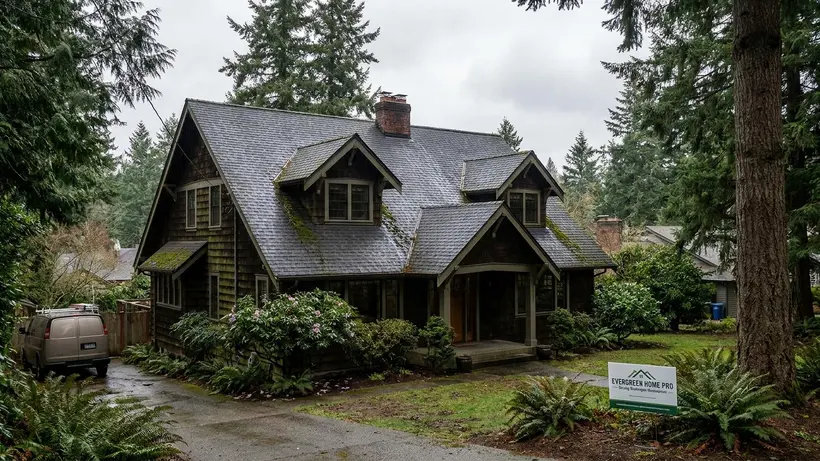
The baseline cost of your new roof is dictated by the physical characteristics of your home. Before any materials are selected, contractors evaluate your roof's unique footprint.
- Roof Size (Square Footage): Roofers measure materials in squares, where one square equals 100 square feet. A larger roof naturally requires more materials and labor.
- Roof Pitch and Complexity: Steeper roofs are more difficult to walk on, requiring specialized safety equipment and slowing down the installation process. Roofs with multiple valleys, dormers, and facets also increase labor time and create more material waste during cutting.
- Accessibility: If your home is situated closely to neighbors, on a steep hill, or has extensive landscaping, placing a dumpster near the house becomes difficult. Moving heavy materials by hand adds to the labor cost.
- Existing Layers: Tearing off multiple layers of old asphalt shingles costs more in both labor and local dump disposal fees.
Breaking Down a Professional Roofing Estimate
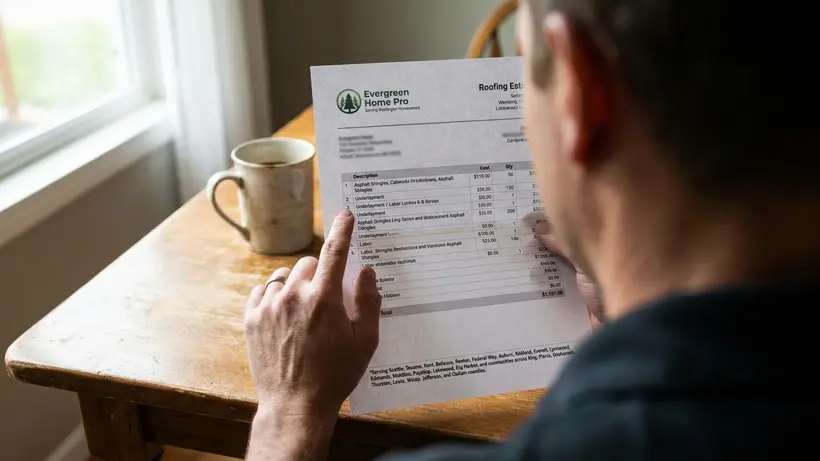
A reliable roofing bid should be transparent and itemized, not just a single lump sum at the bottom of a page. Here is what you should expect to see clearly outlined on a professional estimate.
- Tear-off and Disposal: The labor required to strip the old materials down to the roof deck, plus hauling and landfill fees.
- Underlayment and Water Barriers: A critical layer for Puget Sound homes. This includes high-quality synthetic underlayment and ice and water shields applied to eaves and valleys to prevent moisture intrusion.
- Primary Material (Shingles): The cost of the visible layer, such as architectural shingles, which are engineered for durability and wind resistance.
- Flashing and Drip Edge: Metal components that direct water away from the roof edges, chimneys, valleys, and sidewalls.
- Ventilation: Essential ridge vents and soffit vents that keep your attic breathing, preventing condensation and extending the life of your roof.
- Labor and Permits: The cost of a skilled, local installation crew and the necessary municipal permits to ensure the work is compliant with local building codes.
The Hidden Costs of Pacific Northwest Roof Replacements
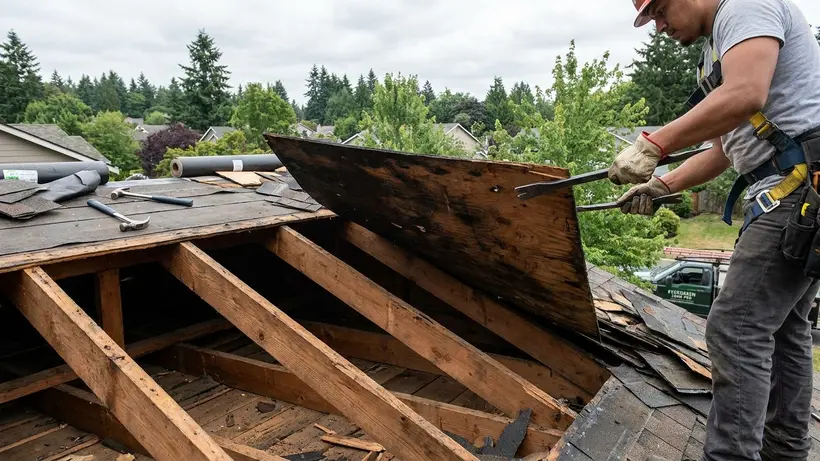
In Western Washington, persistent rain, tree debris, and moss can take a toll on the structure beneath your shingles. Some costs cannot be finalized until the old roof is removed.
- Plywood Decking Replacement: If water has seeped through failing shingles, the wooden roof deck may be rotted. Contractors typically specify a per-sheet cost for replacing damaged plywood.
- Fascia and Soffit Rot: The wood boards at the edge of your roof line often degrade due to clogged gutters or constant moisture. These must be structurally sound before new drip edge or gutters can be installed.
- Chimney and Skylight Re-flashing: Roof penetrations are the most common source of leaks. Properly sealing around skylights and brick chimneys often requires custom sheet metal work or new flashing kits.
Online Roofing Calculators vs. Professional Inspections
Online roofing calculators are helpful for getting a rough initial idea of costs based on satellite imagery. However, they are only a starting point and cannot replace an actual inspection.
- Satellite Measurements: While software can estimate the exterior footprint, it completely misses the condition of the underlying decking and framing.
- Attic Inspections: A thorough contractor inspection often involves checking the attic for signs of daylight, trapped moisture, and proper airflow—factors an online tool cannot see.
- Field Verification: Having a qualified contractor physically walk the roof and measure penetrations guarantees that the scope of work is accurate and complete, preventing mid-project surprises.
How to Compare Roofing Bids Like a Pro
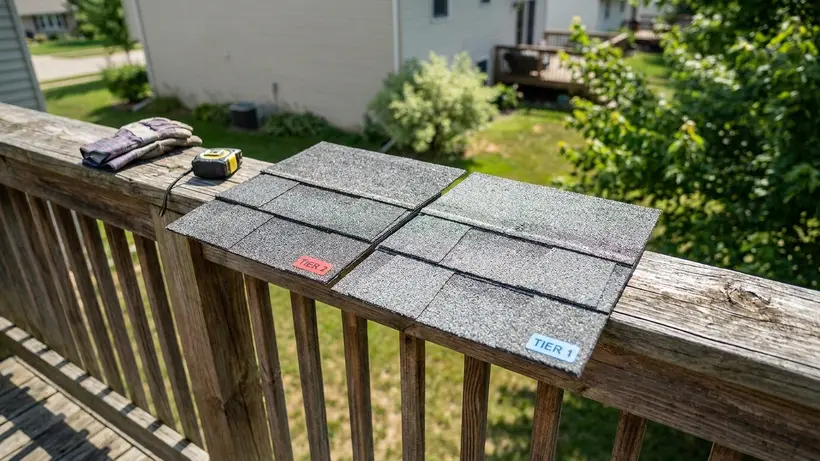
When you have multiple estimates on the table, it is crucial to ensure you are making an apples-to-apples comparison. The cheapest bid is not always the most cost-effective in the long run.
- Look beyond the bottom line: Ensure lower bids are not achieving their price by omitting critical system components, reusing old flashing, or downgrading the underlayment.
- System vs. Shingles: Verify that the estimate provides a complete, integrated roofing system engineered to work together, rather than a patchwork of mismatched manufacturer materials.
- Verify Licensing and Insurance: Check that the contractor holds a valid Washington state license and carries adequate insurance to protect you and your property.
- Warranty Clarity: Read the details to understand the difference between the manufacturer's warranty on the physical materials and the contractor's warranty covering the installation labor.