Should I replace roof flashing when reroofing in Western Washington?
Roof flashing does not always need to be replaced during a reroof, but every flashing location deserves a clear plan. Learn what to inspect, when reuse may make sense, and what to confirm in a roofing estimate.
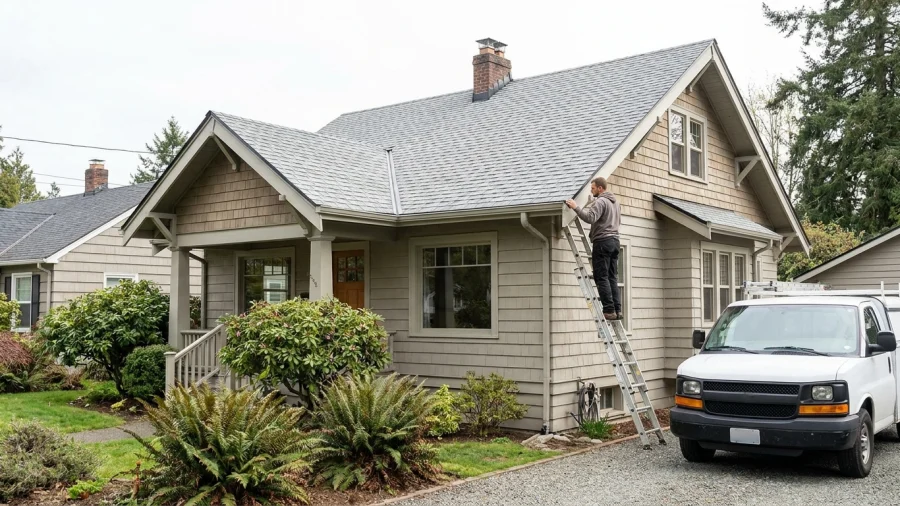
New shingles are only one part of a watertight roof. During a reroof, the metal and other flashing details around walls, chimneys, vents, and roof edges need attention too. The useful question is not whether every piece must go, but whether each detail is sound and can work with the new roofing.
The short answer: assess flashing as part of the reroof
You do not necessarily need to replace roof flashing when reroofing, and you should not assume it can all be reused. The decision depends on the flashing material, its condition and location, and whether it can be properly integrated with the new roof covering. A roofing estimate should identify the planned approach before work begins.
Some flashing is partly concealed by old roofing or adjacent materials. Once removal exposes it, the crew may find damage that changes the plan. Ask how those findings will be documented and how a scope change will be reviewed and approved rather than treating an unknown condition as work already included.
What roof flashing does—and where it is used
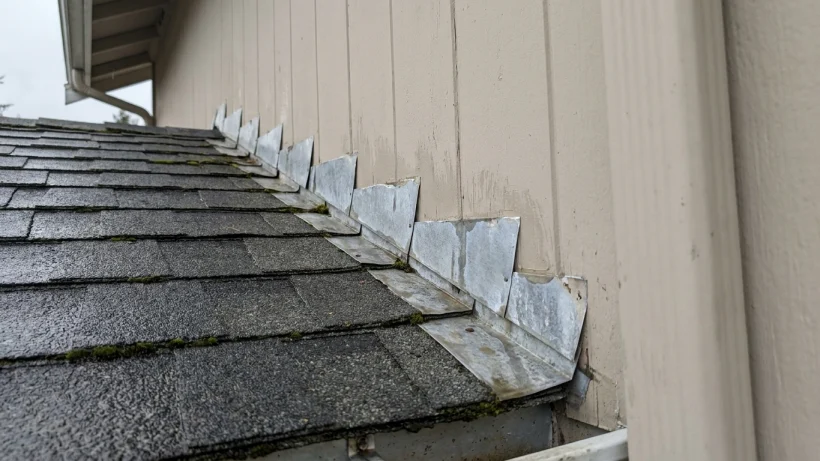
Flashing directs water away from places where the roof surface changes direction, meets another material, or has an opening. It works alongside the roof covering, underlayment, and adjacent siding or masonry. Even sound metal cannot make up for a transition that is layered incorrectly or allows water to drain behind it.
- Chimney flashing seals the transition between the roof and masonry.
- Step flashing protects roof-to-wall joints, with overlapping pieces that work with the roofing courses.
- Valley flashing helps manage runoff where two roof planes meet.
- Plumbing vent flashings surround pipes that pass through the roof.
- Skylight flashing directs water around the skylight and back onto the roof.
- Metal edge flashing helps direct water at roof edges.
These locations use different designs and materials. A problem at one vent does not mean the chimney flashing has the same problem; each detail needs its own assessment.
When flashing is a strong candidate for replacement
Rust-through, cracks, holes, bent or loose metal, failed joints, and deteriorated sealant where sealant is part of the detail are reasons for closer evaluation. So is evidence of recurring leakage. A roofer should assess the whole transition, including concealed portions, rather than decide from a surface glance.
A poorly positioned or incorrectly configured detail may also need replacement even if the metal looks serviceable: new shingles will not correct a water path behind the flashing. Removal of old roofing can reveal corrosion, decayed adjacent material, or earlier patching that was not visible during the estimate. An indoor stain is worth investigating, but it does not identify the entry point on its own; water can travel before it appears inside.
When existing flashing may be reusable
Reuse can be reasonable when flashing is intact, appropriately sized and positioned, securely attached, and compatible with the planned reroof. Visible condition is only part of that decision. The installer must also be able to layer the new roofing and underlayment with it so water drains outward as intended.
Some details may be difficult to remove without damaging adjacent materials; others may be replaced during standard reroof preparation. A limited repair may be appropriate for a specific, accessible defect, but it should not be used to avoid correcting a failed transition. Ask the contractor to explain the proposed detail and how applicable product instructions and local building requirements affect it.
Why Western Washington roofs need careful water-management details
Frequent rain, wind-driven rain, and long damp periods make reliable drainage especially important in Western Washington. Walls, chimneys, valleys, and penetrations interrupt the roof plane, creating transitions where water must be guided back onto the roofing rather than behind it.
Debris and moss can hold moisture or slow drainage, though neither proves flashing has failed. During planning, consider where water flows and whether nearby siding, masonry, or exposed roof framing shows signs of deterioration. Flashing is an important part of water management, not a stand-alone cure for every leak.
What to ask about flashing in a reroof estimate
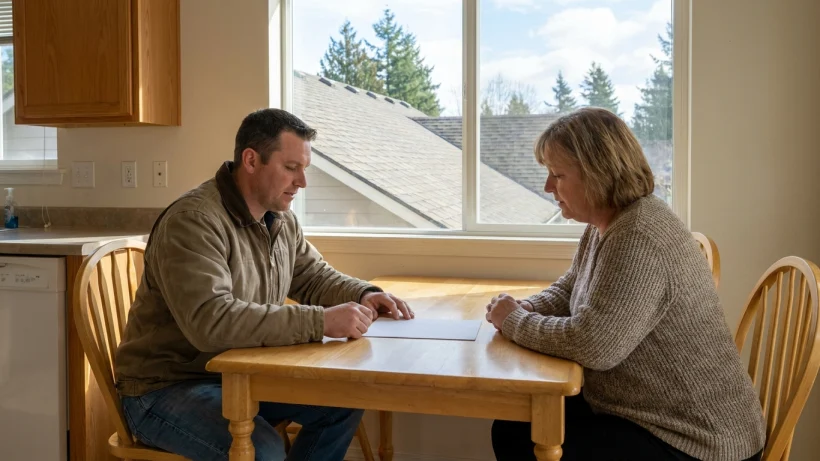
Compare written scopes, not just a line item labeled “flashing.” Two bids can describe different work while appearing similar at a glance.
- Which flashing locations will be replaced, which may be reused, and what condition checks support those choices?
- Does the scope address the chimney, roof-to-wall joints, valleys, vents, skylights, and roof edges that are present on this home?
- How will new or reused flashing be integrated with the roofing, underlayment, and adjacent wall or masonry materials?
- How will concealed damage or additional work be documented, priced, and approved before it proceeds?
- What does the estimate exclude, and how does the proposed installation follow applicable product instructions and building requirements?
If an estimate does not name a detail, do not assume it is included. A clearer scope makes it easier to compare bids and resolve questions before the old roof comes off.
A practical decision checklist before work starts
- Identify the flashing locations on your roof and make sure each is addressed in the written scope.
- Understand why each detail is slated for replacement, repair, or reuse.
- Agree on how concealed conditions will be reported and changes approved.
- Confirm that each planned detail works with the new roof covering and the adjoining wall, chimney, or penetration.
- Keep the agreed scope and any approved changes with your project records.
The goal is not to replace metal for its own sake. It is to leave the reroof with sound, well-integrated water-management details that suit the home and the roofing system.