Should You Replace Skylights During a Roof Replacement?
Learn why replacing aging skylights alongside a roof replacement prevents moisture leaks, lowers overall labor costs, and improves home energy efficiency in the Pacific Northwest.
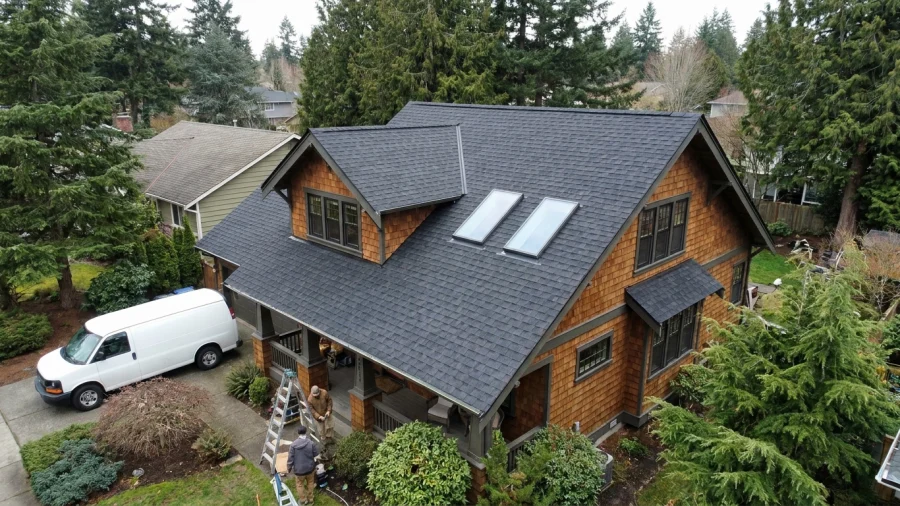
When planning a residential roof replacement, homeowners often face the decision of whether to replace their existing skylights or leave them in place. Because skylights cut directly through the roof deck and waterproof underlayment, their performance is inseparable from the roofing system around them. In Western Washington, where sustained rain and high moisture levels test roof penetrations constantly, synchronizing skylight replacement with a full roof tear-off is almost always the most reliable and cost-effective approach.
The Lifecycle Reality: Why Skylights and Roofs Belong on the Same Clock
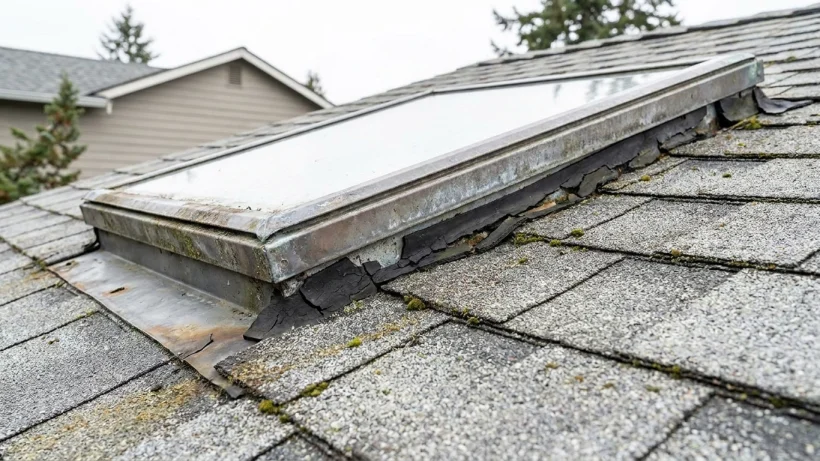
Asphalt architectural shingles and modern skylights have overlapping service lives, but they do not age identically. While quality architectural shingles generally last between 20 and 30 years depending on attic ventilation and tree cover, residential skylights carry an effective operational lifespan of 15 to 20 years.
Over time, persistent UV exposure, seasonal temperature swings, and outdoor moisture degrade the vital components that keep a skylight sealed. The synthetic rubber gaskets, perimeter seals, and insulated glazing units lose elasticity and slowly break down. When a homeowner installs a 30-year roofing system around a 15-year-old skylight, that skylight is already approaching the end of its design life. In most cases, the older skylight will begin leaking, fogging, or weeping condensation years before the new shingles show any sign of wear.
- Architectural shingles typically provide 20 to 30 years of protection in Puget Sound conditions.
- Skylight perimeter gaskets, glazing seals, and acrylic or glass seals generally last 15 to 20 years.
- Reusing an aging skylight creates an uneven maintenance timeline that leads to premature leaks.
How Flashing and Moisture Barriers Connect Roofs to Skylights
A skylight does not keep water out on its own; it relies entirely on a layered drainage assembly integrated directly with the roof deck. Proper waterproofing requires self-adhering ice and water barrier membranes wrapped up the sides of the curb, followed by woven metal step flashing, head flashing, sill flashing, and an interlocking counter-flashing hood.
During a roof tear-off, crews strip away shingles down to the bare wooden decking. Attempting to preserve an existing skylight means tearing out the old flashing while trying not to bend the unit's frame or puncture the curb wrapper. In practice, re-flashing an old skylight is notoriously difficult. Many older models have proprietary flashing profiles that manufacturers no longer produce, forcing roofers to patch together custom metal scraps or rely on excessive caulking and mastic.
The Financial Logic: Labor Efficiency vs. Standalone Replacement
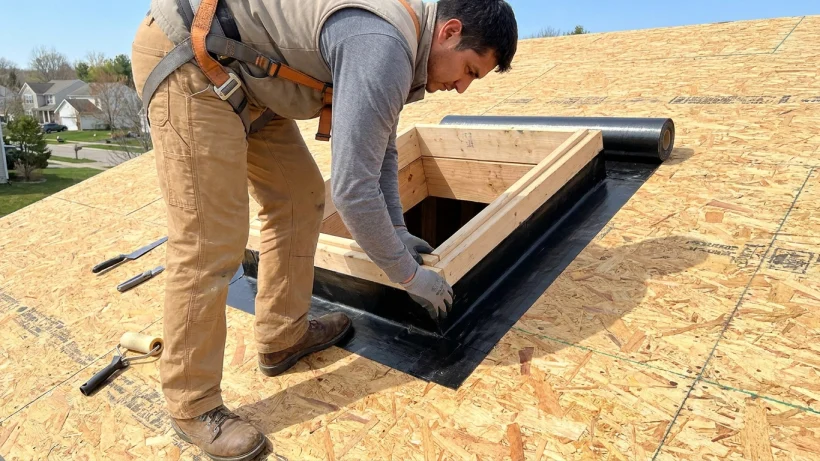
From a budget perspective, replacing a skylight during a planned re-roof is substantially less expensive than replacing that same skylight as an isolated project later on. The savings come down to installation labor and job site logistics.
During a full re-roof, the decking is already clear, safety harnesses and ladders are already staged, and the installation team is actively laying down membrane and shingles. Installing a new deck-mounted or curb-mounted skylight at this stage takes minimal extra time because the flashing integrates naturally as the shingle courses move up the roof pitch.
- Bundled replacement: Eliminates redundant mobilization fees and fits seamlessly into the roofing crew's workflow, typically reducing skylight installation labor by 40% to 50%.
- Standalone replacement: Requires a dedicated crew trip, manual deconstruction of surrounding shingles, delicate removal of underlayment, and the risk of damaging neighboring shingles that must then be matched and re-laced.
When Does Keeping an Existing Skylight Actually Make Sense?
While replacing skylights during a re-roof is the industry standard recommendation, there are specific situations where preserving an existing unit is sensible and structurally safe.
- The skylight was installed recently (typically within the last three to five years) and shows zero signs of seal degradation, clouding, or mechanical wear.
- The unit is made by a current manufacturer (such as VELUX) with factory-engineered retrofit flashing kits readily available for purchase.
- The insulated glass unit shows no internal condensation, fogging between panes, or frame corrosion.
- A physical inspection of the wooden curb confirms the framing is square, plumb, dry, and completely free of dry rot or past water damage.
If a unit meets all of these criteria, your contractor can inspect the perimeter, install a brand-new factory flashing kit matched to the current shingle profile, and wrap the curb with fresh waterproof membrane without replacing the glass assembly itself.
Energy Efficiency and Modern Glass Technology Upgrades
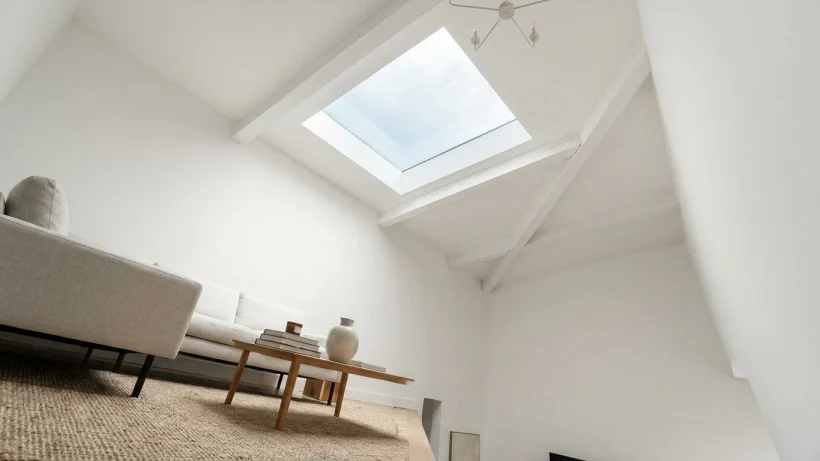
Skylights manufactured twenty or thirty years ago bear little resemblance to modern architectural daylighting systems. Older bubble-style plastic domes and basic double-pane glass units often create thermal weak points in the building envelope, causing noticeable heat gain in the summer and persistent chill or condensation during cold Pacific Northwest winters.
Upgrading to modern skylights delivers significant comfort and functional improvements throughout the home:
- Advanced Low-E coatings and argon gas fills reduce radiant heat loss in winter and deflect harsh summer heat, easing the burden on your heating and cooling system.
- Laminated interior safety glass dampens outside sound, noticeably reducing the roar of heavy rainfall on the glass.
- Modern clean-coating technology helps daylight break down organic dirt on the exterior glass, allowing rain to sheet off cleanly rather than beading into dirty water spots.
- Solar-powered venting skylights open to release trapped attic and ceiling heat passively, with integrated rain sensors that close the unit automatically at the first drop of rain.
Key Scope Details to Review with Your Roofing Contractor
To ensure your skylight replacement goes smoothly and performs properly for decades, review the exact scope of work outlined in your roofing proposal before signing.
- Flashing specifications: Verify that the estimate specifies an engineered, manufacturer-matched flashing kit rather than generic step flashing or hand-bent sheet metal.
- Waterproofing details: Confirm that self-adhered ice and water barrier will be applied directly to the roof deck around the opening and turned up the vertical sides of the skylight curb.
- Interior scope: Ask how the replacement will affect the interior drywall shaft. Standard dimensional replacements usually leave the interior trim intact, but curb modifications may occasionally require light interior touch-up paint or trim adjustments.
- Warranty coverage: Check that the skylight product warranty and the roofing contractor's workmanship warranty both apply to the finished installation without exclusions.