Spot Hidden Roof Deck Damage Before Replacement in Western Washington
Roof deck damage is not always visible before a replacement begins. Learn which clues to watch for, what an inspection can reveal, and how to plan for possible sheathing repairs.
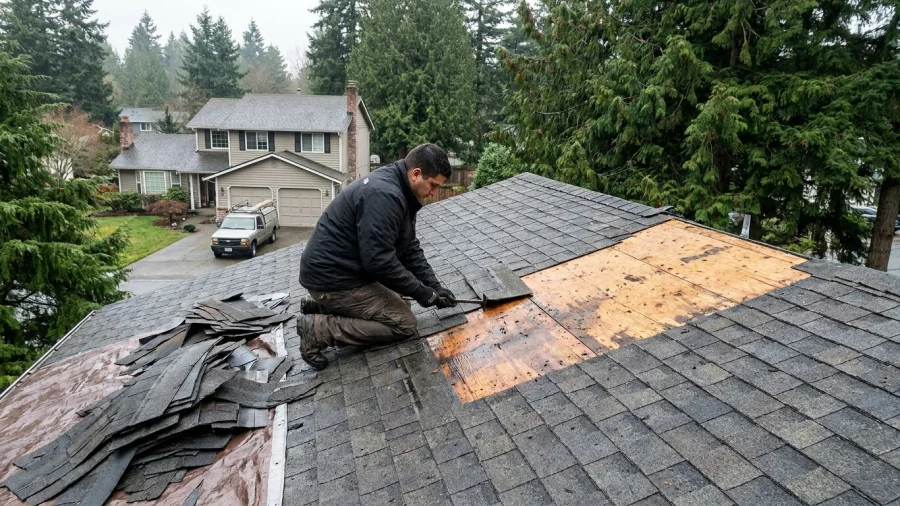
A roof can look reasonably sound from the street while moisture has affected the wood beneath it. If you are planning a replacement in Western Washington, it helps to know which signs deserve attention—and why the full condition of the roof deck may not be clear until the old roofing comes off.
What the roof deck does—and why damage can stay hidden
The roof deck is the structural sheathing attached to the roof framing. Underlayment sits over the deck, and the roof covering, such as shingles, sits above that. Together, these layers help support the roofing and manage water, but they serve different purposes.
Leaks or trapped moisture can affect the sheathing without leaving an obvious mark on the shingles. A pre-replacement visual inspection may reveal clues, but it cannot confirm the condition of every section covered by underlayment and roofing.
Warning signs homeowners may notice before tear-off
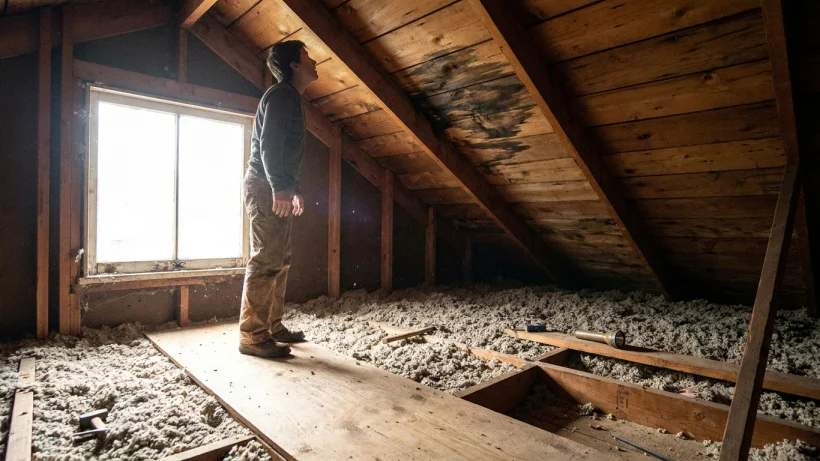
Recurring attic dampness, water stains, musty odors, or daylight near a roof penetration are reasons to look more closely. None proves the deck has failed: a stain may be from an older leak, and attic moisture may have more than one source.
- From the ground, note sagging roof planes, uneven or curling shingles, and areas that appear to dip or look soft.
- Track persistent leaks and where they show up indoors. Potential trouble spots include valleys, chimneys, skylights, plumbing vents, eaves, and other transitions.
- Avoid walking on the roof or pressing on suspect areas. Roof access and assessment can be hazardous, especially where materials may be weakened.
How Western Washington weather can contribute to roof deck problems
Frequent rain, wind-driven water, and slow drying make flashing, drainage, and moisture control particularly important in Western Washington. Water entering at an edge, valley, penetration, or flashing transition can reach the deck if the surrounding details do not keep it out.
Moisture can also come from inside the home. Indoor humidity and inadequate attic airflow may contribute to condensation on roof sheathing, which calls for a different investigation than an exterior leak. Local weather alone does not determine a roof’s condition; the roof assembly, maintenance history, and specific moisture path all matter.
What an inspection can establish before replacement
Before work begins, a roofer can review accessible attic sheathing, visible roof conditions, drainage paths, flashing, and known leak locations. These observations can help identify areas to watch during replacement, even while much of the deck remains covered.
Share what you know about past leak repairs, staining, ventilation changes, and attic moisture. Ask the inspector to explain which concerns are supported by visible evidence and which cannot be confirmed without removing roofing. Use the findings to plan the scope, not as a guarantee that every concealed defect has been found.
Why some deck damage is confirmed only during tear-off
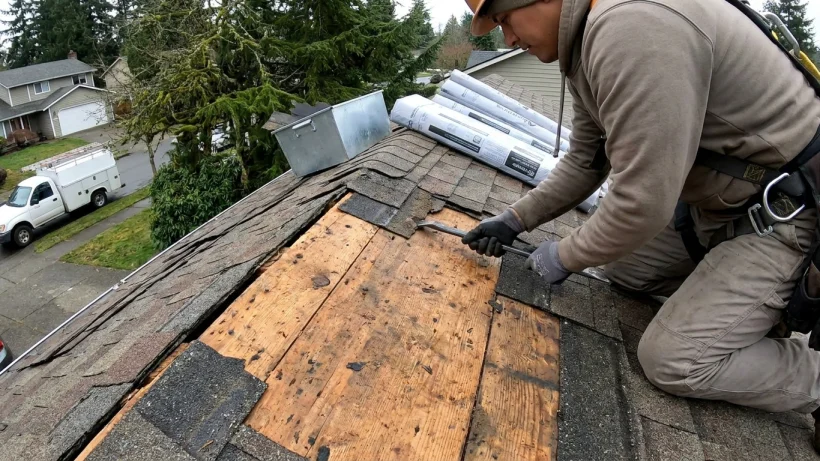
Once the shingles and underlayment are removed, the crew can inspect the exposed sheathing for soft spots, deterioration, delamination, and other compromised sections. Damage beneath intact-looking roofing may only become visible at that point, so the final amount of deck repair may be uncertain before tear-off.
A stain does not automatically mean a panel needs replacement. The response depends on the material’s condition, where the problem is located, and the requirements of the roof system being installed. The goal is a sound, properly prepared substrate for the new roofing, not replacing sheathing based on appearance alone.
Questions to ask about possible sheathing repairs
When comparing proposals, look for a clear process for handling concealed conditions. These questions can help you understand what is included in the initial scope and what would require a decision during the project:
- How will the deck be inspected after tear-off, and how will any additional repair scope be explained?
- If sheathing replacement is needed, what unit or measurement method will document the work?
- Will photos or field notes show the affected areas, and how will I review and authorize a scope change?
- Does the proposal distinguish roof covering work from possible sheathing repairs, flashing, ventilation, and other components?
Compare bids by their scope and assumptions, not just the initial total. Two proposals may handle potential deck repairs differently even if they specify similar shingles.
Plan for a complete roof replacement scope
A replacement plan should address more than the shingles. Review the proposed underlayment, flashing at transitions and penetrations, ventilation considerations, and cleanup. Ask how the crew will protect the home and manage exposed areas if weather changes the work sequence.
When practical, keep attic access available and identify active leaks or interior moisture concerns before the project starts. Warning signs help direct attention, but inspection of the exposed deck during removal may be what establishes its actual condition and the repair work needed.