Can I Install Vinyl Siding Over Old Wood in Western Washington?
Vinyl siding can sometimes be installed over old wood, but the wall must be sound, dry, and suitable for the chosen product. In Western Washington, moisture, flashing, and hidden damage deserve close attention before deciding whether to cover or remove the wood.
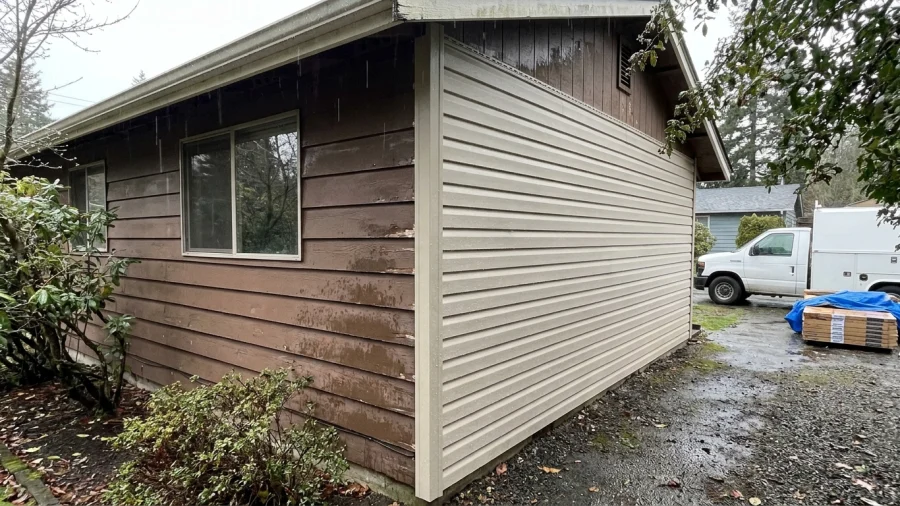
If you are wondering whether you can install vinyl siding over old wood, the answer depends on what is happening at the wall—not just how the boards look from the yard. An overlay may be workable on some homes, but Western Washington's wet weather makes it important to check for water entry, damaged materials, and installation details before covering the existing siding.
The short answer: sometimes, but the wood must be sound and dry
Existing wood siding may be able to stay if it is firmly attached, dry, and sufficiently even for the proposed vinyl siding system. The wall also needs to be free of signs of active leaks or widespread deterioration. Whether an overlay is appropriate depends on the full wall assembly and the vinyl manufacturer's installation instructions.
New siding does not repair rot or stop water that is already getting into a wall. Covering questionable areas can make future leaks harder to trace and repairs harder to reach. Age and appearance alone are not enough to decide; the choice should follow an on-site assessment.
What to inspect before covering wood siding
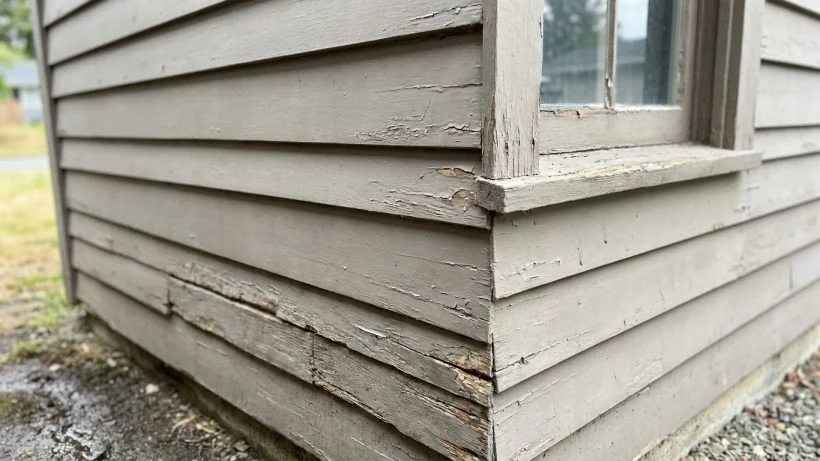
Start with the condition of the boards. Soft spots, splits, loose or missing boards, and pronounced warping are reasons to investigate further. Peeling paint can be ordinary finish wear, but recurring paint failure or staining—especially in the same location—may point to trapped moisture or water getting behind the siding.
- Check around windows and doors for staining, soft trim, failed joints, or other signs of water entry.
- Look closely at corners, roof-to-wall intersections, deck connections, and utility penetrations, where flashing details matter.
- Inspect lower wall edges for splashback, ground contact, or deteriorating boards.
- Ask which areas can be evaluated from outside and whether any selective opening is needed to assess concealed conditions.
A fresh coat of paint does not establish that the wall behind the boards is dry. Before work begins, the proposed scope should also explain what happens if opening the wall reveals rotten framing, damaged sheathing, or repairs beyond the original plan.
Why rain and moisture management matter in Western Washington
Siding is one part of an exterior wall system. In a climate with frequent rain and long damp periods, water needs a reliable path away from windows, doors, penetrations, and the bottom of the wall. Vinyl siding is not a replacement for properly integrated flashing or a functional drainage plane behind the cladding.
An overlay adds a finish layer, but it does not automatically improve the water-management details beneath it. A siding proposal should explain how the existing wall handles water, which details will be retained or changed, and how new work will connect to them. If the current drainage or flashing is failing, covering it can hide the problem rather than solve it.
How an overlay can affect wall flatness, trim, and openings
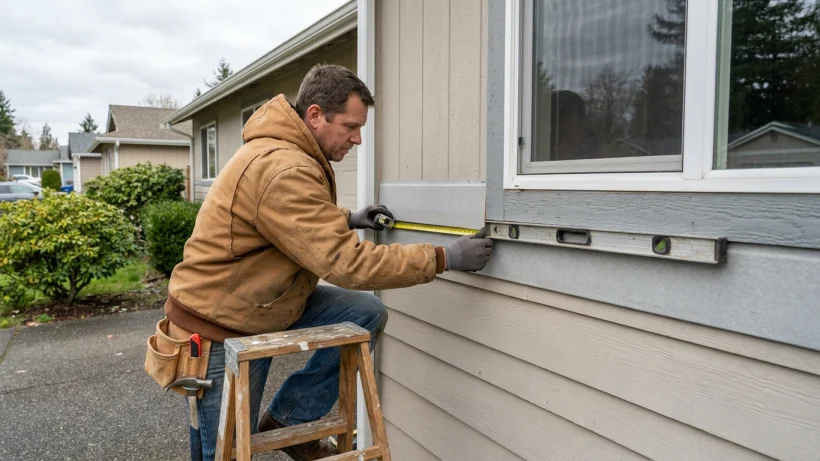
Wood lap siding has a profile, and older boards may be uneven. Vinyl needs the backing, fastening, clearances, and room for movement specified for the selected product. The installer should explain how the existing surface will be evaluated and prepared; old boards should not be assumed to provide an adequate fastening surface.
Adding siding also increases wall depth. That can change how the new surface meets window and door trim, corners, light fixtures, vents, roofing, and adjacent materials. Look for a clear description of any trim extensions or replacements, flashing adjustments, and finishes at the top and bottom of the wall. These details affect both appearance and how water leaves the wall.
When removing the old wood is the better choice
Removal is often the more sensible option when boards are rotten, persistently damp, loose across large areas, or too uneven to support the planned installation. Signs of repeated water entry or unresolved flashing problems also warrant a closer look at what is behind the wood.
Taking off the old siding allows direct inspection of the sheathing and can make concealed repairs or water-management improvements possible. If a house has multiple existing cladding layers or materials that are not clearly identified, those layers should be assessed before settling on an overlay. On older homes with painted siding, the plan should also address appropriate precautions before disturbing the finish.
Questions to ask when comparing siding estimates
Two estimates can both say "vinyl siding" while describing very different work. The useful comparison is whether each proposal explains the wall condition, the intended installation, and what may change if hidden damage is found.
- Will the old wood remain or be removed, and what observations support that choice?
- Which vulnerable areas will be inspected, and how will concealed rot or damaged sheathing be handled if discovered?
- What drainage, flashing, trim, and material-transition details are included?
- Which vinyl product and installation instructions will guide the work, including preparation of uneven areas and fastening?
- What work is excluded, and which discoveries could change the scope?
- What product warranty information applies, and what installation requirements affect that coverage?
Clear written scope matters more than a broad description of the finished siding. It helps you understand which conditions have been evaluated and which can only be confirmed after part of the existing wall is opened.
A simple decision guide for your home
An overlay may be possible if the wood is sound, dry, firmly attached, and sufficiently even, and if the selected product and wall details support that approach. Moisture staining, rot, loose boards, substantial unevenness, or unresolved flashing concerns point toward investigating removal and repairs instead.
The decision should account for how the wall was assessed, how water will be managed, and how the added depth will affect openings and trim. An inspection can identify likely trouble spots, but some concealed damage may not be apparent until existing siding is opened.