Does Your Siding Need New Sheathing? A Puget Sound Guide
Siding problems can sometimes point to moisture damage in the wall beneath, but the sheathing’s condition is usually confirmed only after siding is removed. Learn what to watch for and how to plan for possible repairs.

New siding can improve a home’s appearance, but it cannot fix a damaged wall underneath. If you are planning siding replacement in the Puget Sound area, it helps to understand what sheathing does, which clues warrant a closer look, and why the full repair scope may not be clear until siding comes off.
What sheathing does behind your siding
Sheathing is the panel layer attached to exterior wall framing. It contributes to the wall assembly and provides a surface for other exterior layers. Depending on the home’s age, construction, and past remodeling, the sheathing material and the layers over it may vary.
Sheathing, the water-resistive barrier, flashing, and siding have different jobs. The water-resistive barrier and properly integrated flashing help direct water away from the wall; siding is the outer finish, not a substitute for those details. In Puget Sound’s rainy, sometimes wind-exposed conditions, the layers need to work together so incidental moisture can drain rather than remain trapped.
Clues that may point to damage behind the siding
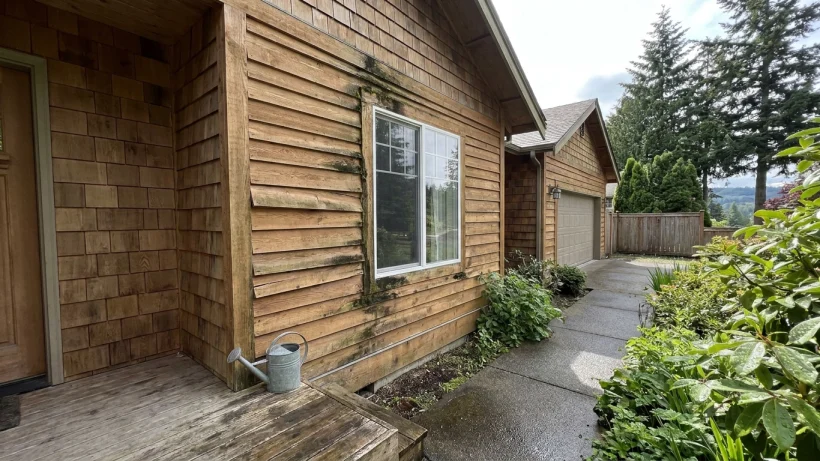
Soft, swollen, warped, or unusually loose siding can justify a closer look. So can paint or caulk that repeatedly fails, or staining near windows, doors, corners, and roof-to-wall transitions. Inside, unexplained dampness, staining, or a musty odor near an exterior wall may also be worth investigating.
None of these symptoms proves the sheathing is damaged: a surface issue or another moisture source may be responsible. The reverse is also true—concealed moisture damage may have little obvious exterior evidence. Note where a symptom appears, whether it changes after wind-driven rain, and any history of leaks or repairs. Those observations can help focus an inspection.
Why Puget Sound homes can develop hidden moisture problems
Rain alone does not mean a wall will be damaged. Problems become more likely when water gets behind the siding repeatedly and has limited opportunity to dry during cool, damp seasons. Wind-driven rain can put extra pressure on openings and connections where different building materials meet.
Windows, doors, roof-to-wall intersections, utility penetrations, and deck connections deserve attention when flashing or drainage details are compromised. Aging sealants, earlier repairs, installation choices, and maintenance history can also affect performance. Exposure varies from house to house, so neither a siding material nor a neighborhood tells you whether hidden damage is present.
How a contractor checks the sheathing
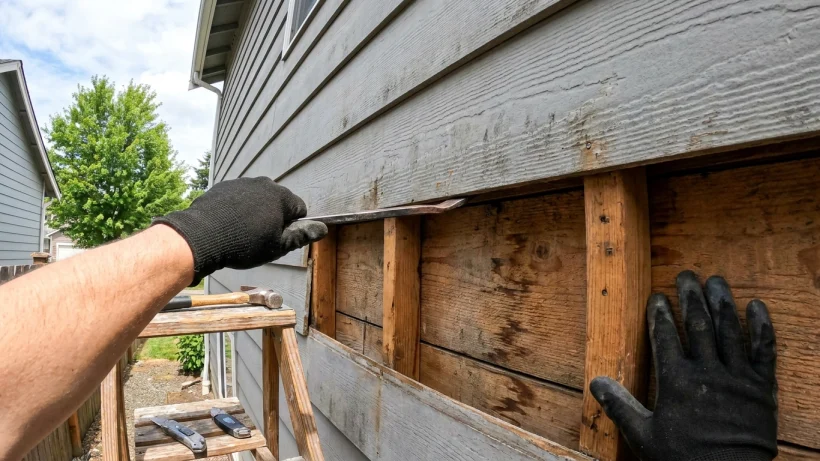
An assessment typically starts with visible symptoms, the location of any known leaks, previous repairs, and details around openings and wall transitions. Probing or other limited checks may provide clues, but they cannot always establish the condition of sheathing concealed behind siding. The clearest view often comes when siding is removed in the affected area or as part of a planned replacement.
The assessment should separate damage to the sheathing from problems with the siding, flashing, water-resistive barrier, or another moisture source. Before work begins, ask which areas may be opened, how suspected damage will be photographed or otherwise documented, and how findings will be reviewed with you before work beyond the agreed scope proceeds.
When sheathing repair or replacement may be needed
Sound, dry sheathing does not automatically need replacement when new siding is installed. Siding sheathing replacement may be needed where panels have deteriorated, lost integrity, or can no longer support an appropriate installation. If damage is limited, replacing affected sections may be sufficient; more extensive findings can change the scope.
Repairs should address why moisture reached the area, whether that means correcting a flashing transition, drainage detail, or another source. Covering deteriorated material with new siding leaves the underlying problem in place. Because concealed areas become visible in stages, the final repair area may differ from what was suspected before removal.
Questions to ask before siding work begins
A clear plan for concealed conditions makes it easier to evaluate findings during the project. When reviewing an estimate and proposed wall assembly, ask:
- What sheathing work, if any, is included in the estimate, and how will concealed damage be handled if it is found?
- How will you show me the affected area and explain a proposed repair before proceeding beyond the agreed scope?
- How will the water-resistive barrier, flashing, and nearby transitions be addressed along with the visible siding?
- What product and installation guidance applies to the selected siding and the wall assembly?
- How will the agreed scope and any changes be documented?
The answers should explain the process without assuming every wall needs new sheathing. Final repair needs depend on the conditions uncovered at the home and should be assessed on site.