Hidden Water Damage Behind Siding: When to Inspect Before Replacement in WA
Warning signs can point to moisture behind siding, but they cannot confirm what is happening inside the wall. Learn when to investigate and what to clarify before a siding replacement in Western Washington.
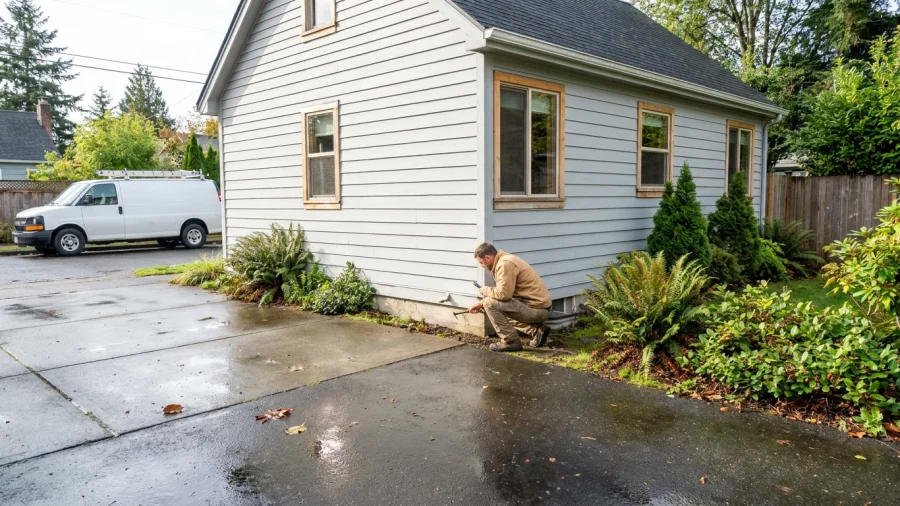
New siding can improve a home’s appearance and weather protection, but it cannot fix deterioration left underneath. If you suspect hidden water damage behind siding, the useful question is not just which material to install. It is whether water has reached the wall assembly, where it entered, and what needs attention before the wall is covered again.
Why inspect behind siding before replacing it?
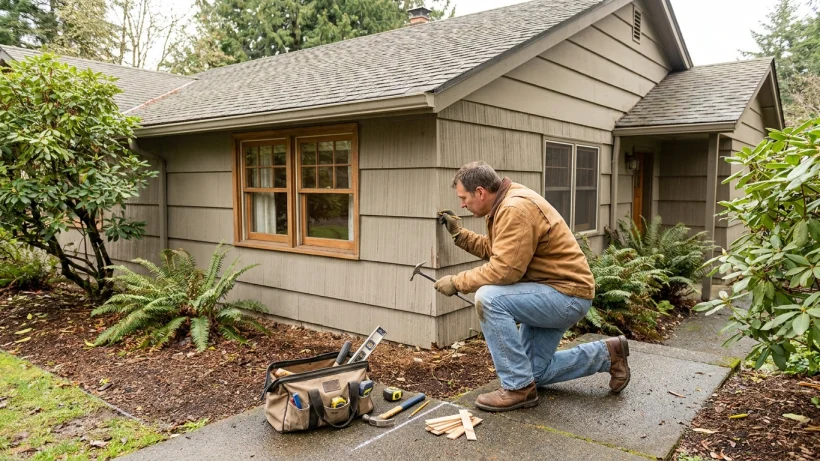
Western Washington’s frequent rain, wind-driven moisture, shaded walls, and slow drying make exterior water management worth a close look. Siding is only one part of that system. Flashing, trim details, the weather-resistive barrier, and drainage paths all affect how water moves around and out of a wall.
An older home does not necessarily have hidden damage, and peeling paint alone does not prove rot. But investigating credible warning signs before replacement can help distinguish a straightforward siding project from one that may also involve trim, sheathing, or other affected materials. Some conditions will remain concealed until siding is removed.
Warning signs homeowners can spot from outside
Walk around the home and look for patterns rather than relying on one isolated mark. Pay particular attention to areas that receive wind-driven rain or runoff, and to places where different materials meet.
- Siding that is swollen, warped, cracked, loose, or separating at joints, corners, or trim.
- Soft or decayed trim, especially near windows, doors, roof-wall intersections, and deck connections.
- Localized staining, persistent mildew, or paint that repeatedly peels after being repaired.
- Gaps or deteriorated sealant around penetrations and transitions. Caulk may need maintenance, but it does not replace correctly detailed flashing.
Photograph the location and note whether nearby roof runoff, irrigation, or prevailing rain reaches it. A recurring stain is more informative than temporary surface dirt, but neither an exterior photo nor a visual walkaround can establish the condition behind the siding.
Indoor clues that may warrant further investigation
A recurring damp or musty odor near an exterior wall, bubbling or stained finishes, or paint or wallpaper that repeatedly lifts in one spot may justify a closer look. Record the room and wall location, when the symptom appears, whether it follows rainy weather, and whether it returns after cleanup.
These clues do not identify the source on their own. Condensation, indoor humidity, and plumbing leaks can produce similar effects. If an investigation may involve electrical wiring, plumbing, or a larger area of damp or contaminated material, avoid opening finished walls yourself; have the concern assessed with those risks in mind.
When to inspect: before choosing materials or starting removal
Arrange an assessment before settling the replacement scope if you see warning signs, know of past leaks, find damaged trim, or have repaired the same spot repeatedly. Even when no symptoms are obvious, ask how the existing wall will be evaluated and what the plan is if deterioration appears during removal.
A contractor may recommend a limited exploratory opening where the evidence points to a concern. Clarify where the opening would be, what it could reveal, and how the exposed area would be protected from rain. A visual check or a single moisture-meter reading can inform an assessment, but neither is a complete diagnosis without context. Full removal may reveal conditions that could not be confirmed beforehand.
What a careful siding inspection should cover
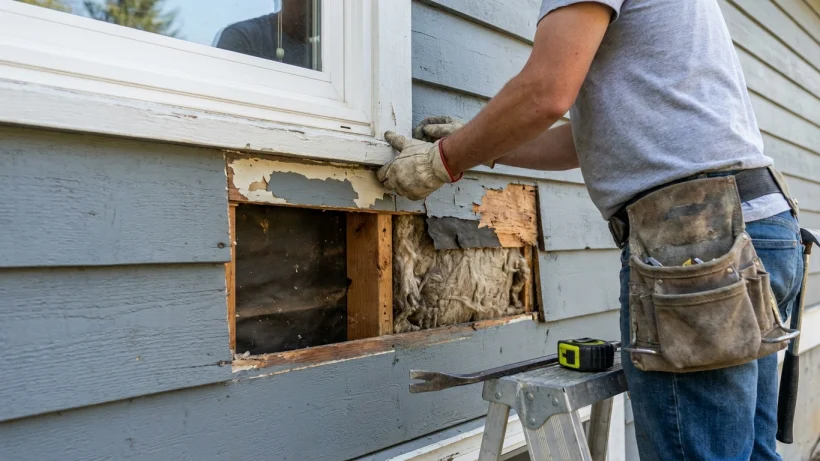
A useful inspection reviews the siding and its transitions at windows, doors, corners, penetrations, rooflines, decks, and the foundation. It should also address how flashing, drainage paths, and the existing weather-resistive barrier will be evaluated during the proposed work.
Ask whether the assessment is visual only or includes selective removal, and which areas will remain unverified. Observed damage, a suspected water source, and recommended repairs should be explained separately: a stain may be visible even when its cause or the extent of concealed damage is not yet clear. The project plan should also describe how newly uncovered damage will be documented and discussed before additional work changes the scope.
How hidden damage can affect replacement planning
If removal exposes wet or deteriorated materials, the work may need to pause long enough to identify the affected area and water-entry detail. Depending on the findings, the scope could include removing damaged material, repairing the substrate, and correcting the entry point before installing new siding. The appropriate repair depends on the wall assembly, the location and extent of damage, and the moisture source—not on a standard solution applied to every house.
A clear proposal separates known siding work from conditions that cannot be confirmed until removal. It should explain how scope changes will be reviewed and how open wall areas will be protected during changeable Washington weather. Ask how flashing, barrier, and drainage details will be checked before new siding covers them. Material choice matters, but even a well-suited product cannot compensate for an unresolved leak or poorly installed transitions.
Questions to ask before approving the project
- What signs of moisture or deterioration did you observe, and which areas cannot be confirmed without removing siding?
- How will flashing and transitions be handled at windows, doors, corners, rooflines, decks, and penetrations?
- What happens if more deterioration is uncovered, and how will a revised scope be explained and approved?
- How will removed or exposed areas be protected if rain arrives before the wall is closed in?
- Which product information, care guidance, and installation details should I keep with the project records?
Plan for a dry, well-detailed exterior—not just new siding
Staining, warping, recurring finish failure, and indoor dampness are reasons to investigate, not definitive diagnoses of hidden water damage. A sound replacement plan accounts for what an inspection can establish, what may remain concealed until removal, and how the moisture source and affected materials will be addressed if found. For a lasting exterior in Western Washington, product selection and careful installation need to work alongside well-managed flashing, drainage, and transitions suited to the home’s exposure.