Puget Sound Siding Care Calendar: Moss, Rot, and Moisture Prevention
A season-by-season siding care guide for Puget Sound homeowners, with practical checks for moss, drainage, rot, and moisture damage.

Puget Sound siding maintenance does not have to be a major project every season. A few well-timed checks can help you spot water problems early, keep debris from trapping moisture, and choose cleaning methods that suit your siding.
Why Puget Sound weather calls for regular siding checks
Frequent rain, damp shade, and wind-driven water can leave parts of a Western Washington home wet long after a storm passes. North-facing walls, siding behind dense shrubs, and areas beneath roof runoff often dry more slowly. How much care a wall needs depends on its material, exposure, age, finish, and installation condition.
A little surface moss or algae is different from persistent dampness, failing paint, soft wood, or signs that water may be getting behind the siding. Identify your siding material before cleaning or applying a treatment. A seasonal calendar helps you notice changes, but it does not replace an assessment after a leak, significant storm damage, or suspected hidden moisture.
Late winter: look for water paths and storm wear

After the wettest months, walk around the home from the ground and follow the paths water takes off the roof and down the walls. Look for loose, cracked, warped, or displaced siding and trim, particularly at corners and around windows and doors. Staining below roof edges may point to overflowing gutters or drainage that needs attention.
- Check whether downspouts discharge away from the house and whether water stands or splashes onto lower siding.
- Look for gutter overflow, clogged outlets, and spots that remain wet when nearby surfaces have dried.
- Photograph concerns from a safe position. Do not climb a ladder or pull siding apart to investigate.
If storm damage or staining appears to extend beyond what you can see safely, a closer assessment can help identify the source before a repair is planned.
Spring: clean gently and check shaded walls
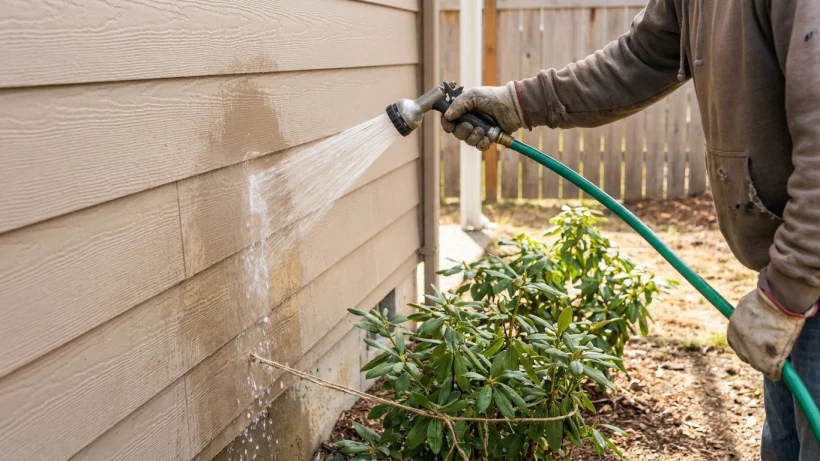
Spring is a useful time to remove leaves and soil collected near the foundation and cut back vegetation that blocks airflow around siding. Check shaded walls for recurring green growth, and notice whether the surface dries after rain or stays damp for days.
For light surface dirt, start with the siding manufacturer's cleaning instructions and test the recommended method in an inconspicuous area. Use a gentle approach suited to the material. Pressure washing, abrasive scrubbing, and household chemicals can damage some finishes or force water where it should not go; do not assume they are safe for your siding.
Summer: use drier weather to inspect joints, paint, and clearances
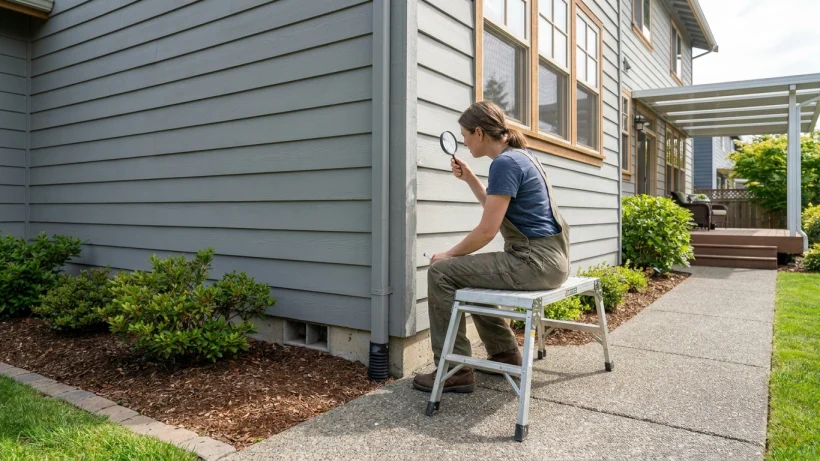
Relatively drier weather makes it easier to see cracks and plan minor upkeep before fall rain returns. From a safe position, review caulked joints, trim transitions, and the areas around windows and doors for gaps or failed sealant. Not every siding joint is meant to be caulked, so confirm how that part of the wall is designed to drain before sealing it.
- On painted wood siding, note peeling or cracked paint and follow the siding and coating manufacturers' preparation guidance before recoating.
- Move soil and mulch away from siding, and trim plant growth that touches the wall or restricts airflow.
- Check that hose bibs, exhaust outlets, and other penetrations appear intact without blocking vents or drainage openings.
Fall: prepare gutters, drainage, and landscaping for rain

Before regular rain returns, clear leaves from gutters and downspout outlets, or arrange safe help if access is difficult. Confirm that downspouts carry water away from the foundation instead of emptying beside lower siding. Overflow and splashback can keep a wall wet even when the siding itself is in good condition.
Trim branches that rub the wall and plants that prevent it from drying, while leaving wall components and necessary screening undisturbed. Recheck lower siding courses, corners, and trim for new gaps or damage so you have a record of their condition going into the rainy season.
Match care to the siding material
A cleaning or repair method that works for one siding product may harm another. If you are unsure what is installed, identify the material and check its product documentation before using a cleaner, coating, or sealant.
- Wood: Watch for coating failure, soft spots, and repeated water exposure. Localized deterioration deserves prompt attention.
- Fiber cement: Follow the specific product and finish guidance for cleaning and recoating.
- Vinyl and composite: Remove surface growth using approved methods, and inspect joints and edges for damage without using harsh techniques that could affect the finish.
- Metal: Check for coating damage, loose or damaged fasteners, and places where debris or water collects.
For every material, preserve designed gaps, flashing, vents, and drainage paths. Filling every visible opening with caulk can trap water rather than keep it out.
Know when a stain or soft spot needs closer attention
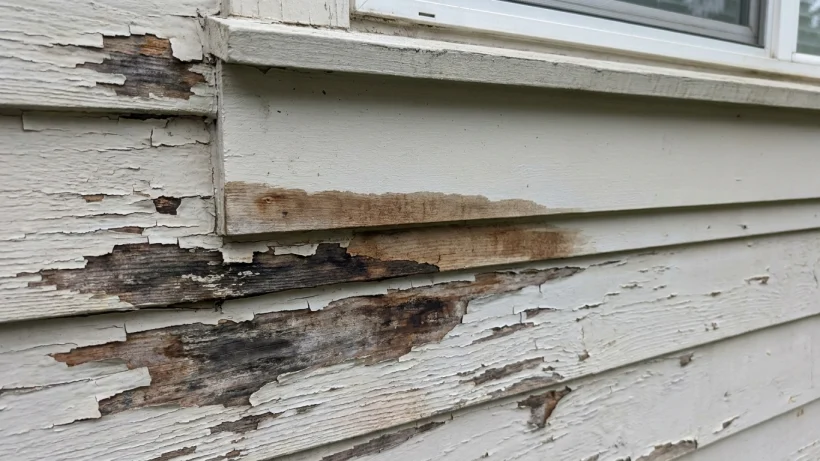
Persistent staining, growth that quickly returns, bubbling or peeling finishes, and soft or crumbling material warrant more than routine cleaning. A musty odor indoors near an exterior wall is another reason to investigate. Notice whether the affected area remains wet after nearby siding has dried, and record any related gutter, roof, window, or ground-drainage problems.
Do not cover suspected rot with fresh paint or caulk before the moisture source is understood. Visible symptoms cannot reliably show how far damage extends behind siding. A qualified siding professional can assess accessible damage and discuss whether the wall assembly needs further evaluation.
A simple routine to keep through the year
Make a brief ground-level walk-around part of your late-winter and pre-fall routine, with an extra check after severe weather. Clear debris and maintain drainage as the seasons change. Clean siding only with methods appropriate for its material and finish.
Keep dated photos and short notes about stains, repairs, and areas that take longer to dry. They make changes easier to recognize from one season to the next. Use your product documentation for care details, and have damage, persistent moisture, or uncertain repair details assessed by a qualified professional.