Siding Repair or Replacement in Washington: A Practical Decision Guide
A practical guide to deciding whether damaged siding needs a targeted repair or a broader replacement, with attention to moisture, material condition, and project scope.
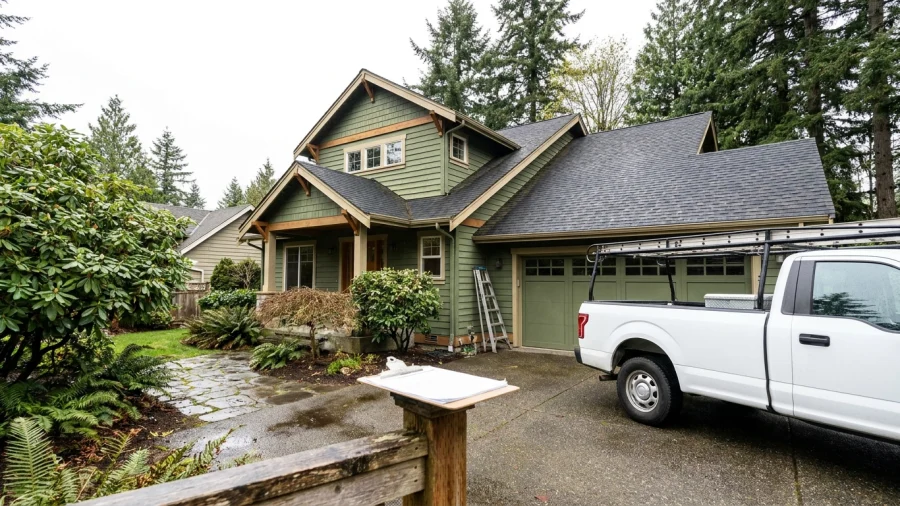
Deciding between siding repair or replacement in Washington starts with understanding what is damaged and why. A few affected boards may call for a different solution than recurring problems across several walls. In Western Washington, it also matters whether water is reaching the layers behind the siding.
Start with the damage, not the age of the siding
Look at the location and extent of the damage before relying on the siding’s age. Cracked, loose, warped, soft, or missing pieces deserve attention, as does paint that repeatedly peels in the same area. Surface wear and deeper moisture damage can look similar from a distance; appearance alone cannot confirm the condition of the materials underneath.
A damaged board at one impact point is different from deterioration on multiple walls. Staining or recurring dampness near windows, doors, roof edges, and other transitions warrants a closer look because water may be entering or collecting there. Avoid probing suspected rot or disturbing potentially hazardous older materials yourself. A qualified professional can assess what needs further investigation.
When a siding repair may be a reasonable option
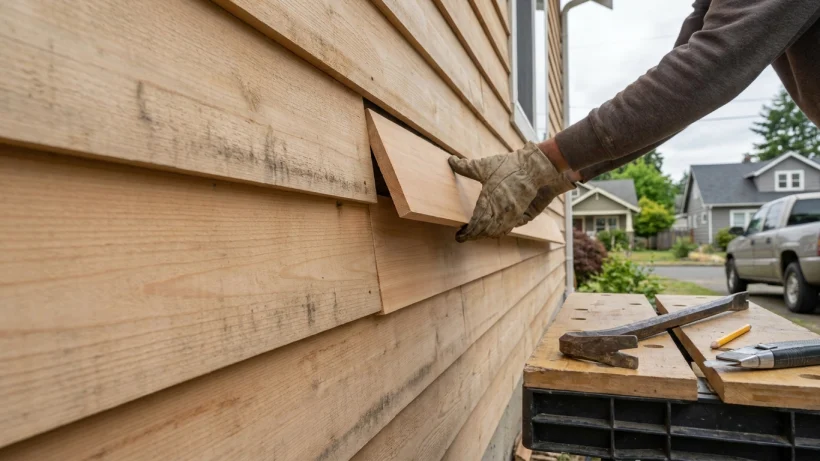
A localized repair may be worth considering when damage is limited, nearby siding is sound, and the cause can be corrected. Examples include a small impact-damaged area, an isolated loose piece, or a problem confined to a trim or opening transition. If water caused the damage, the repair should address its entry point or drainage path rather than simply cover the visible symptom.
Material match matters. A new piece may differ from existing siding in color, texture, profile, or weathering, especially if the original has faded or is no longer readily available. The proposed repair should make clear both how it will fit and what the finished area is likely to look like.
Signs it may be time to evaluate broader replacement
Widespread cracking, warping, loose panels, recurring paint failure, or damage in several locations are reasons to assess more than one spot. Repeated repairs to the same areas can also suggest an unresolved moisture source or a broader installation issue. None of these signs proves that the entire home needs new siding, but they can change the scope of a useful inspection.
Sheathing and framing conditions cannot be reliably determined from an exterior photo or a quick visual check. Replacing a wall or a larger area creates an opportunity to inspect exposed layers and address details found during the work. How far that work needs to extend depends on the conditions uncovered, not just the visible damage.
Why Washington moisture and exposure change the assessment
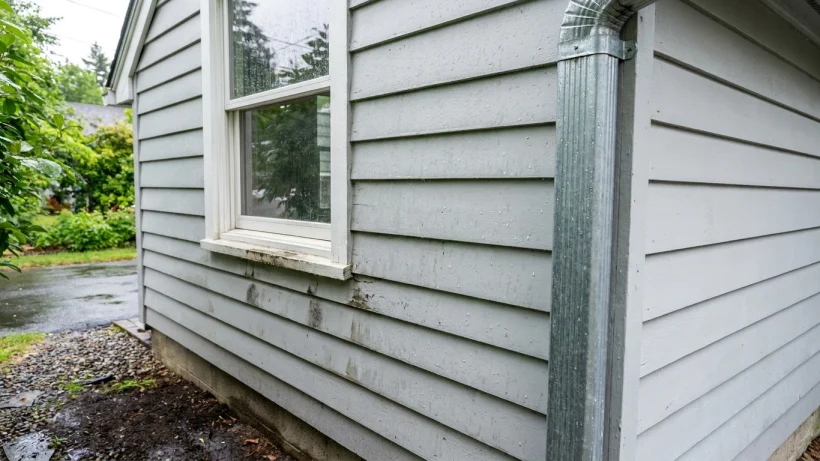
Frequent rain, wind-driven water, shade, and limited drying can leave some areas damp longer than others. Exposure varies with the site and wall orientation, so one side of a house may need a different assessment than another. Look at whether gutters, roof edges, window trim, penetrations, or ground clearances are directing water toward the siding or allowing it to linger.
Siding is one part of an exterior assembly. Flashing, drainage, ventilation, and installation details help manage water alongside the visible material. Before choosing a repair or replacement scope, it helps to identify where moisture may be coming from and how it moves through or away from the wall.
Compare the scope, material match, and disruption
Compare proposals by the area they cover, the condition of adjacent siding, the suspected cause, and whether related trim or flashing details are included. For a repair, ask whether a compatible material and profile are available and how noticeable the finished patch may be. For replacement, check exactly which walls or sections are included, how concealed damage would be discussed if discovered, and what preparation and cleanup the scope covers.
Vinyl, fiber cement, wood, composite, and metal siding differ in how they are maintained and repaired. No one material or scope fits every home. The existing assembly, exposure, product compatibility, and installation details all affect the comparison, as do the amount of work and disruption involved.
Questions to ask before choosing a path
A clear inspection or estimate should connect the recommended work to observed conditions. These questions can help make repair and replacement options easier to compare:
- What damage was observed, where is it located, and what evidence supports the proposed scope?
- Could water be entering at a nearby window, door, roof edge, or other transition? What work would address that possibility?
- If repairing, what material and profile will be used, and how will the visible finish blend with existing siding?
- If replacing, which siding, trim, preparation, and flashing-related tasks are included? How will concealed conditions be discussed if found?
- Are the scope and product details in writing? What do the applicable manufacturer information and project-specific warranty terms actually cover?
The most useful decision is one that accounts for both the visible damage and its likely cause. That gives a targeted repair a fair comparison with broader replacement without assuming either is necessary from appearance alone.