Casement vs. Sliding Windows: Which Handles Puget Sound Rain Better?
A practical look at how casement compression seals and sliding window track systems perform against Western Washington's persistent, wind-driven moisture.
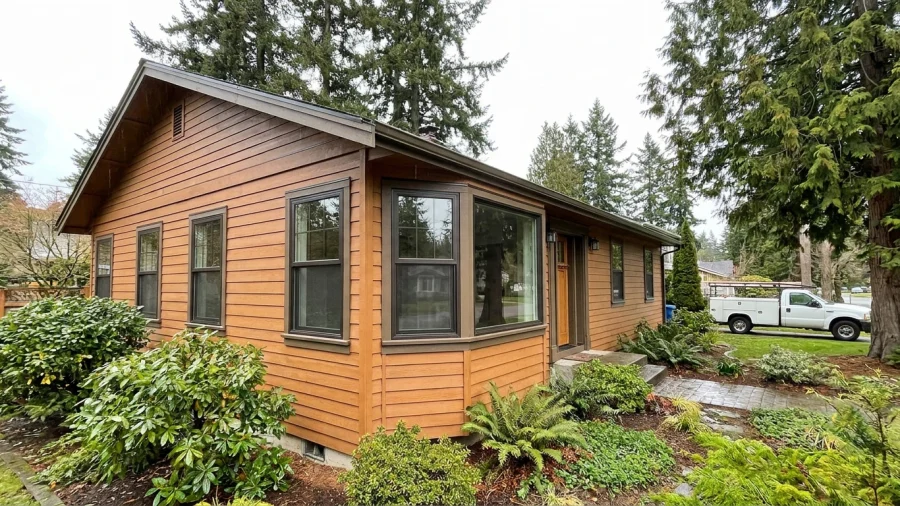
Living in Western Washington means accepting that rain is not just an occasional weather event—it is an active exterior factor for more than half the year. In neighborhoods across Seattle, Tacoma, Everett, and the Kitsap Peninsula, homes face everything from months of fine, persistent mist to strong storm fronts pushing off Puget Sound. When replacing windows, choosing the right operating style involves more than just aesthetics and ease of opening; it determines how your home manages air leakage, standing water, and wind-driven moisture.
Casement and horizontal sliding windows are two of the most popular configurations for modern Pacific Northwest replacements. Both provide clean sightlines and ample natural light, but their fundamental operating mechanisms handle water and wind pressure very differently.
Why Puget Sound Rain Demands More From Your Windows
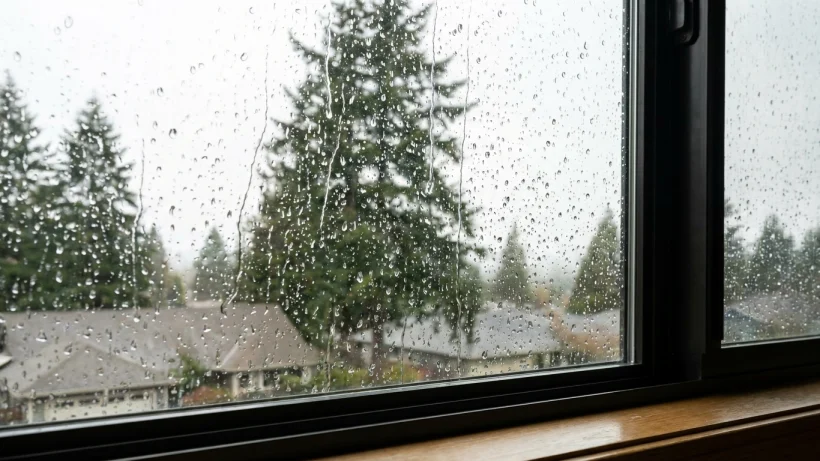
Standard rainfall falling straight down is relatively easy for any properly installed exterior window to shed. The greater challenge in Western Washington comes from prolonged seasonal dampness combined with marine wind gusts. When wind pushes rain horizontally against an exterior wall, water creates hydrostatic pressure against the window frame, searching for any tiny pathway through gaskets, corners, or operational joints.
In our coastal and inland microclimates, window failure rarely looks like sudden water pouring into the living room. More often, it manifests as chronic, slow moisture intrusion behind siding or within wall cavities. When water repeatedly bypasses a window's primary defense over years, it leads to soft framing, mold within the insulation, and ruined drywall beneath sills.
How Casement Windows Seal Against Moisture and Wind
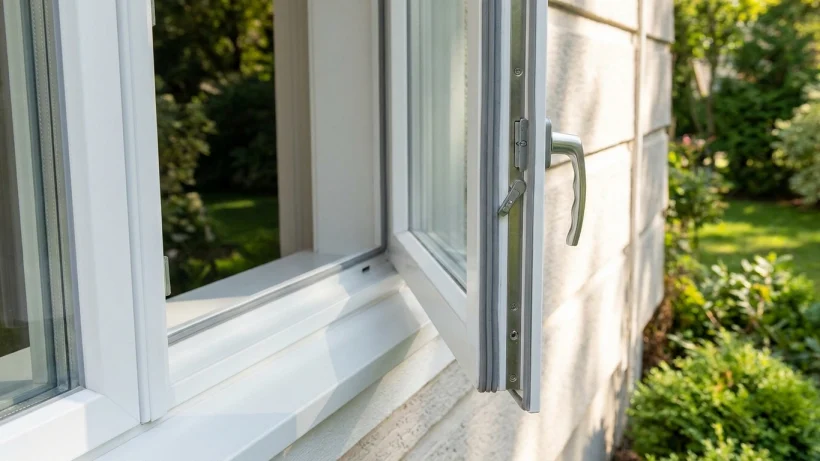
Casement windows are hinged at the side and swing outward using a manual hand crank or push-out mechanism. From an engineering standpoint, this design offers substantial advantages when it comes to weather resistance.
The primary weatherproofing advantage of a casement window is its compression seal. Around the entire perimeter of both the sash and the frame runs a flexible, continuous rubber or synthetic gasket. When you close the window and engage the lock, the sash is pulled firmly inward against this gasket, compressing it flat.
- Continuous compression gaskets: Because there are no sliding parts in the seal zone, the gasket creates an unbroken barrier around the entire perimeter.
- Wind-assisted sealing: When ocean storms or Puget Sound gusts hit a closed casement window, the wind pressure pushes the sash deeper into the frame, actually tightening the seal against the weatherstripping.
- Multi-point locking systems: Modern casements utilize a single lever that engages two to four locking points simultaneously along the vertical jamb, ensuring even clamping pressure from top to bottom.
The operational limitation of a casement window in wet weather is that you cannot leave it cracked open during a downpour without rain hitting the interior face of the open sash. However, when closed against a storm, its compression mechanism provides one of the tightest seals available on the residential market.
The Realities of Sliding Windows in Wet Climates
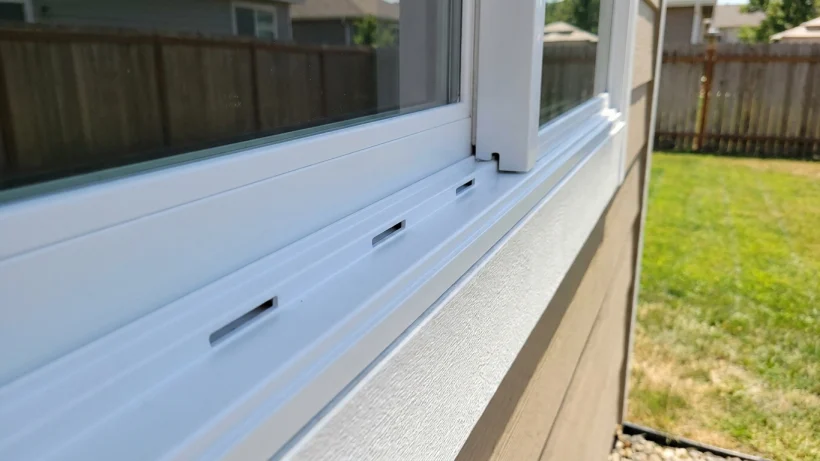
Horizontal sliding windows operate on a track system where one or more sashes move left or right over a fixed track. Because the sash must slide smoothly across the frame, it cannot use a high-compression rubber gasket along the sliding path. Instead, sliders rely primarily on woven pile (brush-style) weatherstripping.
Unlike casement windows, which prevent water from ever penetrating the frame line, sliding windows are engineered with an active drainage strategy. The bottom track is designed to get wet. As water hits the glass and rolls down into the lower sill, it collects in an internal channel and drains outward through built-in weep holes.
- Track vulnerability to debris: Western Washington's abundant Douglas fir needles, hemlock seeds, and seasonal pollen frequently land in open slider tracks, mixing with rainwater to form a sludge that clogs the weep channels.
- Wind-driven back pressure: Under heavy wind, outside air pressure can push water sitting in the track back inside, overcoming the small exterior flap valves on the weep holes.
- Felt weatherstripping wear: Over years of use, brush pile weatherstripping tends to flatten, trap grit, and allow higher rates of air and moisture penetration compared to rubber bulb seals.
Despite these design considerations, sliding windows remain widely used across the Northwest. They are mechanically simple, lack outward swing constraints, offer large viewing areas, and deliver reliable service when installed in sheltered locations and maintained properly.
Direct Comparison: Weatherproofing, Durability, and Maintenance
Evaluating these two styles side by side helps clarify how each functions over years of damp Pacific Northwest winters.
In water infiltration and air leakage testing, casement windows consistently achieve higher design pressure (DP) ratings. Because their seals compress rather than slide, air leakage ratings are typically lower, reducing cold winter drafts and interior condensation near the perimeter frame.
- Maintenance routines: Sliders require frequent vacuuming and wiping of the bottom track to keep weep ports clear of organic debris. Casements require occasional cleaning of the outer gaskets and light annual lubrication of the metal scissor gears and hinges.
- Hardware exposure: Casement crank mechanisms and hinge arms are exposed to exterior dampness when open, making stainless steel or marine-grade coated hardware essential in areas close to saltwater, such as Edmonds, Mukilteo, or West Seattle.
- Ventilation in mild rain: Sliding windows can sometimes be cracked open an inch or two under small eaves without direct rain entry, whereas casement sashes can act as wind scoops if opened toward oncoming weather.
Strategic Placement: Matching Window Styles to Your Home's Exposure
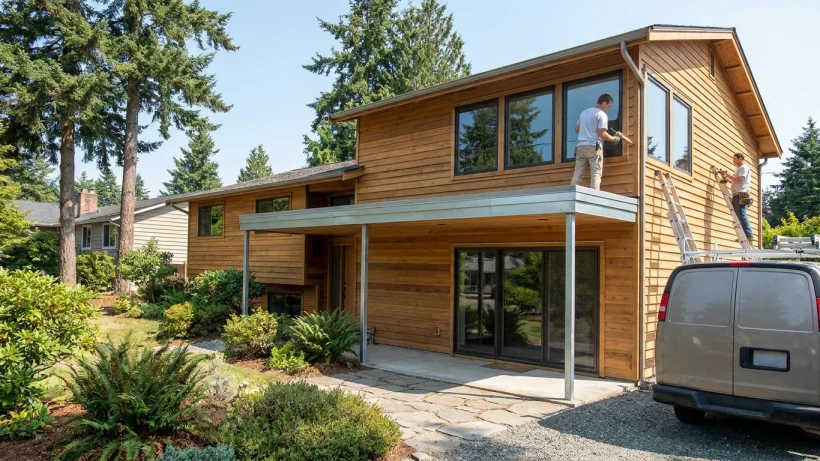
Rather than choosing only one window style for your entire home, a balanced approach matches the window type to the specific exposure of each exterior wall.
In our region, prevailing weather and winter storms typically approach from the south and southwest. South- and west-facing walls take the brunt of wind-driven rain. Installing casement windows on these exposed elevations gives your home maximum protection against wind pressure forcing moisture past exterior barriers.
Conversely, walls sheltered by deep porch roofs, wide soffits, or north-facing walls protected by adjacent structures are excellent candidates for horizontal sliders. Sliders are also practical along outdoor living areas, such as low-clearance decks and patios, where an outward-opening casement sash might obstruct foot traffic.