Hidden Costs in Puget Sound Window Replacements You Should Expect
Window replacement costs can extend beyond the new window units. Learn which conditions may add work in Puget Sound homes and what to clarify before comparing estimates.
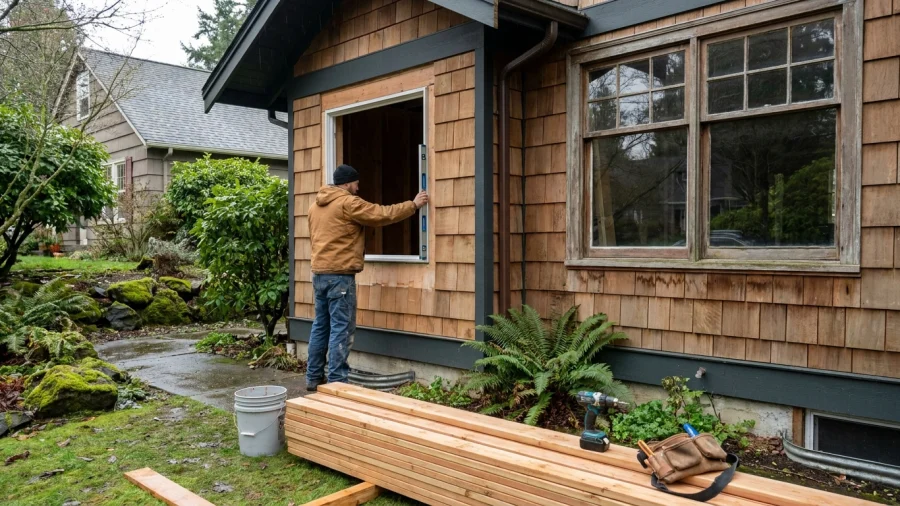
A window estimate covers a defined scope, but the window unit is only one part of the project. In Western Washington, rain exposure, older openings, finish materials, and site access can affect what it takes to complete a replacement. Understanding these possible additions helps you compare estimates without assuming every home will need the same work.
Why a window estimate may not include every project cost
A contractor can measure openings and inspect visible conditions before quoting, but some conditions remain concealed until the old windows come out. The number and dimensions of the windows, chosen products, installation method, and condition of the home all shape the quoted scope. This is a planning guide, not a fixed list of extra charges.
Ask what the estimate assumes about the existing openings and what happens if those assumptions prove wrong. The written agreement should explain how unexpected work will be documented, priced, and approved before it proceeds.
Hidden moisture damage and deteriorated framing
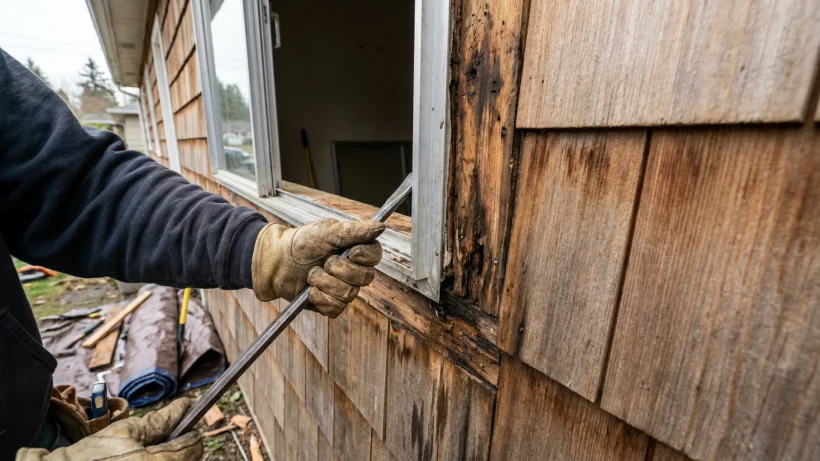
Staining, soft trim, peeling paint, persistent drafts, or visible deterioration near a window can warrant a closer look. None of these clues, by itself, confirms hidden rot. Once the old unit is removed, however, damage to framing, sheathing, or surrounding materials may become visible for the first time.
Ask how the contractor will photograph and describe any concealed damage, explain the proposed repair, and obtain your approval of the additional scope before making it. Also discuss how the installation will manage water at the opening. Flashing and other water-management details are particularly important where Puget Sound rain and wind can expose weaknesses around a window.
Trim, siding, and interior finish work
The installation approach affects how much surrounding material must be disturbed. Some replacements can retain existing trim; others call for trim removal or modification. Siding or other exterior cladding may also need adjustment to fit the new window and its water-management details.
Do not assume window installation includes restoring every adjacent finish. Interior casing, drywall repair, staining, and painting may be separate tasks. Ask for an opening-by-opening description of what will be removed, replaced, patched, or left for another contractor or homeowner to finish.
Custom sizes, opening changes, and product choices
Older homes may have openings that do not match common stock sizes, while specialty shapes or divided-light patterns can require a different product specification. Fitting a replacement into an existing opening is also a different scope from enlarging, reducing, or otherwise altering that opening.
Glass options, frame colors, hardware, screens, and other features can affect the order and its lead time. Before the order is placed, confirm final measurements, window configuration, selected features, and included accessories in writing. If an opening will change, make sure the related framing and finish work is described too.
Access, protection, and disposal considerations
Upper-floor windows, steep ground, tight side yards, decks, and limited parking can change how a crew stages materials and reaches an opening. These conditions are easier to plan around when they are identified during the site assessment rather than on installation day.
Check how floors, furnishings, landscaping, and nearby surfaces will be protected. Confirm that removal and disposal of the old windows, along with ordinary job debris and cleanup, are included in the written scope. If unusual materials or access conditions are present, ask how they will be evaluated instead of assuming standard removal covers them.
Older-home material checks and project coordination
An older home may have existing coatings or building materials that require evaluation before they are disturbed. Appearance alone cannot establish what a material contains. Ask whether the contractor has identified any material-safety concerns and whether testing or specialized handling may be needed. If applicable, those steps should be discussed as part of the scope before work begins.
Window work can also overlap with planned siding, roofing, or other exterior repairs. Coordinating the sequence may reduce disruption or repeated finish work, but responsibilities still need to be clear. Confirm which tasks belong in the window contract and which require a separate trade or agreement.
Permits, inspections, and local requirements to verify
Requirements depend on the jurisdiction and the work being done. Replacing a window in its existing opening may raise different questions from changing the opening or performing structural work. Avoid assuming that the same requirements apply across Seattle, Tacoma, Bellevue, and other Puget Sound communities.
Ask who will check applicable requirements with the local building department and who will handle any applications or inspections. The project documents should state those responsibilities and identify any related work included in the estimate.
Questions that make a window estimate easier to compare
A bottom-line number is hard to compare when estimates make different assumptions. Use these questions to check whether each proposal covers the same work:
- Does it identify each window, its size or configuration, product features, and installation approach?
- Which exterior trim, siding, interior finish, disposal, and cleanup tasks are included or excluded?
- How will concealed moisture damage or other unexpected conditions be documented, priced, and approved?
- Does it account for access constraints, protection of the home and landscaping, and any material-safety concerns?
- Who will verify local requirements, and how will you be informed of additional work before it begins?
Plan for conditions, not just the window unit
A useful replacement plan accounts for the opening and surrounding materials, finish restoration, site access, disposal, and applicable local requirements—not just the selected window. Review allowances, exclusions, and the process for approving changes alongside the product details. A site-specific assessment and clear written scope give you a better basis for comparing estimates than a generic per-window figure.