Preventing Condensation on Western WA Windows: Tips After Replacement
Condensation on a new window is a clue, not automatic proof of a defect. Learn where to look for moisture and how to manage humidity and airflow during Western Washington's damp season.

Seeing moisture on a recently replaced window can be frustrating, especially during a stretch of cool, rainy weather. The first step is to find out which side of the glass is wet. That detail helps you decide whether to adjust indoor conditions or have the window assessed.
Why condensation can show up after new windows are installed
Condensation forms when moist air meets a surface cool enough for water vapor to collect. Replacement windows do not create indoor moisture. They may, however, reduce the drafts that previously carried some moisture out of the home. Water vapor from showers, cooking, laundry, and everyday activity can then linger if ventilation does not keep up.
Western Washington's cool weather can leave glass surfaces cold, while indoor humidity and airflow affect whether moisture collects on them. A little condensation, particularly under certain conditions, does not by itself establish that the window or installation is faulty.
First, identify where the moisture is forming
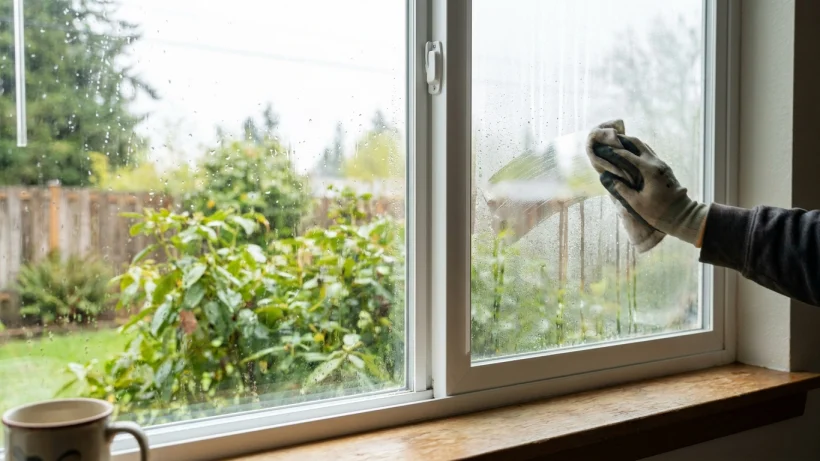
- Room-facing glass: Moisture you can wipe away from indoors is usually related to indoor humidity, glass temperature, or limited airflow around the window.
- Outdoor-facing glass: Exterior condensation can occur when weather and glass temperatures align. It is different from moisture inside the window unit.
- Between the panes: Fog or droplets that cannot be wiped from either exposed surface may indicate an issue with the insulated glass unit. Document it and ask the window provider to assess it.
Check more than one window. Note when the moisture appears, whether it clears, the outdoor conditions, and what was happening in the room beforehand. These observations are more useful than a single photo without context.
Reduce indoor moisture at its source
Run bathroom exhaust fans during showers and afterward as appropriate for the equipment. Confirm that the fans vent outdoors, not into an attic or another enclosed space. When cooking, use a range hood that vents outdoors if you have one, and cover pots when practical. Indoor clothes drying can also add substantial moisture, so watch for condensation when laundry is drying inside.
Look beyond daily habits if moisture remains a problem. Plumbing leaks, damp crawlspaces, and materials that stay wet need investigation; wiping the glass will not address those sources. There is no single indoor humidity setting that suits every home in every season. A comfortable level that avoids condensation depends in part on outdoor temperature and the home's construction.
Improve ventilation and airflow around the glass
Use kitchen and bathroom exhaust fans consistently, and consider whether the home's whole-house ventilation is working as intended after the windows have become less drafty. Keep supply and return air pathways clear rather than placing furniture over registers or blocking airflow near windows.
Closed blinds and heavy curtains can trap cooler air against the glass, especially overnight. Open them periodically so room air can circulate across the window, while keeping fabrics away from wet sills. If condensation persists across many rooms, a qualified home-performance or HVAC professional can help check ventilation operation and indoor humidity.
Check window use, installation details, and signs of a separate moisture issue
Make sure operable windows are fully closed and latched when weather protection is needed. If a window has a built-in ventilation feature, follow its product instructions. Check sills and surrounding trim for standing water, staining, peeling finishes, or dampness. Ongoing moisture in these areas deserves attention because it can damage nearby materials.
Record which windows are affected and take dated photos that show the moisture and surrounding area. Note indoor conditions and recent weather. If moisture is between panes, water is entering around a frame, or the problem continues despite reasonable humidity and ventilation steps, ask for a product or installation review. Coverage and service procedures depend on the specific product, installation agreement, and applicable terms, so check your documents rather than assuming a particular outcome.
A simple routine for Western Washington's damp season
- In the morning, check affected windows. Identify whether moisture is on the room side, outside, or between panes, and wipe up standing interior moisture.
- During cooking and bathing, use exhaust ventilation and let fans continue running afterward as appropriate for the equipment.
- Adjust window coverings to allow airflow, and keep damp fabrics and other wet materials away from sills and trim.
- Track when and where condensation returns. If it is widespread or persistent, or appears with leaks or material damage, investigate the moisture source and seek a qualified assessment.
The pattern matters more than any one damp morning. Knowing where the water forms and what conditions precede it helps separate an indoor moisture issue from a window concern that needs closer review.