Soundproofing Windows in Puget Sound: What Works in a Damp Climate
Traffic, aircraft, and neighborhood noise can make a room less comfortable, but the right window upgrade depends on how sound is getting in. Compare sealing, inserts, and replacement windows while accounting for rain, condensation, and ventilation.

A quieter room starts with finding the path sound takes into it. For Puget Sound homeowners, that may mean fixing a drafty window, adding a second layer of glazing, or addressing a problem elsewhere in the room. The best choice also needs to hold up to Western Washington’s wet weather without creating new moisture or ventilation concerns.
Why window sound control matters in Puget Sound
Depending on the location, a home may be exposed to road traffic, aircraft, nearby construction, or neighborhood activity. Windows can be a significant entry point for that noise, especially when they do not close tightly. But sound also travels through walls, roofs, vents, doors, and gaps around the window opening. Improving the glass alone may have limited effect if another path remains open.
Rain and damp conditions add another consideration: changes to a window assembly must preserve the wall’s ability to shed water. Sound control should not come at the expense of sound flashing, drainage, or moisture management.
Find the weak point before choosing an upgrade

Start with a visual and hands-on check of the noisiest window. Look for worn weatherstripping, loose hardware, cracked caulk, and noticeable drafts. Listen with the window fully closed and latched, then compare that with it slightly open. A large difference may point to an air-leak issue that sealing or adjustment could help.
Notice whether sound seems concentrated at one window or comes through a broader part of the room. If the source is unclear—or you see staining, soft framing, or other signs of water intrusion—an in-person assessment can help distinguish a window problem from a wall, drainage, or ventilation issue.
What window features can reduce outside noise
Laminated glass has an interlayer that can help damp some sound vibrations. Different glass thicknesses or spacing between panes in an insulated glass unit can also affect how sound passes through. Results depend on the complete assembly, its installation, and the frequencies of the noise you hear—not just the number of panes.
An energy-efficient window is not automatically a soundproof window. Thermal and acoustic performance are different measures. When comparing products, ask for available sound-performance ratings for the complete window or assembly rather than judging by the appearance of the glass alone.
Compare sealing, window inserts, and full replacement
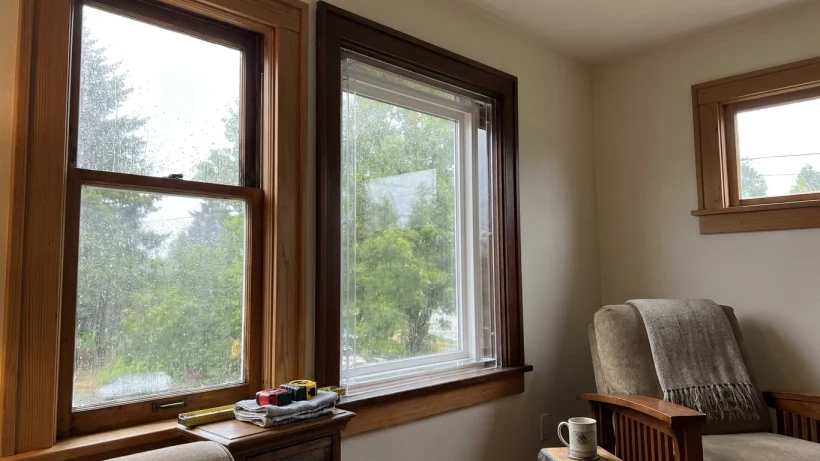
- Sealing and hardware adjustments: A practical first step when worn weatherstripping, gaps, or poor latching are the main problem. These repairs do not change the sound performance of the glass itself.
- Interior window inserts: A secondary layer with an air space that may reduce incoming noise. Check how the insert fits, whether the window can still be opened, how both surfaces will be cleaned, and whether moisture could collect between layers.
- Full replacement: Worth exploring when windows are damaged, difficult to operate, persistently drafty, or already due for an overall upgrade. Glass configuration matters, but so do frame condition, sealing, and installation details.
The right scope depends on the condition of the existing windows, the type and location of the noise, and how often the room needs an operable window for ventilation. Replacement is not automatically necessary for every noise complaint.
Plan for rain, condensation, and ventilation
Tighter windows can reduce uncontrolled drafts, but they do not replace appropriate ventilation. Indoor humidity, cold glass or frames, and limited airflow can all contribute to condensation. Neither an insert nor a replacement window should be assumed to prevent it in every room.
For replacement work, ask how flashing, drainage, and the transition to the home’s water-resistive layers will be handled. For inserts, ask whether their fit could trap moisture or make condensation harder to notice. Recurring water around a window deserves investigation as a possible leak or drainage problem, not just treatment as a sound issue.
Set realistic expectations and compare estimates
A window upgrade can make outside noise less intrusive without making a room silent. The result varies with the noise source and frequency, the existing window’s condition, and other paths through the room envelope. A useful proposal should identify the specific window or assembly and explain which sound path the recommended work is meant to address.
- Compare the proposed glass configuration, available sound-performance documentation, frame condition, and sealing details.
- Confirm the installation scope, including what happens to existing trim, flashing, and water management.
- Discuss how the work affects window operation, cleaning, and ventilation.
- Ask for recommended work and optional upgrades to be clearly separated in the estimate.
- Check applicable local requirements and confirm site-specific details with the contractor; conditions and requirements can vary.