Why Proper Window Flashing Matters for Washington Homes
A comprehensive guide explaining the importance of proper window flashing, weatherproofing, and sill protection when replacing windows in the rainy Pacific Northwest.
The Hidden Threat to Washington Windows: Water Intrusion
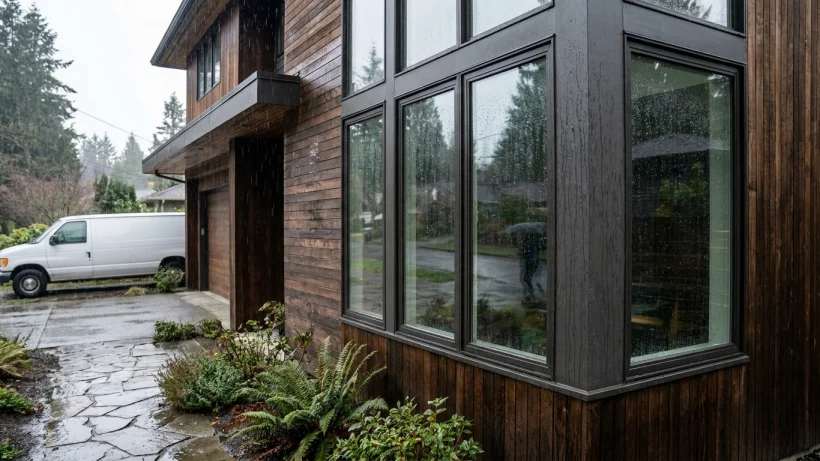
Western Washington homes face months of continuous moisture and wind-driven rain. From heavy autumn storms in Seattle to persistent winter drizzle in Olympia, water naturally flows down the side of a house. When it encounters a window frame, it will exploit any tiny gap it can find.
A premium replacement window is useless if the perimeter isn't completely sealed against moisture. Even the most energy-efficient, triple-pane window will fail if the installation does not account for heavy, wind-driven rain, leading to water intrusion directly into your home's framing.
What Is Window Flashing and How Does It Work?
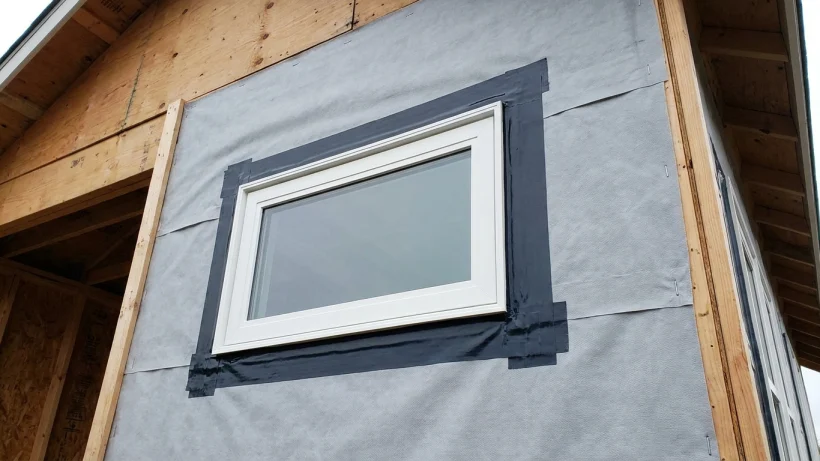
Flashing is a critical part of your home's weather barrier system. In simple terms, it is a thin, waterproof material—often a specialized adhesive tape, metal, or vinyl—that directs water away from vulnerable seams around the window opening.
- Drip Cap: Installed at the top of the window frame to divert water outward, preventing it from pooling on top of the window.
- Jamb Flashing: Applied to the sides to seal the vertical gaps between the window frame and the house wrap.
- Sill Pan: Placed at the bottom edge, designed to catch any incidental water that gets past the outer seal and safely drain it back outside.
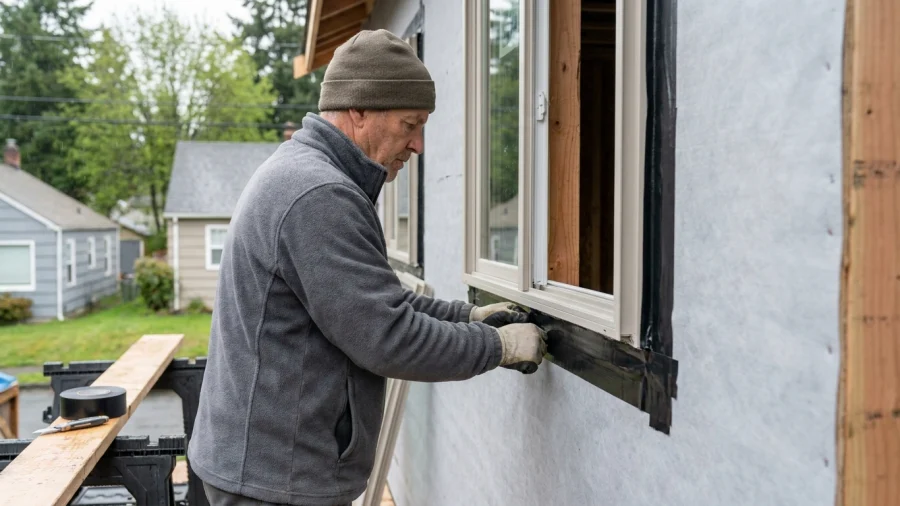
Proper window flashing replacement means integrating these components directly into the home's existing house wrap or weather-resistant barrier, creating a continuous shield against the elements.
Signs You Need Window Flashing Replacement
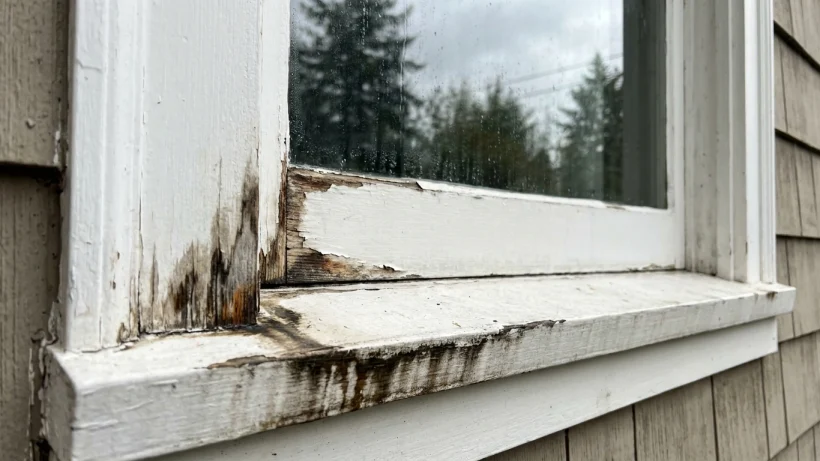
Failing flashing doesn't always result in an immediate, obvious puddle on the floor. Often, water intrusion happens slowly over years. Identifying the symptoms early can help you catch moisture intrusion before it leads to costly structural damage.
- Bubbling, peeling paint, or drywall staining on the interior wall beneath a window.
- Soft, spongy, or visibly rotted exterior wood trim and siding around the frame.
- Unexplained drafts or moisture condensation forming between the wall interior and the window frame.
- Musty odors near the windows, particularly after heavy Puget Sound rainstorms.
Addressing Rotted Window Sills During Replacement
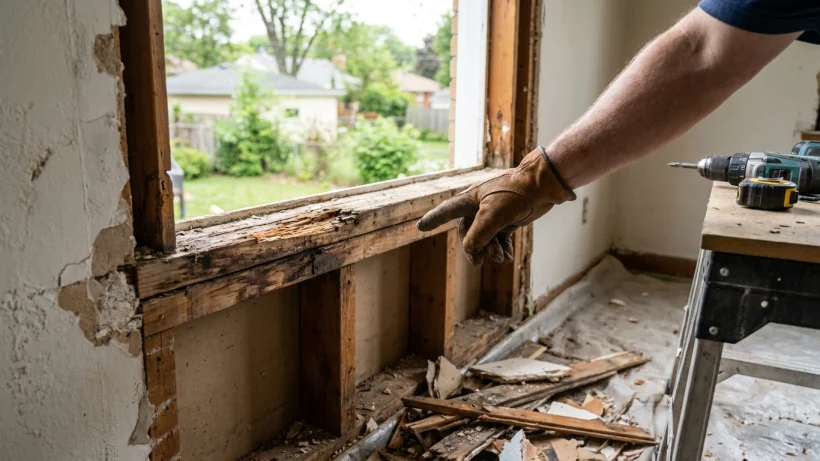
Removing an old window frequently reveals hidden water damage caused by years of failed flashing. This is why thorough inspections during the removal phase are so vital. You cannot simply install a new window over a rotted sill.
Proper window flashing replacement requires a solid, dry structural foundation. If rot is discovered, the damaged wood must be safely removed. The rough sill and surrounding framing are then replaced or treated to ensure the new window is anchored into healthy, structurally sound lumber.
The Evergreen Standard for Moisture Protection
Weatherproofing a new window installation requires specific techniques tailored for Pacific Northwest conditions. A meticulous approach ensures your exterior remodeling project lasts for decades.
- Custom-Sloped Sill Pans: Creating a slight outward slope at the base ensures any trapped water drains safely to the exterior.
- Premium Flexible Tapes: Using high-grade flashing tapes that adhere aggressively to the rough opening, even in the cooler, damp temperatures common in Western Washington.
- The Shingle-Lap Method: Flashing is always installed from bottom to top. This allows water to naturally flow over the overlapping seams, much like roof shingles, rather than getting trapped behind them.
- Proper Sealants: Applying low-expansion spray foam and high-quality exterior caulking to complete the weatherproofing without warping the window frame.
Why Installation Quality Dictates Window Lifespan
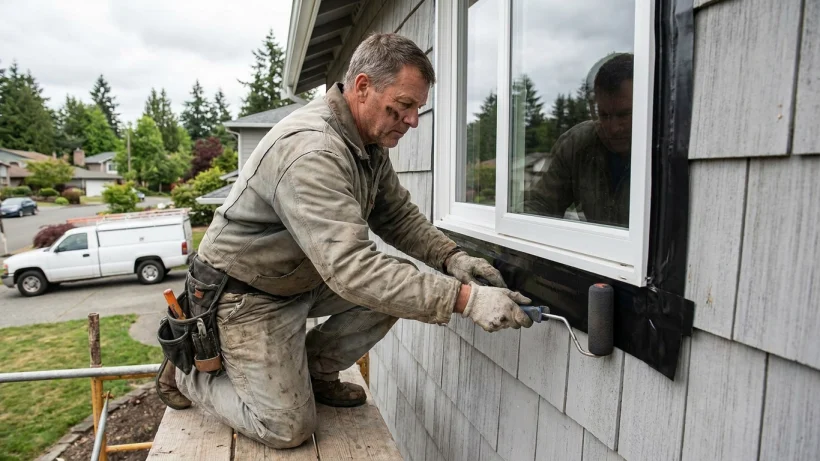
The skill and climate knowledge of the installation crew matter just as much as the brand of window you choose. Even top-tier windows will experience leaks within the first year if the flashing is applied improperly. Furthermore, poor installation practices can void manufacturer warranties.
Local Washington contractors understand regional weather patterns and building codes. Prioritizing an installer who handles meticulous flashing details ensures your investment is protected, saving you thousands in potential water damage repairs down the road.