Record the trees beside the footprint.
Show retained trees on the preliminary layout and ask which inventory or site information is needed. Do not treat an overhead photograph as a full assessment.
Decks · Mercer Island, Washington
Decks in Mercer Island should be planned with nearby retained trees and the construction activity around them. Show the intended supports and work route before assuming that an opening in the canopy provides enough room for the project.
Evergreen Home Pro helps you identify that site question. Share the proposed footprint, nearby trees and where materials or equipment would need to move during construction.
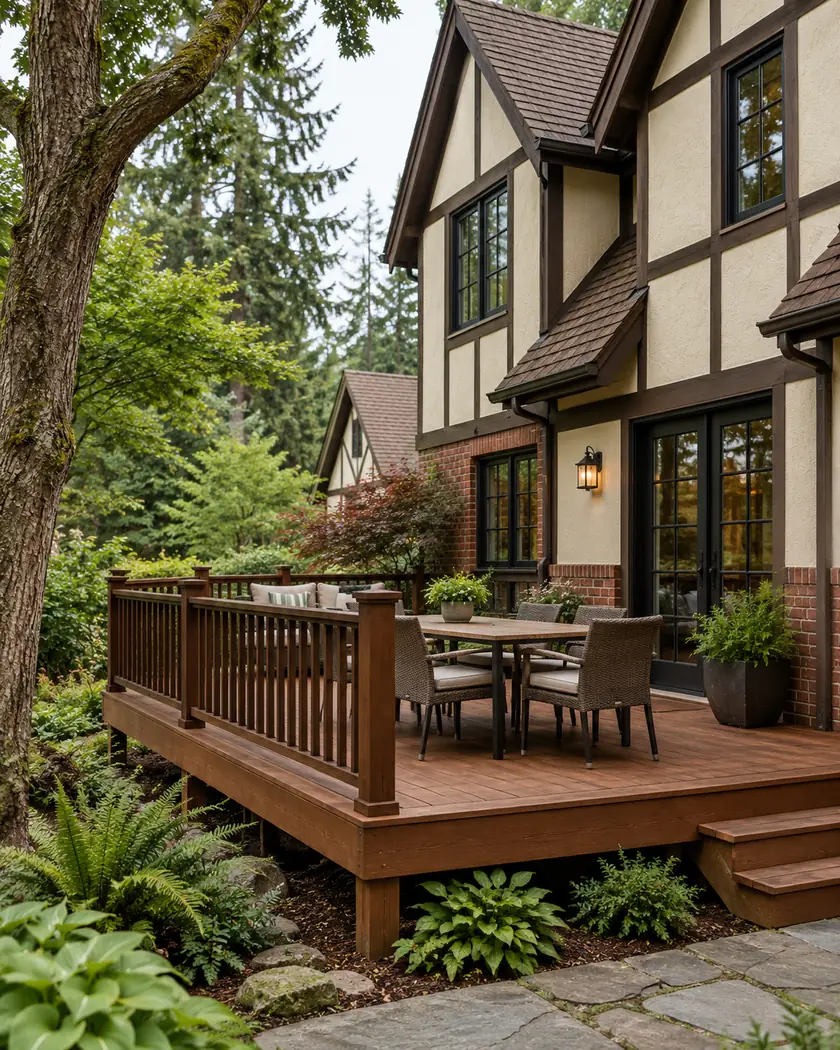
Deck building
Have the responsible designer and arborist assess supports, excavation and construction access around trees that remain. A clear distance from the trunk alone does not describe the root area or the activity that needs review.
Show retained trees on the preliminary layout and ask which inventory or site information is needed. Do not treat an overhead photograph as a full assessment.
Have the designer and arborist consider the proposed foundations and applicable protection area together. Resolve constraints before choosing the final support arrangement.
Agree routes and storage locations with the contractor. Include where equipment, supplies and waste will be placed while the deck is built.
Before work begins
Mercer Island describes basic decks outside geological hazard areas and critical-area buffers as potential simple projects. Confirm whether the actual location meets that description and what site information is required.
The simple-project page asks for lot slope, lot coverage and hardscape sections of its site worksheet for new or replacement decks. Classification is not an automatic exemption or guaranteed review time.
Have the root area, supports and construction activity assessed. Trunk distance alone does not establish a suitable design.
Keep staging outside the established protected area and confirm the site-specific construction plan.
No. The city’s description includes location conditions, including geological hazards and critical-area buffers. Confirm the actual site.
Include a preliminary footprint, retained trees and proposed construction access so the site constraints can be assessed.