Identify what is proposed to remain.
Have the quote distinguish reused piping from new connections and components. Existing covers or visible pipe routes do not establish the condition of the concealed installation.
HVAC · Snoqualmie, Washington
HVAC in Snoqualmie replacing an existing system should make any proposed piping reuse explicit. Tell the contractor what equipment and refrigerant lines already exist before assuming the new units can use them unchanged.
Evergreen Home Pro helps you distinguish retained piping from new work in the HVAC proposal. Ask the qualified installer to assess the actual lines against the selected equipment’s current engineering and installation requirements.
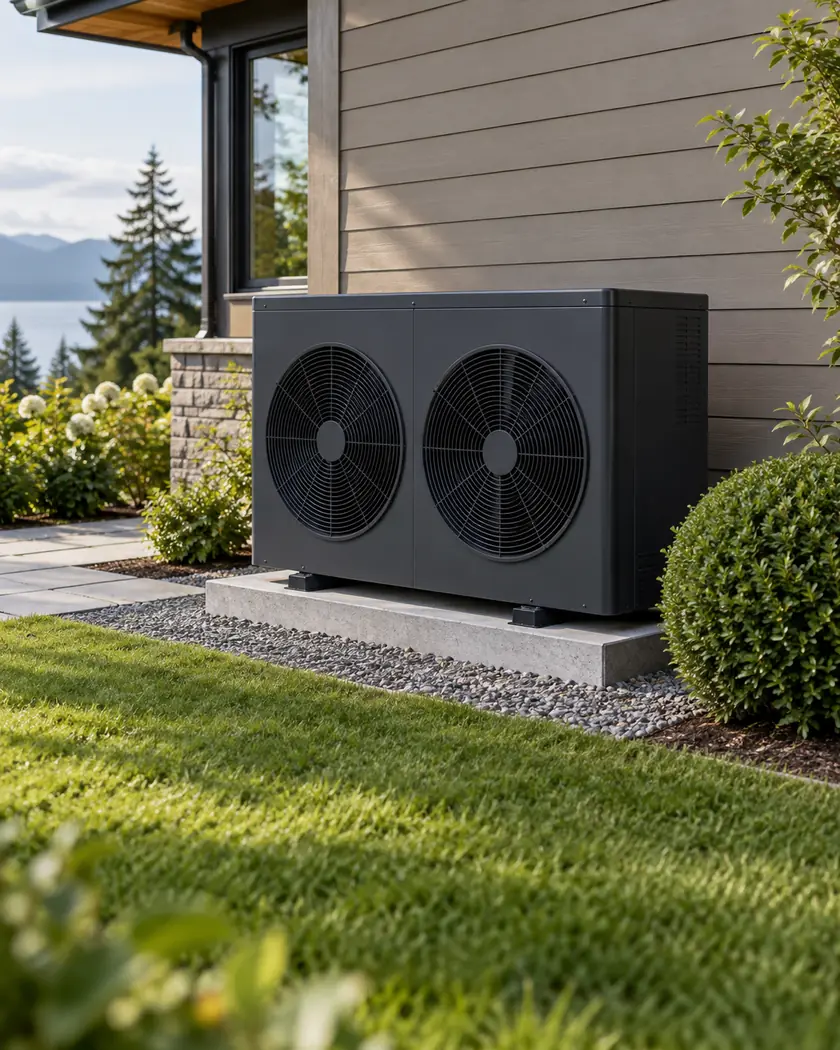
Heating and cooling installation
An accessible line set is not automatically a suitable line set. Have the installer establish its condition, dimensions and applicability to the proposed equipment, then identify whether retention, alteration or replacement belongs in the assessed scope.
Have the quote distinguish reused piping from new connections and components. Existing covers or visible pipe routes do not establish the condition of the concealed installation.
Ask how the current equipment instructions govern the actual pipe dimensions, arrangement and condition. Permission for one named system does not establish compatibility for a different replacement.
Ask what happens if the installer finds the existing lines unsuitable. Keep any needed access and replacement responsibility visible before assuming that retention has been accepted.
Before work begins
Snoqualmie lists heat-pump installation, relocation and replacement as permit-required mechanical work. The city routes electrical permits to Washington L&I; include the proposed equipment, retained piping and associated work when confirming the applications.
The piping decision belongs to qualified installation assessment. A reuse allowance in the quote is not a completed equipment match, refrigerant procedure or acceptance of concealed conditions.
Have the qualified installer assess the actual lines against the selected system’s requirements.
Request the engineering and installation guidance for the exact proposed equipment.
Ask for the access, piping and responsibility changes associated with that finding.
Tell us what system is being replaced and whether the proposal is expected to retain any existing piping.