Label the opening and viewpoint.
Identify the room and whether you noticed the pattern inside or outside. Explain whether it changes with time of day, viewing direction or sunglasses, without trying to force a diagnosis.
Windows · Rainier, Washington
Window replacement in Rainier can begin with something you see rather than a broken component. A pattern visible through sunglasses or at one viewing angle should be described clearly before it becomes a reason to order new glazing.
Record which opening is involved and how the appearance changes. Have the window provider distinguish that observation from persistent distortion, moisture or another condition it needs to assess; do not assume every changing pattern has the same explanation.
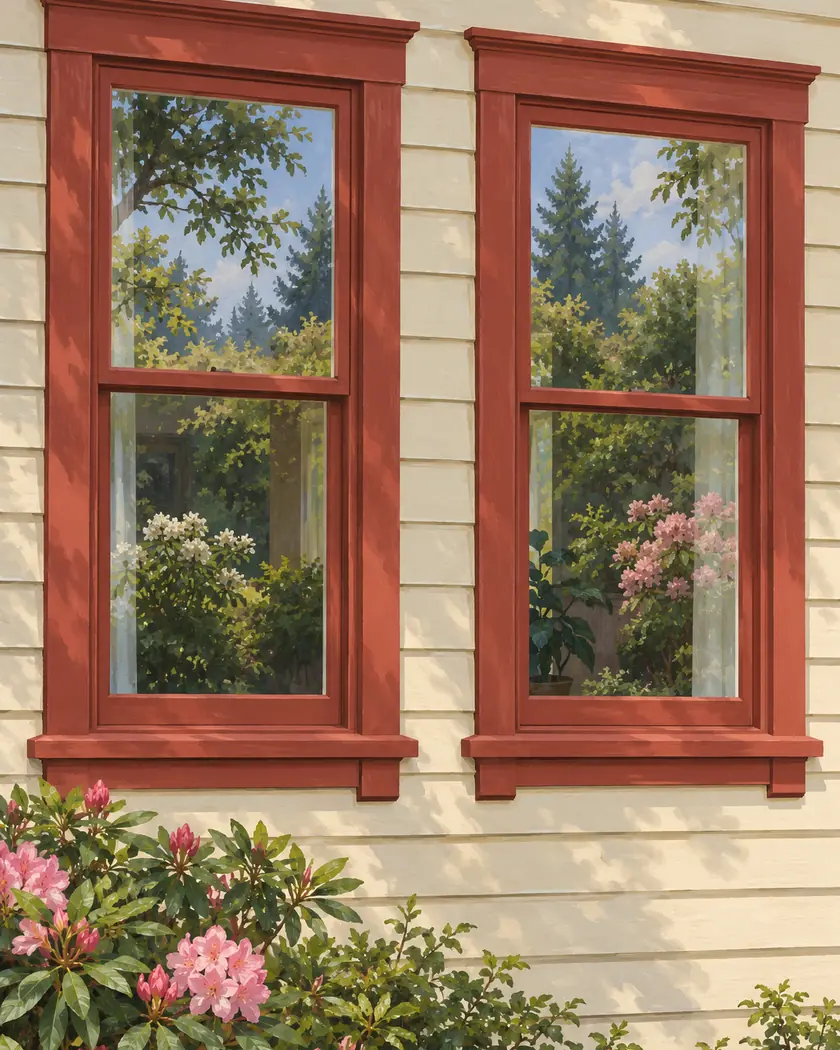
Window replacement
Give the provider a repeatable description of what you see from the room or ground. Keep a replacement decision tied to the assessed condition and exact opening instead of treating an optical effect as proof that every window has failed.
Identify the room and whether you noticed the pattern inside or outside. Explain whether it changes with time of day, viewing direction or sunglasses, without trying to force a diagnosis.
Describe changing patterns, distorted reflections and moisture as separate observations. Ask the provider which require further assessment and which findings affect the remedy.
If replacement is proposed, have the supplier identify the actual glass and opening requirements. Discuss expected appearance before accepting an order; a familiar frame color does not define the glazing.
Before work begins
Ask Rainier about review for the actual opening alteration or remodel scope. A glazing observation alone does not define the construction being proposed.
This guide does not determine the glass type, safety-glazing compliance or a defect from its appearance. Have those questions assessed for the actual opening.
Have the provider assess the actual observation and glazing. Note the viewing conditions instead of deciding from one photograph.
Record them separately and explain when each is visible. The assessor can then investigate the relevant glass and opening conditions.
Have the responsible provider verify the actual product identification and applicable opening requirements. A visual pattern is not a compliance record.
Identify the openings and describe when the pattern is visible, plus any separate moisture or operation concerns.