Name the affected layer.
Ask for a clear description of the actual finding rather than a general damaged-duct allowance.
HVAC · Seabeck, Washington
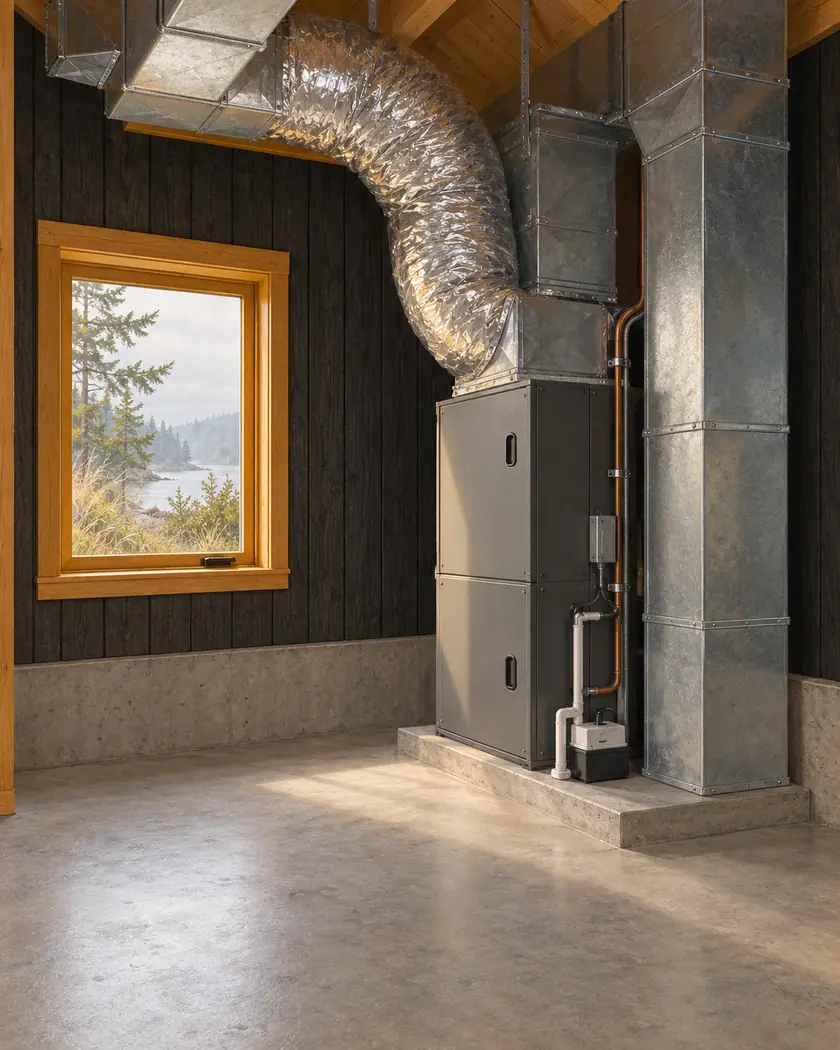
HVAC in Seabeck with a flexible-duct repair needs the damaged layer identified. The visible outer jacket and the inner air-carrying liner have different roles.
Ask the qualified provider what was observed and what the proposed repair actually restores. A tidy outer wrap does not by itself establish an intact air path.
Heating and cooling
Ask whether the finding concerns the outer jacket, insulation, inner liner or a connection. Request the location and the provider’s recommended repair or replacement boundary, including any access needed to confirm it. Keep the resulting scope distinct from simply wrapping the visible surface. Have the qualified provider assess the completed airflow path and any required verification before concealing the affected area again.
Ask for a clear description of the actual finding rather than a general damaged-duct allowance.
Have the provider explain which parts are repaired or replaced and why.
Request the applicable check and final record, including any remaining access or insulation work.
Before work begins
Use County project resources to describe equipment, distribution work and associated access repairs together. Ask DCD and the responsible provider which current mechanical review applies.
Do not enter an unsafe crawlspace or cut open duct insulation to produce a photograph. Share information already safely available and leave assessment to the qualified provider.
Ask the provider to identify and verify the actual air-carrying layer and connection.
Have the actual condition assessed and the repair boundary explained.
Ask which opening, insulation and finish reinstatement work is included.
Share an existing inspection record or safe photograph and describe any associated heating or cooling replacement.